
Chewing for change
Maryjane Butters | Hagadone News Network | UPDATED 15 years, 9 months AGO
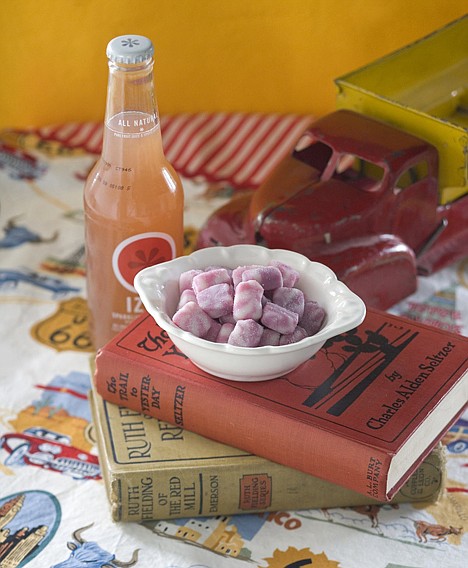
<p>To make your own chewing gum, soften some chicle gum base (either in the microwave or on the stove), add other ingredients like corn and sugar, knead it, roll it, cut it, and start chewing!</p>
Chewing gum has a charm that captivates the mouths of millions every day. We chew it to soothe our nerves, stay focused, freshen our breath, and to enjoy a sweet treat without counting a bunch of calories. You might say it's a modern marvel, but in fact, various kinds of "gum" have been chewed since the Stone Age. This little bit of trivia might have been lost in the dustbin of history, had an archaeology student in Finland not discovered a 5,000-year-old piece of birch-bark-tar chewing gum, complete with tooth marks! Because birch-bark resin boasts antiseptic properties, it was likely chewed way back then in order to soothe irritated gums. A few hardy souls still chew tree sap today, but it's usually more for novelty than remedy. Hard, crystallized nuggets of pine or spruce sap, broken from tree trunks, will crumble in the mouth, stick to the teeth, and offer a pungent dose of coniferous flavor. After gnawing for a few minutes, though, the crumbly sap softens into a suitably gum-like texture - a rite of passage that has captivated generations of kid campers.
The majority of modern gum chewers grab prefab packs from the grocery-store checkout line, but the trouble with gum these days is that cheap chemicals get top billing in all of the big-name brands. I am amazed at the number of artificial flavorings, colors and preservatives that can be crammed into such a slim stick, not to mention that the gum base itself is now concocted from synthetic rubbers, petroleum waxes and other dubious fillers.
• Reviving a greener gum: Lucky for gum lovers, there is a perfectly happy medium between unpalatablepinesap and chemical crud: chicle. Found in Central and South American rain forests, chicle (rhymes with tickle) is the sap of the sapodilla tree that was historically used as a commercial gum base in this country until manufacturers cut costs by turning to synthetic ingredients. But the case for chicle only gets stronger the more you learn about it. Specially trained collectors called chicleros harvest chicle sustainably and without the use of toxins. These hardy folk trek deep into the forest to hand-tap carefully selected trees for their resinous white sap. Scars from tapping heal within a few years so that the process can be repeated time and again. The revival of this longstanding tradition is helping to protect rainforests from logging and bolster local economies in countries like Mexico, Guatemala and Belize.
• Got Glee? At the forefront of the U.S. chicle gum market is Verve Inc., a family-owned company that creates a mouthwatering variety of 100 percent natural gum by the cheerful name of Glee. Imagine tangerine, peppermint, cinnamon, spearmint and bubblegum - all without the worry of unsavory additives. Glee can be ordered online in packets, boxes and bulk bags (www.gleegum.com), or use the site's "Store Locator" to find a retailer in your neighborhood.
• Make your own: Not only do the people at Verve make great gum; they also offer "Make Your Own Chewing Gum" kits for enterprising gum enthusiasts young and old. These cool kits combine lessons in rain-forest ecology, food production, cooking chemistry and global connections all in one yummy project. Everything you need is included: natural chicle gum base, confectioners' sugar, corn syrup (although you can substitute rice syrup), natural cinnamon and cherry flavors, a pan for softening the gum base, instructions and the story of chicle. Plus, it's really easy.
Copyright 2010, MaryJane Butters Distributed by United Feature Syndicate Inc.
ARTICLES BY MARYJANE BUTTERS
Un-pinching your pennies
MaryJane's Everyday Organic
We like to talk a lot about frugality 'round these parts. And with the tough times folks have been facing lately, the value in such advice increases tenfold. But can I be honest with you? It's getting - well - a little old.
Fresh summer sauces are a snap
MaryJane's Everyday Organic
As you look forward to all of the barbecues and picnics that lie ahead this summer, you may not give much thought to three staple sauces that are bound to be in high demand: ketchup, mustard and mayonnaise. The basics. Chances are, you have a bottle of each in your refrigerator right now, and when they run out, it would be easy enough to grab more from the grocery store. But I'd like to ask you to stop and give another moment's consideration to your condiments.
Why we (still) need our girlfriends
MaryJane's Everyday Organic
Not a week goes by that we don't hear the results of another study on human behavior. These reports often try to explain present-day relationships in the context of evolutionary adaptations and the great race to survive. And it's truly interesting stuff. Up until very recently, well before the age of advanced social technology, people NEEDED each other, and not just for a pat on the back or company over a cocktail. They needed one another for basic survival. If men didn't have friends and neighbors to help them build their houses or tell them where to hunt, the family unit didn't make it. And if women didn't cozy up to other females for information and acceptance, well, they were just as doomed.