
A feast for the senses
Maryjane Butters | Hagadone News Network | UPDATED 15 years, 11 months AGO
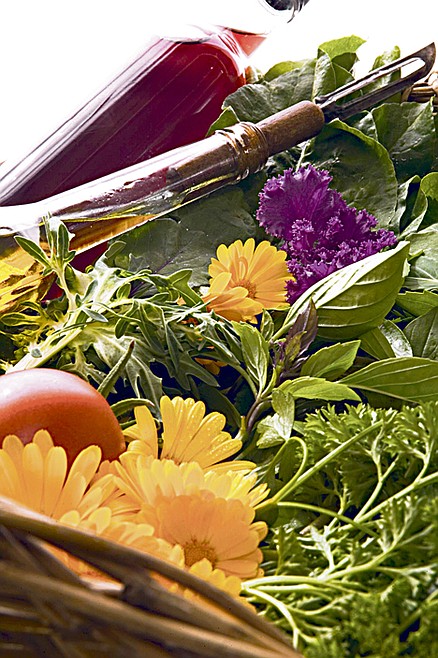
<p>Enjoy the edible petals of common flowers like pansies, sunflowers, roses, hollyhocks, calendula, lilacs, and bachelor buttons.</p>
The allure of flowers is irresistible. Their delicate fragrances beckon, and their colors are candy to the eye. But have you ever considered nibbling a flower's tender petals, just to find out whether their taste is every bit as tantalizing? If so, read on. It just so happens that there is a rainbow of secret flavors within a common backyard garden that is just waiting to inspire an entirely fresh array of hand-harvested fare throughout the summer to come.
Incredible and edible
As their gorgeous colors suggest, flowers are high in vitamins and minerals, and they offer a piquant variety of flavors ranging from spicy to nectar-sweet. While flowers have been eaten throughout the ages, they were particularly popular during the Victorian era. One fanciful recipe of the time called for a peck of flowers pounded with ladyfingers, three pints of cream, 16 eggs and a little rosewater to create "fairy cakes" that were baked with a sprinkling of sugar on top.
Recently, flowers have been reappearing in gourmet cooking. The finest restaurants are reinventing the art of floral food, scattering violets atop savory salads, infusing baked goods with hints of rose and searing meats in succulent crusts of lavender petals. But you needn't be a professional chef in order to revel in the romance of flowers. Most edible petals are easy to find - you may even be growing them in your garden already. Common candidates for the kitchen include: nasturtium, chamomile, hibiscus, lavender, marigold, tulip, rose, dandelion, day lily, sage, squash, violet, Johnny jump-up and yucca. These flowers and many more can be found on the following Web charts, which give comprehensive information about edibility, flavor and precautions:
• Edible Petals Glossary: www.epicurean.com/articles/edible-flowers.html
• Edible Flower Chart: www.whatscookingamerica.net/EdibleFlowers/EdibleFlowersMain.htm
As with any wild-growing foods, it's best to introduce flowers into your diet slowly and in small quantities, trying one species at a time. This way, you can keep track of any digestive upset or allergic reactions that might occur. In general, it's best to avoid any flowers that you cannot positively identify as edible: flowers growing by the roadside; flowers from florists, nurseries or garden centers; and flowers grown with pesticides.
How to harvest
Ideally, edible flowers should be picked in the morning, just after the dew has dried. For best flavor, look for fully open flowers, and steer clear of any that are damaged, wilting or brown. Like fruits and vegetables, flower flavor can vary depending on environmental conditions, soil types and cultivars. Flavor can also fluctuate during the growing season, and from one year to the next. Simply sample a petal from one or two flowers before collecting larger amounts to make sure you're happy with your harvest.
Flowers are most attractive and flavorful when used fresh from the garden. Short-stemmed flowers should be harvested no more than 3 to 4 hours before use. If you can't use them right away, place the blossoms in a plastic bag between layers of damp cloth, and store in the refrigerator. Long-stem flowers can be placed in a container of water and stored in a cool location.
When you're ready to use your flowers, test one for colorfastness in water. (Some may discolor when wet.) If the test flower holds up well, you can gently wash the rest to remove dirt and check for insects. At this point, you might also want to remove the pistils and stamens because their pollen content can detract from the flavor of the flowers and may also increase the odds of allergic reaction. If your recipe calls for petals only, then pluck each petal at the base where it was attached to the flower.
Flower feasts
There are countless ways to incorporate flowers in your food, whether you want to fancy up cool drinks and salads with whole-blossom beauty or mince petals into otherwise ordinary dishes. Think lavender lemonade, stuffed squash flowers, rose-petal scones, lilac syrup and pansy crisps. I guarantee you'll never look at a backyard flowerbed the same way again.
Copyright 2010, MaryJane Butters. Distributed by United Feature Syndicate Inc.
ARTICLES BY MARYJANE BUTTERS
Un-pinching your pennies
MaryJane's Everyday Organic
We like to talk a lot about frugality 'round these parts. And with the tough times folks have been facing lately, the value in such advice increases tenfold. But can I be honest with you? It's getting - well - a little old.
Fresh summer sauces are a snap
MaryJane's Everyday Organic
As you look forward to all of the barbecues and picnics that lie ahead this summer, you may not give much thought to three staple sauces that are bound to be in high demand: ketchup, mustard and mayonnaise. The basics. Chances are, you have a bottle of each in your refrigerator right now, and when they run out, it would be easy enough to grab more from the grocery store. But I'd like to ask you to stop and give another moment's consideration to your condiments.
Why we (still) need our girlfriends
MaryJane's Everyday Organic
Not a week goes by that we don't hear the results of another study on human behavior. These reports often try to explain present-day relationships in the context of evolutionary adaptations and the great race to survive. And it's truly interesting stuff. Up until very recently, well before the age of advanced social technology, people NEEDED each other, and not just for a pat on the back or company over a cocktail. They needed one another for basic survival. If men didn't have friends and neighbors to help them build their houses or tell them where to hunt, the family unit didn't make it. And if women didn't cozy up to other females for information and acceptance, well, they were just as doomed.