
Help finding child care available
Cynthia Taggart | Hagadone News Network | UPDATED 14 years, 3 months AGO
Help finding child care available
Heather Heidt started her hunt for child care at the Child Care Resource Center (CCRC) at the Panhandle Health District (PHD). She was pregnant with her first child, but she knew she would return to work and wanted time to do a thorough job finding the child care right for her.
Heidt had worked for Head Start and had referred plenty of families to the CCRC for a list of child care providers available in their areas. When it was her time to search, she dialed 2-1-1, the Idaho Careline.
The toll free careline connected her with Jennifer Ross, coordinator of the CCRC in the five northern counties. The CCRC keeps track of child care providers in North Idaho that work with the Idaho Child Care Program (ICCP). ICCP provides funding to help with child care expenses for income-eligible families. The resource center provides information on those facilities to all families.
Ross and her staff match parents with child care providers who offer care specific to each family's needs. They ask the age of the child, desired location of child care and days and hours of care needed.
"They asked me questions to narrow the search," Heidt says. "I knew I wanted family child care - up to six kids."
The CCRC produced lists of legally operating child care providers and facilities that fit Heidt's criteria. The service cost Heidt nothing. Ross and her staff couldn't endorse any facility, but they could tell Heidt if any were part of the IdahoSTARS quality improvement rating program.
Participation in the program is voluntary. Providers who go through it eventually earn a one- to five-star rating based on how much they've improved their quality and their future plans of improvement.
Only three child care providers in the five northern counties have star ratings at this point, but about 15 others are working on it.
Ross gave Heidt a "Child Care Checklist for Parents" and encouraged her to use it as she visited facilities. Questions on the checklist cover cost and hours as well as daily routines, safety measures and types of activities.
"It's good for parents to make sure a place is right for them up front rather than have to move their children later," Ross says. "It's good for kids to be in a consistent environment."
Armed with her list of providers and her checklist, Heidt went to work.
"I made a lot of calls," she says. "I used the checklist a lot. It gave me important things to ask that I might not have thought of on my own."
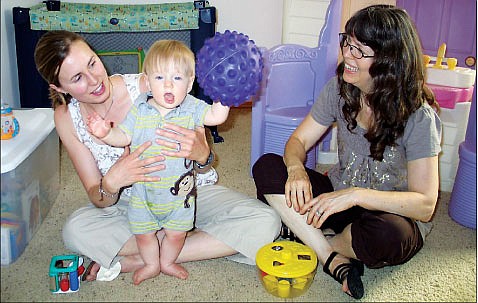
She found child care provider Julie Witters for her son, Everett. Everett will turn 1 in October. Witters has cared for him since he was 11 weeks old.
"The CCRC is a great resource," Heidt says. "It lets you know what's out there and it's free. Things have worked out well for us."
To access the free service, call 2-1-1 or (800) 926-2588, or visit www.phd1.idaho.gov for more information.
Cynthia Taggart is the public information officer for the Panhandle Health District. She can be reached at [email protected].
ARTICLES BY CYNTHIA TAGGART
Preparing for emergencies is common sense
People in tornado country prepare for disaster. We don't hear about the people who sit out killer tornadoes in underground shelters equipped with emergency supplies of food and water. They're not in the news unless they've lost their homes. Have you ever wondered how people who've lost everything survived to talk about it on the 6 p.m. news?
Maintain septic systems to save big bucks
Septic systems are under-appreciated. Unless you live in a city on a municipal water system, septic systems dispose of all the waste that goes down the drains in your household, small business, church, school, restaurant and more.

Area restaurants go for the gold
PHD gold stars are a sign of high food safety standards
When I go out to eat, I look for a Panhandle Health District gold star on display by the establishment's cash register or in the window. The giant gold star is part of PHD's Award of Excellence in food safety.