
Raymond Kendall: Man for all inspections
BILL BULEY | Hagadone News Network | UPDATED 14 years, 5 months AGO
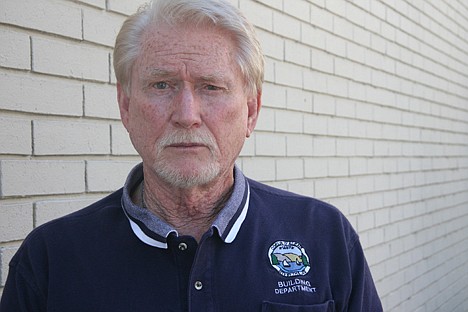
<p>Raymond Kendall.</p>
Bill Buley covers the city of Coeur d'Alene for the Coeur d’Alene Press. He has worked here since January 2020, after spending seven years on Kauai as editor-in-chief of The Garden Island newspaper. He enjoys running. | July 10, 2011 9:00 PM
The city of Coeur d'Alene can rest easier knowing Raymond Kendall is on the job.
Here's why.
Let's start with the number 24.
That's how many International Code Council certifications the five-year Coeur d'Alene building inspector has earned. We're talking electric, fire, building plans, mechanical, plumbing, accessibility and property maintenance.
Then, there's 12.
He is one of only 12 individuals in the U.S. who holds the Master Code Professional and Legacy Status Inspector. And what that means is, he is among the very best at what he does.
"To obtain this level of certification requires and demonstrates commitment to the profession, diverse knowledge of codes and a high level of self-initiative," according to ICC.
Kendall, who overcame polio and childhood poverty to later serve in the military and build a successful business, knows what motivates him.
"A sense of responsibility, solving highly complex problems, and ensuring life safety," he wrote.
To earn the ICC's Master Code Professional - he is one of two in Idaho - he studied 10 years, nights and mornings, taking classes starting in 2001.
What does that title mean?
"It tells you that I could go anywhere on this planet and do inspections," he said.
Can you share your reaction to recently earning the Master Code Professional certification?
Because of the work and the lengthy period of time, I really haven't had time to appreciate that accomplishment. I'm not saying that because everyone else is telling me it's a great achievement. I'm still a bit stunned that it happened.
There were times I just thought, 'Are you going to continue doing this? Are you sacrificing too much of your time, too much of your life, too much of your wife's time?' But now that I have it, I feel at least for this profession, complete.
How does a routine work day go for you?
There are two important parts to what I do. One is accessibility, trying to prevent barriers created for people who need access, people who are disabled. And then people who are institutionalized for one reason or another, who require assisted living. I feel a special need to see that these folks are able to function in a critical situation the best I can and have the means to not necessarily get into a building but get out of that building if they have to.
I think probably fire and seismic are my two largest concerns. Those are the two things that can cause catastrophic failure in moments. I'm dedicated, and I think anyone in this field should take it as seriously as I do to see that these people are protected.
My inspection's most critical part is structural and fire prevention. When you get to the area of fire suppression, that means fire prevention didn't work.
What type of buildings do you inspect?
I look at commercial, schools, all kinds. For example, recently the convention center, which is a wonderful addition to the city of Coeur d'Alene. Prior to that, the Kroc Center. I spent probably on average three hours a day there for a year and a half. And again, a mixed-use building where you have separate types of use, where you have children playing here and you have a dance studio and a theater, they all have their own unique needs as far as inspections, protections that are needed in each area.
The hospital, very complex.
So you have to look very closely at this work and take it very seriously in good conscience.
Are there times you have to say to a builder, 'This isn't right?'
Let me say I'm very proud to be a member of what's referred to as a team. We are on the cutting edge of computer technology. I have access to volumes of material in my vehicle via my computer, I have my own printers.
Correction is kind of a harsh word to people I deal with every day, but that's what they are, and there are inspector's reports that we write corrections on. Typically I will write on an average in a day, probably 50 corrections, and somedays, more. And these aren't arbitrary. These are notices you have to be able to put numbers to. These people want to know where that comes from. Is this my opinion or is this the written word? I have to be able to reinforce anything that I write with a number, whether it be accessibility, whether it be related to fire, the mechanics of a building, ventilation, those are all things I have to try and ensure the public is not only getting in and out of the building, but what they're breathing when they're in the building, all the environmental aspects of construction as well.
Do the people you're inspecting agree or disagree with you?
I say that they most often argue and I understand that. I was in construction 40 years before I became a building inspector and I understand the frustration. It makes the job easier when you understand these frustrations. Although we have the International Code Standard, not everyone applies it the same. They'll say there are no other jurisdictions that require this and at that point the only way you're going to satisfy them is to show them what the codes require, and to stay with them through the process of understanding the language.
Can they dispute your decision?
I'm not the ultimate decision. The ultimate decision is with the city of Coeur d'Alene building official. And I explain that to them. If I haven't done a good job of explaining, sometimes they would want more than one opinion. Sometimes the senior building inspector gets involved, the building officials gets involved. And sometimes you'll get three people in the same room and not everyone will agree on the same word, let alone the sentence.
There's latitudes in the codes for that as well. We try to explain, we're not there to hinder, but to help. And often times I have the latitude that I can perform layout for them, help them understand what we're doing. And work through the situation. And from that comes my rewards.
What's your opinion on construction here?
If anything I'm honest, sometimes, too direct. But I will say this: That our people in the city of Coeur d'Alene, our building department, they are as skilled as any department I have ever been associated with. These people can operate in any capacity in any city, large or small. I salute all the people I work with.
On another note, your daughter is a pediatric cardiologist and your son is in pre-med. Where do they get their brains from?
Their mother (laughs). They get their brains from Lise. My wife was a law student at UCLA when I met her. When we decided to get married, she wanted to stay home and work with her children and that's what she has done. It paid huge dividends. I owe everything to my wife Lise. She's the person who gave me roots and a purpose
Where were you born and raised?
I was born in a tenement in east Los Angeles. I was pretty much born into poverty. I was pretty much raised on the streets, but I had little setback. When I was 2 1/2 years old, I was paralyzed from the waist down because I had polio. I wasn't able to walk for about three years. I remember overhearing a conversation of the doctor telling my mother that if I survived, I probably would never walk again. That was probably one of the biggest motivators of my life. I think he was right. When I was able to move around I started running. I don't really ever recall walking.
What is the key to your success?
With my disability, it took a lot of hard work. I remember the pain, even though I was very young. I just thought that given an opportunity, any opportunity, that I would take advantage of it. My parents never had one. My mother went through the fourth grade, my father was second. I think I owed it to them and their hardship to give my best.
That's always been your attitude?
One thing that's really good is if you don't limit yourself. I've never been about titles. It's been about results. What I feel about myself is important, not necessarily what the world thinks about me. It's always been important to me to be a good civilian and a contributor. I will happily work until my last days because I've been given the ability to do that.
What's ahead for you?
The most important thing for me now down the road is watching my children come into full bloom. Again, I've never been about the titles, but I'm really proud of the idea they're going to be helping children and people who need help.
I believe my children are my legacy.
Snapshot
Raymond Kendall
Family: Wife, Lise, married 33 years. Two children, daughter Shellie and son Michael.
Number of hours on average you work in a week: 60
Favorite type of music: Classical, opera.
Favorite movie: "Stand by Me"
Favorite book: "Grapes of Wrath" by John Steinbeck
Hobbies: Bike riding
Favorite authors: Ernest Hemingway, James Clavell, Charles Dickens, Truman Capote
Favorite spectator sport: Wounded Warrior Olympics
Best advice you ever received: Do one thing and do it well.
Favorite historical figure: Ronald Reagan
Person who most influenced your life: My wife, Lise
Quality you admire most in a person: Integrity and courage
One thing you consider your greatest accomplishment: There are two: Becoming a United States Marine; meeting my wife, Lise and witnessing our children's achievements and their strength of character.
ARTICLES BY BILL BULEY

Nancy Edinger decorates Coeur d'Alene home, keeps husband Ron's spirit alive
Nancy Edinger decorates Coeur d'Alene home, keeps husband Ron's spirit alive
Nancy Edinger decorates Coeur d'Alene home, keeps husband Ron's spirit alive
Nonprofit foundation helps family become homeowners for first time
Nonprofit foundation helps family become homeowners for first time
The Young Family’s Foundation launched about a year ago with a mission "to empower young, hardworking families to achieve the dream of home ownership. Even if a family saved $25,000, they would still be $19,000 short of the down payment needed to buy a $550,000 home, which is the median price in Kootenai County. It’s estimated that only about 20% of area households can afford to buy a home.

Day of Remembrance highlights being homeless in North Idaho, people encouraged to help
Day of Remembrance highlights being homeless in North Idaho, people encouraged to help
According to the 2025 Point in Time Homeless Count in January, Idaho has 2,697 homeless people, down slightly from the previous year. Most, 56%, were adults males between the ages of 18 and 54. In Idaho's Region One, which includes Kootenai, Bonner, Boundary, Shoshone and Benewah counties, there were 246 homeless in the PIT 2025 count.