
Ranotta McNair: Looking after the land
BILL BULEY | Hagadone News Network | UPDATED 14 years, 7 months AGO
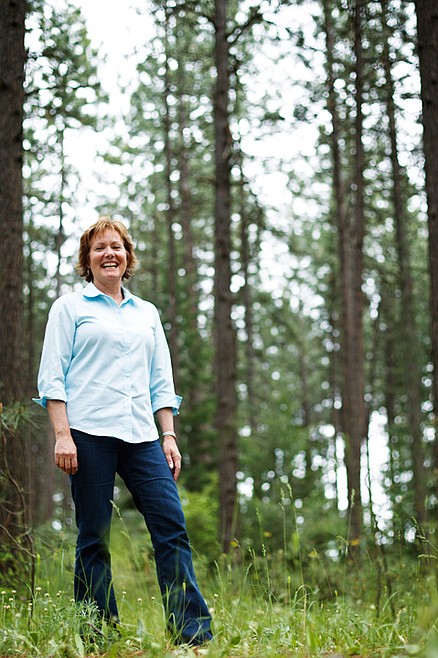
<p>Ranotta K. McNair will be retiring as forest supervisor for Idaho Panhandle National Forests.</p>
Bill Buley covers the city of Coeur d'Alene for the Coeur d’Alene Press. He has worked here since January 2020, after spending seven years on Kauai as editor-in-chief of The Garden Island newspaper. He enjoys running. | May 29, 2011 9:00 PM
Ranotta McNair is in charge of 2.4 million acres, more than 500 employees, five district offices, of the Idaho Panhandle National Forests. Her charge stretches from the Canada border to the Palouse.
There are plenty of sleepless nights because it's a lot of responsibility, certainly, she admits.
"Yeah, but there's pleasure in that," McNair said with a smile.
After 10 years as IPNF forest supervisor, McNair is retiring.
"It's been a wonderful job," the Oklahoma native said.
While she'll miss the people, McNair can't wait to spend more time in the outdoors, from camping on the St. Joe river to cross country skiing or soaking up the sights at her favorite place, Priest Lake.
"When I start looking around, we're just lucky enough we have a lot to explore," she said.
How did you get your start with the Forest Service?
I was going to a community college to learn about forests and engineering. I needed a job and they said go up the road there's this little agency called the Forest Service. I wanted to get some experience as an intern, so I volunteered with the Forest Service for a year and a half, met some of the great people, and became hooked.
The agency and I have had this marriage for 34 years, and it's one I would never change.
What's it like overseeing the Idaho Panhandle National Forests?
It's like being a CEO of a large company. I report to a regional forester that works in Missoula, Mont., and she reports to the chief of the Forest Service. So there's quick, direct lines of communication.
Why did you decide to retire?
I've been doing this job for 34 years, almost 35. I say, go out the door when you're feeling really good. There's a lot of passion in the work that I still do. I love the communities, I love the people and I love the folks that work on this forest. Good time to find a new chapter in my life, find a way to give back even more to the communities. Looking forward to, maybe six months from now, figuring out some things I can do on a voluntary basis.
What's been the best part of this job?
I have enjoyed the backdrop of the woods, the forests, the communities we live in. We're so blessed in North Idaho. When you look at the abundance of wildlife we have, the abundance of trees, clean water, just the great people that live and thrive in these communities. Looking back over time, we have really built a very strong relationship with the people in these communities, working with leadership, working with interest groups, working with tribes. We're seeing people who wouldn't talk to each other 10 years ago really sit at a table.
The best thing, I would say, people have learned that by caring about the people in these communities and caring about the land, that really is the future.
What about your biggest challenges?
Not moving fast enough in some of those areas. Not finding enough ways to bring people together. The challenges are you'd like to leave the most healthy forest in place, but over time, I think the elements of weather, historic conditions in these forests, the use of these forests and what's ahead of us, is going to be a real challenge.
How is the health of our forests?
I got to put together, with a lot of folks, a three-day roundtable forum. We brought in community leaders, tribes, interest groups and we sat down with scientists. We talked about what are the values of the land. People value multiple use. That means they value everything from a wilderness value out there to a working force value, where people can go into the woods and use it and also make a living with it. What science is telling us, over the years these forests have been really changed based on a lot of natural forces, human forces. We had the 1910 fire we just celebrated last year and that fire was like none other this country has probably experienced. We're living with the legacy of that fire. We have a lot of stands and forests that are 100 years old. We had big old monster white pine trees when this country brought in exotic plants, what came in with that was called blister rust. That blister rust completely invaded those trees that were not use to that foreign agent.
So our forests that our grandparents experienced here are very different from the forests we're seeing here today. Some of that's good, some of that's not so good. We know over time these forests will continue to change and evolve. Some of them are not as healthy because we don't have the same trees our grandparents had and the abundance they had here. But we're working on it. We put fire back on the landscape. We're using more thinning techniques. We're replanting. We have a nursery over here that grooms a lot of native species. We feel like we're positioning these forests for better health in the future.
What impact have you had?
I think the impact I've had, I've got a lot of good relationships with my communities. We have differences, but I think the difference is now, we're talking instead of throwing things at each other. I also see we brought in more science with our research community. I think we've been able to bridge that together. For me, I think it's about building those relationships with the communities, the interest groups and the tribes.
We have some great rewards. We've been recognized nationally by Trout Unlimited. We've got whole watersheds we put together. We're seeing fish in those streams. We're seeing cleaner water. You can go to some of the mine cleanup, we have a great example of where we didn't just clean up the tailings, but we restored a watershed where now we're seeing frogs, we're seeing aquatic species in it and it's becoming a new prototype.
Are you able to get out from behind your desk very often?
I get out quite a bit, as much as I can. That's the best part about this job. Some days you don't even know what you're going to do. I travel, I've worked a lot of national issues. I've worked on regional issues, on local issues. A lot of it's about meeting, greeting and being with people. Probably my greatest pleasure is being able to get out and see the great work our folks do in this forest. That's my reward. We've got good, dedicated folks who have their heart in the right place.
Did you love the outdoors growing up?
My fondest, earliest memories were being in the woods. There was either an activity that we went camping, or we played. It may have been an acre, but to me it may have been a forest. I always enjoyed exploring. I enjoyed being under the cover of trees. I loved playing in the water as a kid.
The best part of national forests for me, it's about making memories.
What will you miss most?
The people I work with, the people I get to meet as a result of this job.
If there was one thing you want people to know about the Idaho Panhandle National Forests, what would it be?
They have one of the best forests in their backyard. They have some of the best people working for them, people that care about people, about the communities and care about this land.
Date of birth: June 11, 1953
Education: Bachelor's degree from Oregon State University
Family: Husband of 33 years, Bob Walker. One son Alex Walker going to NIC. One daughter, Courtney Walker, graduating from Pacific Lutheran University. They are the basis of why I stay sane on the nights I can't sleep.
Number of hours on average you work in a week: 50-60
Number of hours on average you sleep in a night: I try for 8
Hobbies: Being outdoors, camping, hiking, photography
Favorite movie: "A River Runs Through It"
Favorite book: "The Great Burn" by Timothy Egan
Favorite spectator sport: Soccer
Favorite type of music: Rock
Quality you admire most in a person: Honesty
One thing you consider your greatest accomplishment: My family.
Person who most influenced your life: My parents. They expected a lot from us. They said you could achieve whatever you set out to achieve.
Best advice you ever received: Don't try to pretend you're something you're not.
ARTICLES BY BILL BULEY

Companions Animal Center has adopted out nearly 2,000 dogs, cats in 2025
Companions Animal Center has adopted out nearly 2,000 dogs, cats in 2025
As if to prove it, signs on two kennel doors proclaim “I have been adopted! I’m currently waiting to be picked up by my new parents.” One is a timid black mastiff. But the shelter remains crowded. Monday, it has about 50 large dogs filling kennels, including in the new wing oped this year, and there is still a four-month waiting list with names of about 80 dogs that people are looking to surrender pets.
Post Falls man named director of ministry with global reach
Post Falls man named director of ministry with global reach
Grassi, a longtime hunter and fisherman, started what was originally called “Let’s Go Fishing Ministry, Inc.” with a focus on outdoors, men and God. It was later changed to “Men’s Ministry Catalyst." The emphasis was on helping men understand their role as defined in the Bible.
Nonprofit foundation helps family become homeowners for first time
Nonprofit foundation helps family become homeowners for first time
The Young Family’s Foundation launched about a year ago with a mission "to empower young, hardworking families to achieve the dream of home ownership. Even if a family saved $25,000, they would still be $19,000 short of the down payment needed to buy a $550,000 home, which is the median price in Kootenai County. It’s estimated that only about 20% of area households can afford to buy a home.