
Your provider is your choice
Cynthia Taggart | Hagadone News Network | UPDATED 13 years, 11 months AGO
Your provider is your choice
After my dad had a stroke last year, his doctor prescribed home health care as he left Kootenai Medical Center. My mother knew nothing about home health services. She was so focused on my dad that she was ready to agree to any home health provider the doctor chose, if I agreed.
I talked to mom. I know Panhandle Home Health, the program through the Panhandle Health District. I know and trust the Panhandle Home Health professionals and knew my dad would feel comfortable with them.
I also knew that Home Health Quality Improvement, a national campaign to raise the quality of home health care, rated Panhandle Home Health among the nation's top 10 percent of home health care providers because so few of its patients need to return to the hospital.
Who provided my dad's home health care was our choice, so we requested Panhandle Home Health.
No matter your age, familiarizing yourself with home health care before you need it is a good idea. Health care is changing and home health is becoming a major player. Knowing what's available and that it's your right to choose your provider can lead you to a more satisfying health care experience.
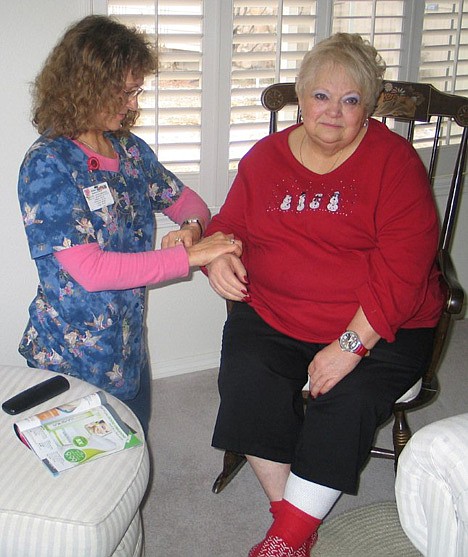
Home health care is professional medical care prescribed by a doctor for you in your home. Registered nurses and physical, occupational and speech therapists play major roles in home health care.
The senior population always has been the primary recipient of home health care. But that trend is changing as medical insurance shortens the length of hospital stays it covers and the number of people suffering from a chronic condition grows.
Younger people are relying on home health care to keep them out of the hospital for orthopedic conditions, post-surgical wound care, diabetes, stroke rehabilitation and much more. About 26 million adults living in the United States have diabetes and nearly 2 million new cases are diagnosed every year.
For post-surgical wound care, home health nurses operate a new technology called a wound vacuum that hastens healing. They teach patients and their families to clean and bandage wounds to decrease their need for medical providers.
Home health care costs less than hospital care, is covered by most health insurance plans and is where most people prefer staying, if they can.
The need among seniors for home health care is growing even faster than it is for younger age groups. Starting in 2011, 10,000 baby boomers turned 65 every day. That trend will continue for 19 more years. It's no surprise that the Bureau of Labor statistics says four out of five of the most needed jobs in the next 10 years will be in home health care.
So, not only is home health care growing in use for all ages, it's also in greater demand than ever. Those are two good reasons to research the home health options in your community and choose the provider you want before you're in the hospital on drugs and in pain.
Medicare's website, www.Medicare.gov, provides a section called Home Health Compare. It lists all the licensed home health agencies in your area - you enter your ZIP code. It lists seven providers for Coeur d'Alene. Click on any one and a list of service expectations pops up with the agency's rating compared to the state and national averages.
Information is given on how often patients improved at moving around, how often the health team checked for pain, how often patients' wounds improved, what percentage of patients needed hospitalization and much more. All agencies are held to the same standards.
If you want more information, call the agencies and ask for brochures or visit their websites. Brochures and websites will tell you what services are important to the agencies and help you figure out which ones suit your lifestyle the best.
I had never thought about my family needing home health care and then, suddenly, my dad had a stroke. Luckily, I knew about Panhandle Home Health, but not everyone has a home health care program where they work.
For more information on home health care, visit www.phd1.idaho.gov.
Cynthia Taggart is the public information officer for the Panhandle Health District. She can be reached at [email protected].
ARTICLES BY CYNTHIA TAGGART
Preparing for emergencies is common sense
People in tornado country prepare for disaster. We don't hear about the people who sit out killer tornadoes in underground shelters equipped with emergency supplies of food and water. They're not in the news unless they've lost their homes. Have you ever wondered how people who've lost everything survived to talk about it on the 6 p.m. news?
Maintain septic systems to save big bucks
Septic systems are under-appreciated. Unless you live in a city on a municipal water system, septic systems dispose of all the waste that goes down the drains in your household, small business, church, school, restaurant and more.

Area restaurants go for the gold
PHD gold stars are a sign of high food safety standards
When I go out to eat, I look for a Panhandle Health District gold star on display by the establishment's cash register or in the window. The giant gold star is part of PHD's Award of Excellence in food safety.