
One to grow on
Coeur d'Alene Press | UPDATED 13 years, 7 months AGO
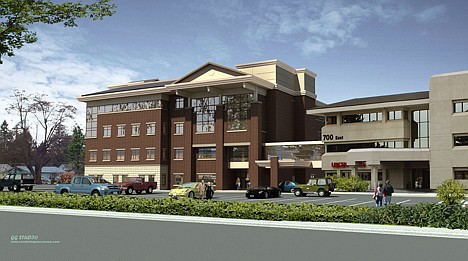
<p>An artist's rendering of the expansion of the 1919 Lincoln Way medical office building.</p>
COEUR d'ALENE - Residents of North Idaho will soon have better access to health care as well as increased job creation thanks to a New Markets Tax Credit investment that supported the expansion of the 1919 Lincoln Way medical office building.
The project came together with NMTC financing from Montana CDC in partnership with developer Parkwood Business Properties and lender and investor U.S. Bank.
The NMTC program is a federal economic development tool that encourages investment of capital in designated low-income areas in order to generate economic activity and revitalize communities.
The 1919 Lincoln Way project qualified for the financing as it is located in a designated low-income area according to census data.
"We're very excited to be working with Kootenai Health and Montana CDC on this new project," said Chris Meyer, development manager for Parkwood. "With the involvement of Montana CDC, U.S. Bank and its Community Development Corporation, and the NMTC program, this project will help enhance access to health care in our community."
With the expansion, the hospital will add a primary care residency program which is a major step in bringing more primary care physicians to North Idaho and ensuring that citizens have access to basic health care.
The Kootenai Health Primary Care Medical Residency Program will occupy about 16,000 square feet in the new building and will provide graduate medical education for six residents in each year of a three-year residency cycle. In addition to the jobs created in the training program, more than 50 percent of the residency graduates are expected to remain in the community to start new practices.
"The expansion of the Interlake building is in alignment with our strategic plan as we work more closely with growing physician offices," Jeremy Evans, vice president of professional services at Kootenai Health, said in a previous press release. "Because of the great location across from the hospital, and its close proximity to other services, it made sense to expand there for medical offices."
According to a study by the American Association of Family Physicians in 2006, each of these new practices is projected to create an average of $1.3 million of economic impact in the community and another 6-7 new jobs.
In addition to the Residency Program, Kootenai Health expects to locate its diabetes, endocrinology, and neurology centers in the building, along with other specialty-care and primary-care offices. Additional support services, including a lab, basic radiology, and financial consulting will also likely occupy space in the building. In all, 75 to 100 people will be employed in the new building.
"We are thrilled to expand our NMTC financing into Idaho," said Dave Glaser, president of Montana CDC. "Having financed eight NMTC projects in Montana, we know the impact these developments can have to transform low-income communities and create jobs. The Kootenai Medical Center is a perfect fit for the NMTC program and will benefit Idaho and Montana alike."
To make the expansion of the medical center financially feasible, Montana CDC raised $11.3 million using the NMTC program. Financing includes more than $3 million of NMTC equity from U.S. Bancorp Community Development Corporation, the investment subsidiary of U.S. Bank, a $7.5 million loan from U.S. Bank, and capital from the project sponsor.