
Educational therapy gets to the root of learning disabilities: Part 1
Alyssa Pukkila | Hagadone News Network | UPDATED 13 years, 6 months AGO
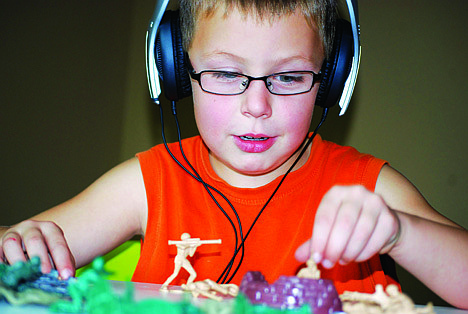
Educational therapy gets to the root of learning disabilities
Many children have difficulties with reading, writing, spelling, math, attention and memory. All children want to be successful in school yet they struggle despite parent-teacher interventions or private tutoring. Thanks to current research in the fields of neuropsychology, major steps forward have been made in understanding potential causes of several learning disabilities. Research points to neurological problems in auditory system for children with dyslexia.
Scientists have discovered underlying neural problems underlying dyslexia. At the Max Plank Institute for Human Cognitive and Brain Sciences in Germany, researchers have discovered that dyslexia, a well-known reading and spelling learning disability characterized by early phonological problems, has an underlying neurological impairment in the structure that transfers auditory information from the ear to the brain. Scientists at Finland's Cognitive Brain Research Unit also discovered underlying auditory problems in individuals with dyslexia. While the most current research comes from Northeastern University in Boston, Mass., demonstrates that dyslexia, generally believed to be caused by phonological impairments, actually has its roots in the phonetic system, causing individuals with dyslexia to have difficulty discriminating sounds.
Educational therapy helps to address these underlying causes of dyslexia, such as auditory processing on an individual basis. This is different from a tutor who provides subject support. Wired2Learn uses educational therapy to help students find success using strength-based interventions and progressive brain training programs based on current psychological and educational research. Clients include individuals with sensory processing disorder, attention deficits, dyslexia, dysgraphia, math deficits and autism spectrum disorders. Free assessments in processing and internal timing will be available at Wired2Learn during our open house on Wednesday, Oct. 3 from 4-8 p.m. on the second floor of 1616 E. Seltice Way in Post Falls. Guests will get a sensory experience as they get to see and try some of the programs and interventions offered at Wired2Learn.
Alyssa Pukkila, MS is an educational therapist for Wired2Learn, (208) 699-6232.
ARTICLES BY ALYSSA PUKKILA
A positive approach: Part I
Kids with learning disabilities are capable of learning. In fact, they have normal or even above normal intelligence, but they are wired to learn differently. Often these children are defined by their weaknesses, but they also have amazing strengths. To equip children with necessary skills and to give them academic success, we need to begin intentionally developing existing strengths.
Auditory hypersensitivity
Imagine a child who is overwhelmed by everyday sounds, where the sound of a police siren is too much to handle and causes the child to clasp his hands over his ears and be reduced to tears. This child suffers from auditory hypersensitivity (AH). Many children with autism spectrum disorder find the processing and integration of sounds very difficult. Although concern about AH has been especially focused on children on the autism spectrum, many non-autistic children also present with behaviors of AH.
Listen2Learn: Part II
In the previous article of Listen2Learn, I focused on the use music therapy (MT) with children who have learning disabilities to help open neuropathways and stimulate the brain for learning.