
'I was in the right'
MAUREEN DOLAN | Hagadone News Network | UPDATED 12 years, 5 months AGO
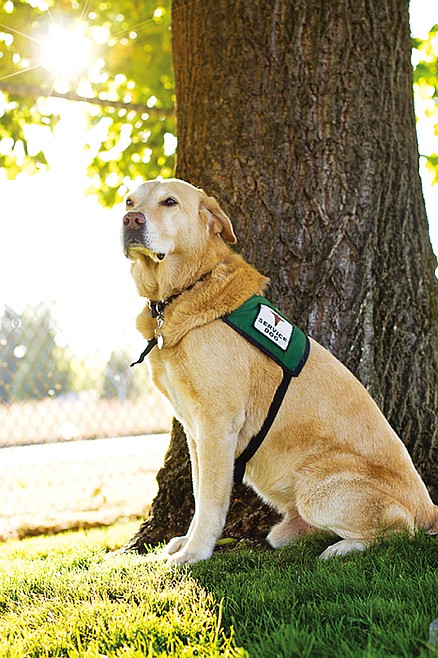
<p>Deoge, the service dog for Post Falls resident Tony Cruz.</p>
POST FALLS — Tony Cruz feels vindicated, and hopeful that his decision last fall to file a complaint against North Idaho College will make it easier for other people with disabilities to attend the school.
In June, NIC entered into a voluntary resolution agreement with the U.S. Department of Education’s Office for Civil Rights in response to a complaint the 59-year-old Post Falls man filed last fall. Cruz alleged that college staff members’ handling of his request to bring a service dog to class violated federal laws that protect students with disabilities from discrimination.
While NIC has not admitted to any violations, nor has the Office for Civil Rights determined that any violations have occurred, the community college will be changing some of its written practices regarding the use of service animals.
“It shows I didn’t make this up,” Cruz said. “I was in the right.”
The agreement, signed on June 6 by NIC President Joe Dunlap, states that the Office for Civil Rights has discontinued its investigation of NIC, but that it will resume looking into the matter if the college fails to follow through with the terms of the agreement.
Cruz recently received a letter from the civil rights office advising him of the agreement with NIC and providing him with a copy of the document.
The letter, signed by Susan Read, a team leader in the federal agency’s office in Seattle, states that when fully implemented, the agreement will resolve the issues raised by Cruz’s complaint.
“OCR will monitor the college’s implementation of the agreement and notify you when the provisions of the agreement have been implemented,” the letter states. In addition to calling for the college to review and revise its written practices regarding the use of service animals, the agreement calls for certain staff members, including the college’s vice president of student services and dean of students, to receive training regarding disability discrimination and protections the laws afford students with disabilities, including those with service animals.
Cruz has been disabled most of his life, the result of heart problems caused by a bout of rheumatic fever. He has two mechanical heart valves and also has diabetes.
His dog, a yellow lab, is trained to assist Cruz when the man’s blood sugar level drops or if he needs assistance calling for help due to any other medical situation. The animal will retrieve and bring Cruz a pack containing emergency glucose and a cell phone the man can use to call for help. The dog retrieves other items for Cruz, when he needs them.
Cruz contends that last July he was registered for classes for the fall semester and had his financial aid approved. However, things became difficult when he went to the college’s Center for Educational Access to discuss accommodations for his disability.
“We started going back and forth with all this stuff,” he said.
Cruz said that after completing at least 10 forms and other paperwork, he was asked to provide a prescription for the service dog, although he already had one his physician filled out in 2009.
“My doctor said he didn’t know these things expired, but he gave me another one. He thought it was a really good idea for me to go back to school,” Cruz said.
Cruz said he was then told he couldn’t bring the service animal to class.
“That’s like telling me to leave my wheelchair at home,” he said.
He claims that when he tried to tell the people at NIC that their actions conflicted with sections of the Americans with Disabilities Act, college staff members told him he was confused, that he didn’t understand what he was talking about.
Cruz contends that an employee at the Center for Educational Access said he was going to “advocate himself out of NIC.”
He said he did receive a call later from a college staff member, reversing her earlier denial of his use of the service dog.
Cruz said that by that time, he’d already been dropped from at least one class, and missed his first day of school. He withdrew from the rest of his classes to avoid complications from having received financial aid.
NIC issued the following statement regarding the situation:
“The College has reached an agreement with the Office for Civil Rights (OCR) regarding a recent complaint concerning the use of service animals and disability accommodation practices at the College. Pursuant to that agreement, OCR is terminating its investigation of the matter, and NIC will be working with OCR to review its service animal and accommodation practices to ensure these practices align with federal requirements. NIC has not admitted to any violations of federal law nor has OCR made a determination that any violation has occurred. NIC continues to provide timely and meaningful accommodations to persons with disabilities, including access to campus facilities by service animals.”
ARTICLES BY MAUREEN DOLAN

Daylight saving time begins today
If you arrived an hour early to everywhere you went today, you might have forgotten to move your clock back. Yep, it's daylight saving time. Daylight saving time officially ends at 2 a.m. Sunday, Nov. 5, and returns on March 10, 2024, when clocks are moved an hour forward.

Time to 'fall back'
Daylight saving time officially ends at 2 a.m. Sunday, Nov. 5 and returns March 10, 2024, when the vast majority of Americans will then “spring forward” as clocks are set an hour later.

Fires, smoke continue to affect region
Smoke from the region's wildfires continued to affect air quality Monday as firefighting response teams continued to battle multiple blazes throughout North Idaho and Eastern Washington.