
Montana land bills merged into defense legislation
CHRIS PETERSON | Hagadone News Network | UPDATED 11 years AGO
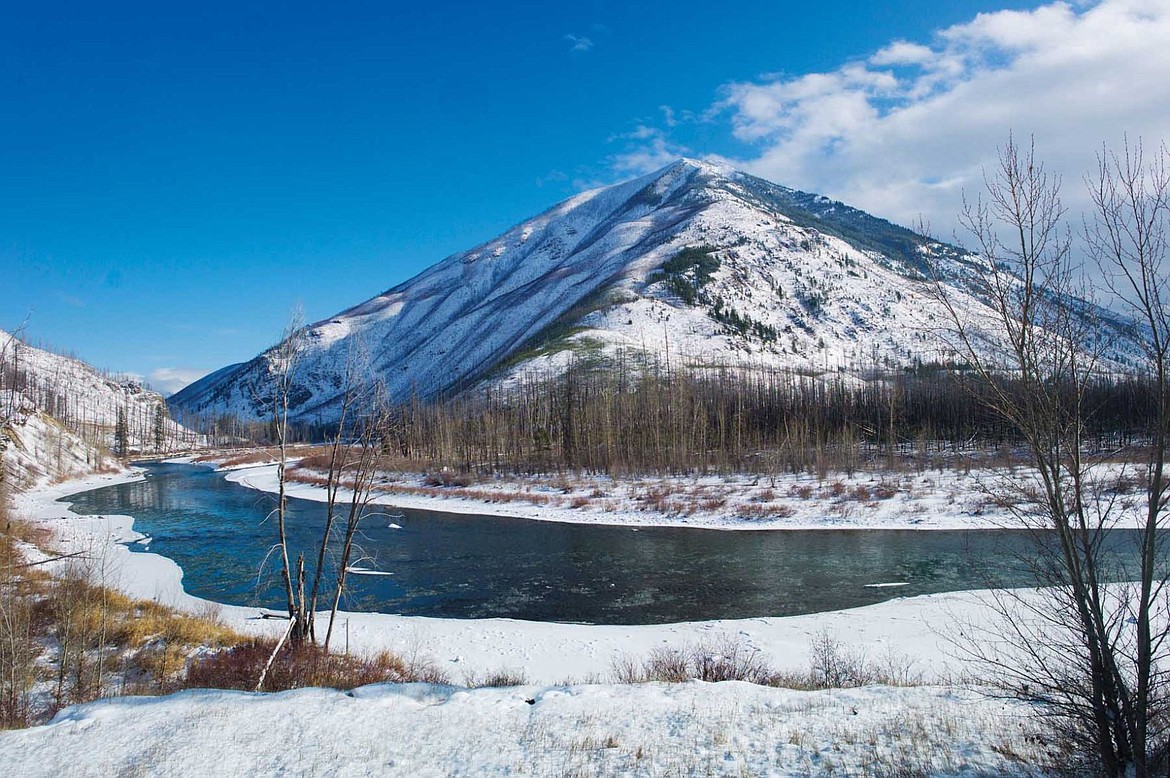
<p><strong>The North Fork</strong> of the Flathead River winds it way around Huckleberry Mountain in Glacier National Park in this photo from earlier this week. (Chris Peterson/Hungry Horse News)</p>
Chris Peterson is the editor of the Hungry Horse News. He covers Columbia Falls, the Canyon, Glacier National Park and the Bob Marshall Wilderness. All told, about 4 million acres of the best parts of the planet. He can be reached at [email protected] or 406-892-2151. | December 3, 2014 4:15 PM
Members of Montana’s congressional delegation announced Wednesday they have come on an agreement for a major public-lands bill that rolls several pieces of key conservation legislation into a defense spending bill that Congress could pass in the next week.
In a conference call Wednesday morning, U.S. Sens. Jon Tester and John Walsh and Rep. Steve Daines said the North Fork Watershed Protection Act, the Rocky Mountain Front Heritage Act, the Northern Cheyenne Lands Act and several other land bills would be merged into the defense legislation.
“Today is an historic day for Montana,” Tester said in his opening remarks.
Of most importance in Northwest Montana is the North Fork Watershed Protection Act, which bans all future energy leases in the North Fork and Middle Forks of the Flathead River.
The one-page bill has been held up in Congress for several years but is seen as a critical piece of legislation to protect the western boundary of Glacier National Park. The park’s western boundary is the middle of the river. A few years ago, British Columbia passed a law banning mining and energy exploration in its half of the drainage.
“This legislation is tremendously important,” said Michael Jamison, Glacier program manager for the National Parks Conservation Association. “By ensuring that the North Fork valley is not industrialized, this bill safeguards both our wild inheritance and our region’s economy.
Dave Hadden of Headwaters Montana had similar praise:
“Passage of this bill will represent a real success for the Flathead Valley. It not only protects Glacier National Park, but also the municipal water supply for the city of Whitefish as well as commercial operations at destinations such as Whitefish Mountain Resort. Nearly 40 years in the making, this effort shows that people here can work across party lines and agree on issues important to everyone.”
The Rocky Mountain Front Heritage Act also has been before Congress for several years. It adds about 60,000 more acres of wilderness to the east side of the Bob Marshall Wilderness Complex and protects about 200,000 acres of federal lands from further development such as oil and gas leases.
Daines said the effort “breaks through the partisan gridlock” in Washington.
Tester called it “an example the entire Congress can learn from.”
The House could take up the defense bill as early as today, Daines said. The language of the bills is largely intact, lawmakers said.
Walsh said the effort reflects all the work done by Montanans from all walks of the political spectrum.
“They brought these bills to us,” he noted. “Thanks to all of the people in Montana.”
Polls showed that both the North Fork and Rocky Mountain Frontage Heritage Act had broad public support.
“This is the highlight of my serving in the U.S. Senate,” Walsh said.
The North Fork bill ran into stiff opposition from some Republican senators earlier this year, but Tester said he is optimistic the legislation will pass.
“We believe we’ve got that [opposition] ironed out,” he said. “We’re confident but not absolutely sure we can get this done.”
Daines said the eight bills included in the Montana lands package strike a balance between land preservation and the economy, such as extending the duration of grazing permits on federal lands from 10 years to 20 years.
Other provisions would revise federal laws to encourage small-scale hydropower projects, establish a new fee system for cabin owners on public lands, and retain a U.S. Bureau of Land Management field office in Miles City to speed up oil and gas permitting by the agency.
Conspicuously absent from the legislative package was Tester’s Forest Jobs and Recreation Act, which was first introduced in 2009 and would expand wilderness and mandate more logging on federal lands.
Tester said he had pushed hard to include it. But the prospect of changing the way the U.S. Forest Service manages land had made people in Washington, D.C., nervous, he said.
The Northern Cheyenne Lands Act would return 5,000 acres of coal reserves to the tribe as part of a complex exchange.
Under the three-way swap, Great Northern Properties would transfer a large coal reserve to the Northern Cheyenne Tribe. In exchange, the company would receive from the Interior department an estimated 112 million tons of coal near Signal Peak Energy’s Bull Mountain coal mine.
The swap would fix a mistake made in 1900 when the government expanded the reservation but failed to acquire the underlying minerals.
The Associated Press contributed to this story.
ARTICLES BY CHRIS PETERSON

Columbia Falls School District makes pitch for charter school
Columbia Falls School District Superintendent Cory Dziowgo and staff recently made a pitch to the Montana Board of Public Education for a new Columbia Falls Trades Academy.
Columbia Falls concerned sewer system could be bottleneck for growth
The City of Columbia Falls could see a significant bottleneck in future growth due to its sewage treatment plant, depending how the city and the state calculate the sewage treatment plant’s maximum treatment capacity without a major upgrade.
Columbia Falls City Council tables e-bike law
The Columbia Falls City Council last week voted to table a city ordinance that would restrict e-bikes and e-motorcycles along with other electrically powered vehicles on its sidewalks and city parks.