
Rainy rider
JERRY HITCHCOCK/[email protected] | Hagadone News Network | UPDATED 10 years, 10 months AGO
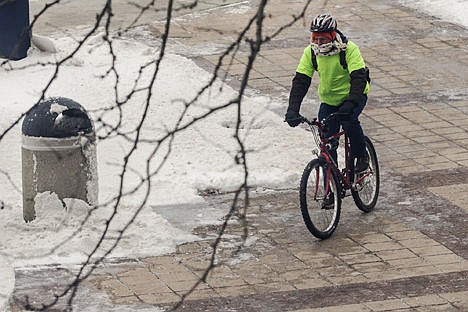
<p>University of Michigan-Flint student Will Rieske, 22, of Flint, bikes through dangerously cold temperatures and wind chill while riding to class on campus on Jan. 8.</p>
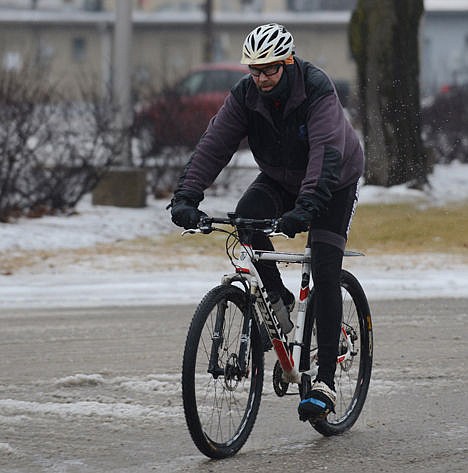
<p>Steve Drecoll of Mundelein doesn't let a mix of snow and rain stop him from riding his bike as he rides through the downtown area on Jan. 3.</p>
Being a cyclist in North Idaho basically means you have to be ready for anything Mother Nature throws at you.
I've been snowed on as I rode home to Post Falls from Liberty Lake, and I've also had to navigate some slick asphalt during a late fall sudden temperature drop.
But the more common occurence involved the wet-weather ride. If you plan on taking to two wheels in the spring or fall, you need to be prepared to be anything other than dry.
I guess I shouldn't say it like that. These days, manufacturers make cycling rain gear that can keep you, if not completely dry, at least less moist.
Aside from you normal cycling shorts/bibs and jersey, the essentials are tights and a long-sleeved overshirt that are waterproof (or at least "wick" away the moisture from your skin).
Next, you'll need waterproof gloves, a good high-visibility jacket and "booties" - which slide over your cycling shoes to keep out all that wetness your wheels will kick up.
Now that you're all dressed, let's access your bike. In dry weather, a bike with no fenders is no problem. Try riding that same bike in wetness, and your wheels will kick up rain to almost every part of your body in less than a mile. If it's fairly cold out, you'll lose body heat at a tremendous rate, and you could lose control of your bike before you know it.
Many aftermarket companies produce lightweight fenders that are easily taken on and off your bike, depending on the weather. All the local bike shops will have them, and you'll be glad you have them the first time you ride on a cool, wet day, because you won't be getting that chilly shot of water up your backside from the rear tire kicking up spray.
Also, the fenders will keep your clothes markedly cleaner, meaning you won't have mud and oil kicked up from the road to clean off after a ride. To me, this is more important than a little chilly water, since I hate to scrub oil out of my cycling clothes more than anything.
The other issue of wet-weather riding involves the ability to remain upright on roads that can become slick before, during and after a rainstorm.
If the temperature is right, rains can bring oil to the surface of the roadway, making every turn you make dangerous. Turning with caution (keeping your lean to a minimum) is paramount if you want to stay mounted.
When it's wet out, you need to keep as much of your body weight off the front wheel as possible, to avoid losing control. Also remember that your brakes will probably be damp when you go to use them, so make sure you brake early and adjust to the amount of time you need to safely come to a stop. The last thing you want is to slide through a stop sign on a busy street. You're no match for a car or truck - you're going to lose in that equation every time.
And speaking to traffic, a good bike headlight and brakelight combination is essential for your safety. Remember - motorists have to use windshield wipers when it rains, and vision is somewhat compromised, so enabling them to see a headlight or brakelight lets them know for sure something is out there, which will help them avoid you. Even if you're riding where you should be on the road, vehicles have a tendency to wander all over their lane in wet conditions.
Another issue of riding on the pavement in rainy conditions is flat tires, as they seem to multiply whenever the H2O falls from the heavens.
Stuff just accumulates on your rubber, and that grit has a way of working itself through the tire and pierce your inner tube at the worst possible time and place.
Many manufacturers are making tires with thicker treads, especially made for wet conditions, which give better grip and flat prevention than normal cycling tires.
I've changed tubes in downpours, and seeking shelter ensures you'll have some dry hands to perform the task. Or better yet if you can call for a ride home, you won't have to worry about wet hands to fumbling with tires, tubes and rims when it's raining cats and dogs.
Given all the above, I still think riding in the rain (or just before or after) is safe, fun and enjoyable. You have to account for a little extra time to get dressed and undressed, but it's well worth the effort.
Besides, that coffee, cocoa or even beer tastes better with a few wet miles under your belt.
Jerry Hitchcock can be contacted at 664-8176, Ext. 2017, or via email at [email protected].
ARTICLES BY JERRY HITCHCOCK/[email protected]

No more BLAZING SADDLES
Proper support is key to long-term cycling abilities
Remember when you were young? Some still are, and it may not have been that long ago for others, but people in their 50s like me, remember the 'good 'ol days?'

Time to crank it up
The right pedal can make any cyclist's life easier
I previously shared the role a proper-fitting saddle can have in the enjoyment (and performance) of a cyclist. In today's article, I wanted to crank it up a notch.
Winter walking
Snowshoes make it possible to keep your outdoor workout routine going all year-round
On a late autumn day last year I was sitting in the backyard, reminiscing about growing up, and I came up with an odd fact about myself. I've been on this Earth for more than 50 years - living most of that time in either Central Montana or North Idaho - and I've never had the chance or the urge to go snowshoeing.