
Idaho air race family jumps to jets
MIKE SATREN/Special to The Press | Hagadone News Network | UPDATED 10 years AGO
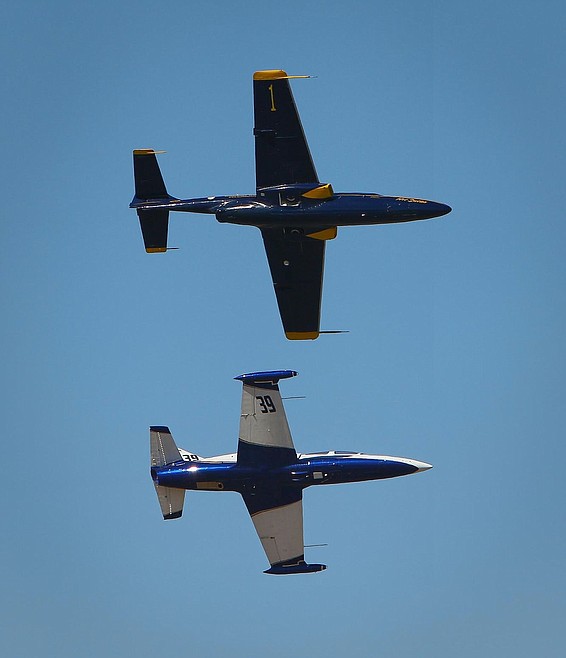
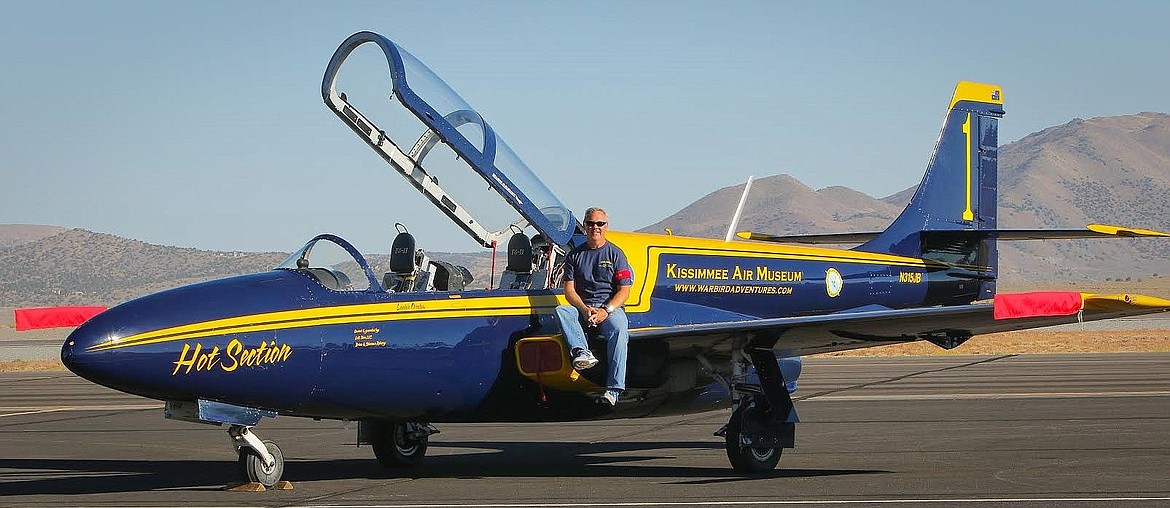
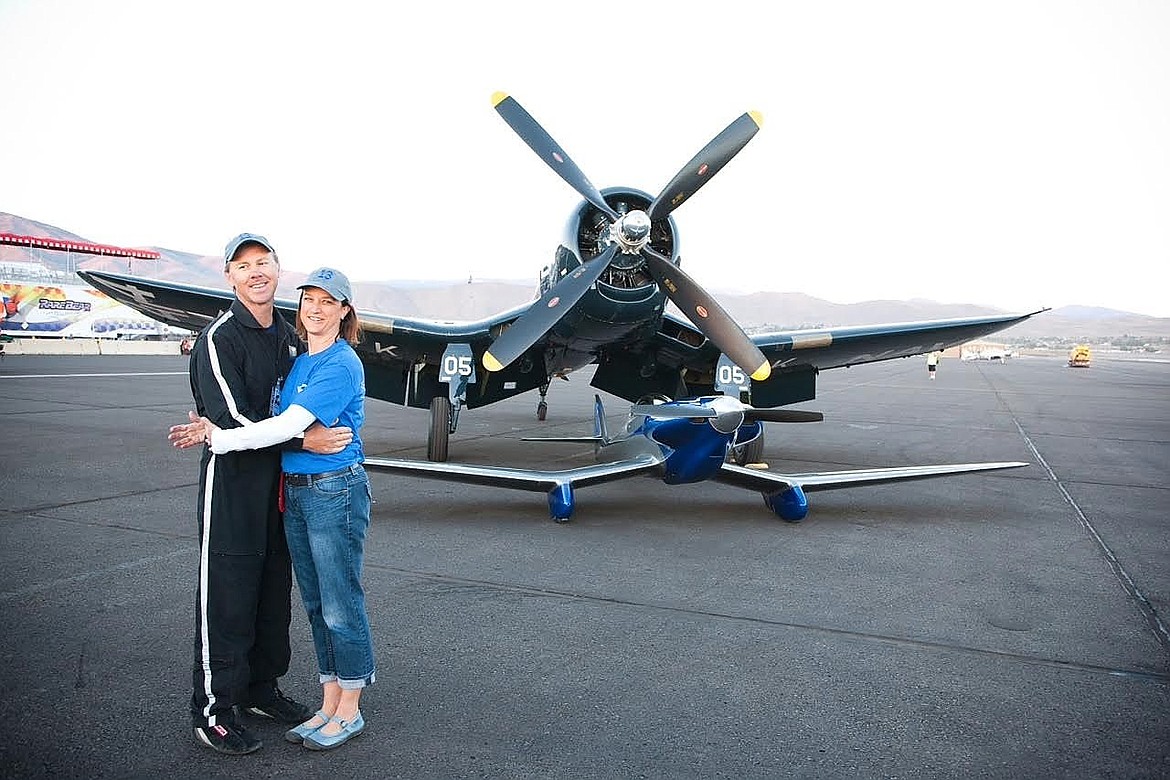
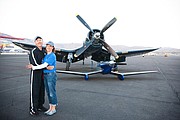
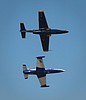
RENO, Nev. — Longtime Reno Air Races family Brian and Sherawn Reberry of Boise jumped to the Jet Class this year when they sold their unique Reberry 3M1C1R gull-wing Formula One race plane to Thom Richard of Kissimmee, Fla., and bought a Polish-built jet trainer, the PZL TS-11 “Iskra.” Purchased only a month before the races, Brian Reberry did not have time to learn to fly it and certainly had not qualified to race by flying in the Pylon Racing Seminar (PRS) earlier in the summer. Now almost two months after the air races, Brian Reberry has become comfortable with the TS-11 and its flight capabilities.
From the earliest days of the National Air Races in the 1920s till 1949 in Cleveland and again from 1964 until 2001 in the Reno area, gasoline-engine-driven propeller aircraft were de rigueur. After former East Block jet training aircraft became widely available in the U.S. after the fall of the U.S.S.R., the Reno Air Races introduced an invitation-only jet class demonstration in 2002 featuring Czech-built Aero Vodochody L-39 “Albatros” jets and made the new jet class available to all qualified pilots in 2004. In 2007, jet class rules opened participation to any non-after-burning jet with less than 15 degrees of wing sweep.
Since then the Jet Class has featured the L-39 “Albatros,” the L-39C, the L-29 “Delfin,” the TS-11 “Iskra,” the Marchetti S211, the DH115 “Vampire,” the Provost P84 T3A, the Fouga DO 328-100 and the T33-AN Mk3. The Jet Class now actually has a speed limit of 515 mph, which is faster by a good margin than any of the Unlimited Gold entries. In 2009, Curt Brown in his L-29 “Viper” qualified a race lap at 538-mph and recorded an actual race lap at 517-mph in 2008, which at that time was unchallenged. However, Brown also has seen the Unlimited/Jet race course at a speed no one else has and it is, in his words from a Kim West interview on Aug. 19, 2010, “a riot.”
Brown thinks the current 8.1025-mile race course has the capacity to handle a lap speed of about 550 mph, about 50 mph faster than the fastest lap speed of any Unlimited Class racer, ever.
In 1964 the Polish PZL “Iskra” was in competition with the Czech Aero L-29 as the standard jet trainer for the Warsaw Pact, eventually losing out to the fatter-wing Czech trainer, which become the U.S.S.R.’s newest advanced jet trainer at the time. The TS-11 “Iskra” was then adopted by India and of course, by Poland.
The TS-11 “Iskra” has a thin, laminar-flow wing which is heavily wing loaded meaning that it operates very efficiently at high speeds but also has a high stall speed necessitating high speeds for rotation (takeoff) and similarly high speeds for approach and landing. The L-29 has a relatively fat wing which allows much slower takeoff and approach/landing speeds but virtually guarantees a violent ride in turbulence near full speed, which is encountered following other jets on the race course.
According to Brian Reberry, the TS-11 “Iskra” is built like a brick $#!+house, tough and robust.
On Sunday’s race, Australian pilot Lacklan Onslow was cleared to start the TS-11 but failed. As the other L-39 and L-29 jets fired up and taxied out, Onslow was dumbfounded. When all jets were clear, Brian Reberry ran out to confer with Onslow and his crew chief. Almost immediately Brian Reberry found that the switch “Ground Start/Air Start” was set to “Air Start.” After resetting the switch to “Ground Start,” the TS-11 immediately lit and was given the clearance to taxi for take off, albeit for a last-place take off. It seems that with all their friends who had sat in the cockpit over the last day since the last race, the switch had been reset and being something never purposely placed in that position while on the ground, was overlooked on the pre-engine-start checklist.
Sherawn Reberry is looking forward to being able to ride in it and get a little “stick time.” Formula One aircraft have only one seat and no rides can ever be given.
“A Formula One airplane just sits in its trailer most of the year and only gets flown just before the air races,” she said.
Brian Reberry who flies an Airbus A320 for Virgin America Airlines, will now be able to take family and friends for rides, show the “Iskra” at fly ins and airshows through the summer, plus race it at Reno each September. All in all, that fits the Reberrys’ plans perfectly.
ARTICLES BY MIKE SATREN/SPECIAL TO THE PRESS
Idaho air race family jumps to jets
Jets now the fastest class at Reno
RENO, Nev. — Longtime Reno Air Races family Brian and Sherawn Reberry of Boise jumped to the Jet Class this year when they sold their unique Reberry 3M1C1R gull-wing Formula One race plane to Thom Richard of Kissimmee, Fla., and bought a Polish-built jet trainer, the PZL TS-11 “Iskra.” Purchased only a month before the races, Brian Reberry did not have time to learn to fly it and certainly had not qualified to race by flying in the Pylon Racing Seminar (PRS) earlier in the summer. Now almost two months after the air races, Brian Reberry has become comfortable with the TS-11 and its flight capabilities.

Pamela Riddle Bird: Last correspondence
A dire premonition is the rest of the story
Rutan's new amphibious SkiGull tests the water
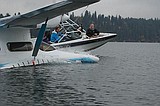
HAYDEN — After two years evolving and building his 47th unique aircraft, SkiGull, Burt Rutan towed it to Bob Williams’ beach next to Honeysuckle on Hayden Lake Sunday for a series of water taxi tests that were conducted Sunday evening and Monday.