
Photographer captures brilliant Glacier starscapes
Samuel Wilson Daily Inter Lake | Hagadone News Network | UPDATED 10 years, 2 months AGO
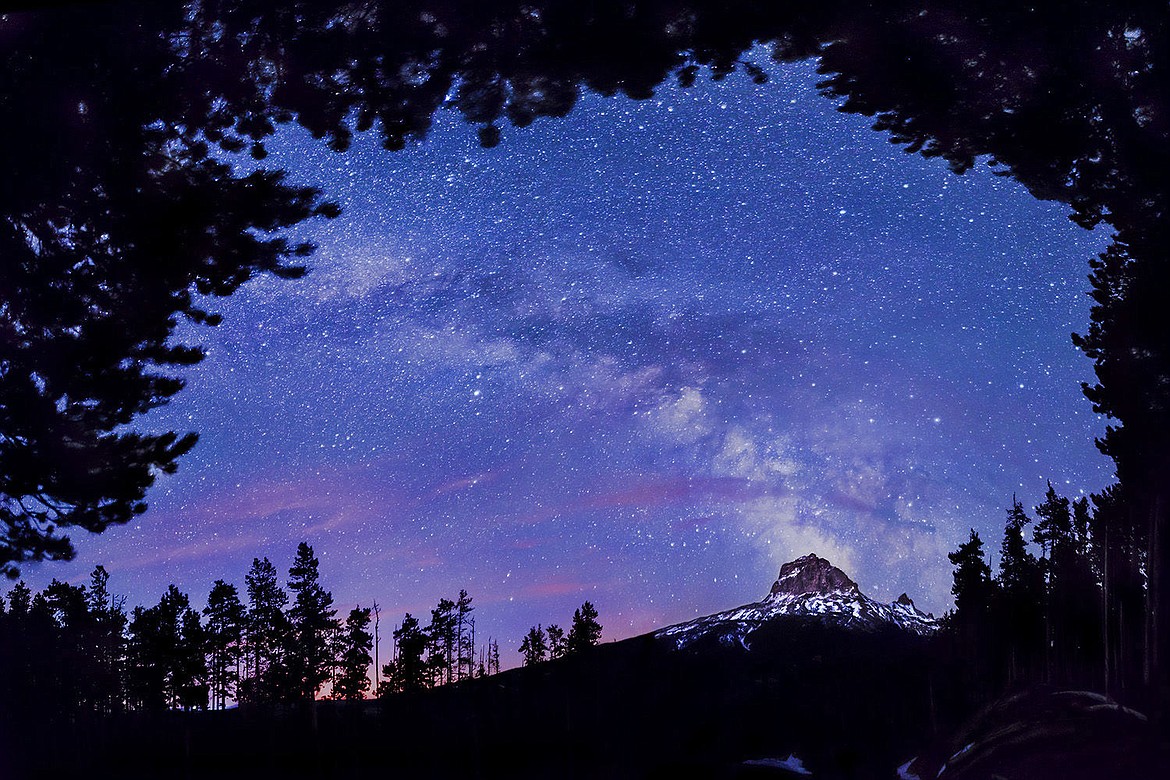
<p><strong>The Milky Way</strong> rises behind Chief Mountain like clouds from some ancient smoke signal.</p>
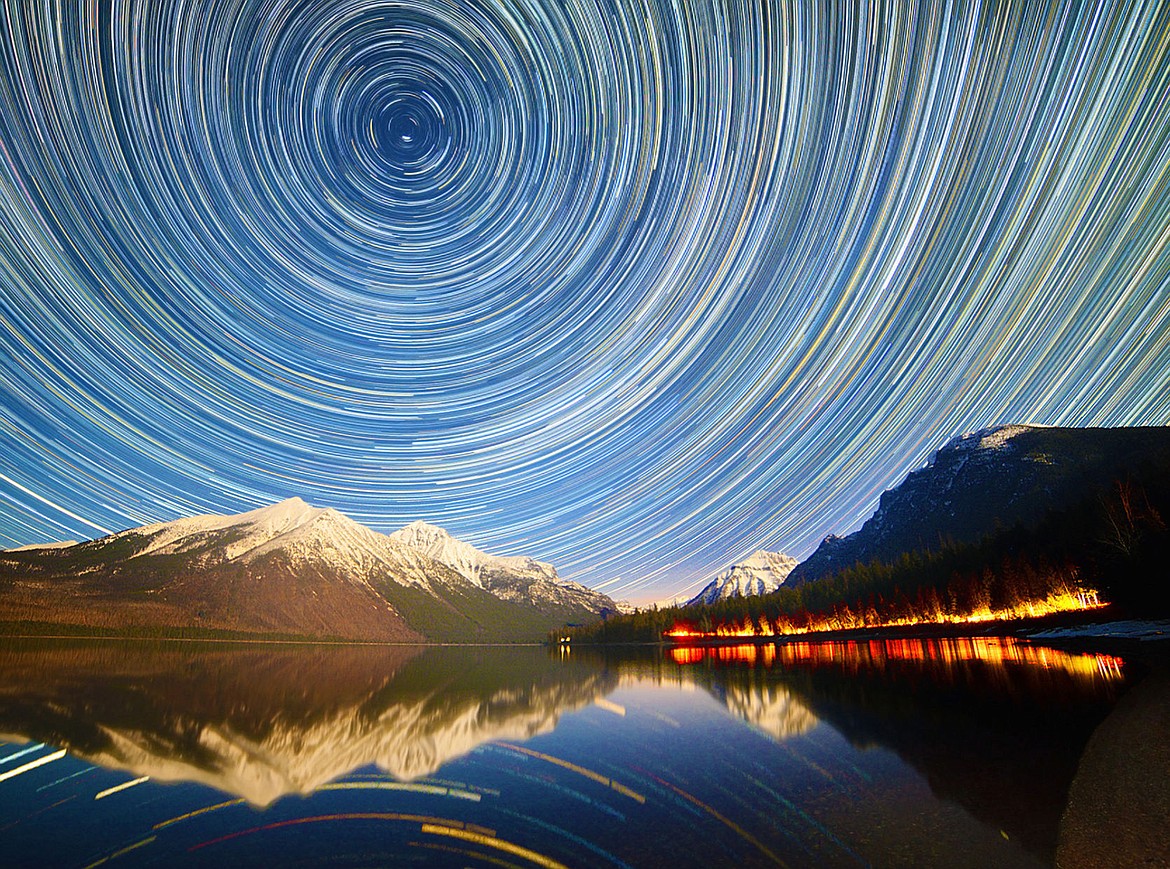
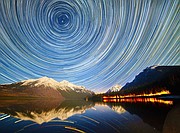
<p><strong>A sky full of stars</strong> appears to rotate around Polaris, the north star, in this three-hour time exposure over Lake McDonald in Glacier National Park. In reality, it's the earth's rotation that turns the star trails into circles.</p>
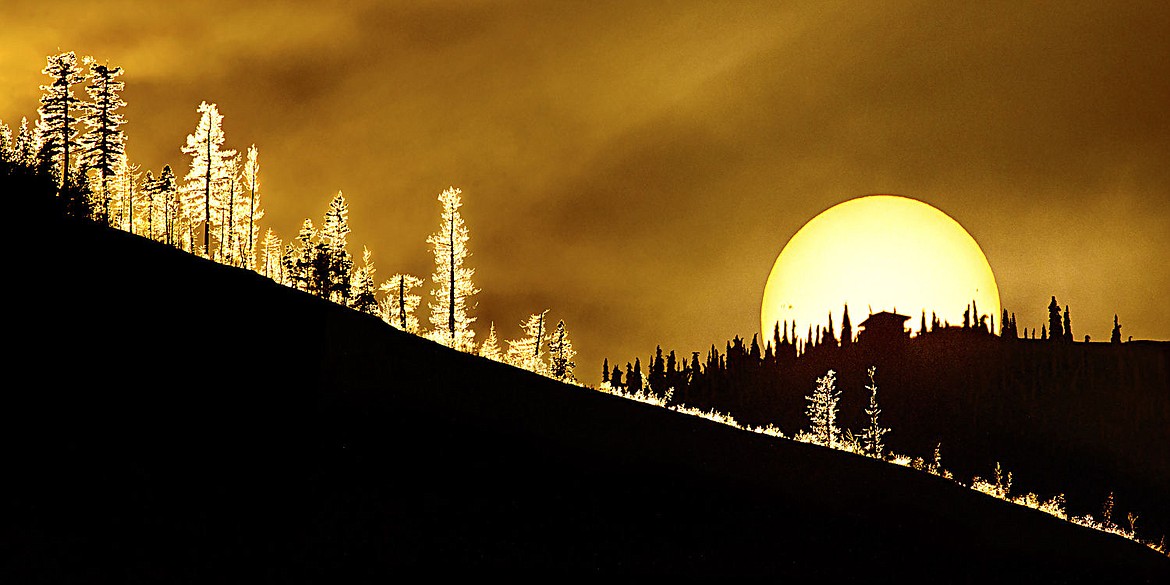
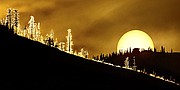
<p><strong>The New Year's Eve</strong> sunset in 2014 silhouettes the Huckleberry Mountain fire lookout and backlights a ridge of frost-covered trees. (The sun was safely photographed with an orange astronomer's filter).</p>
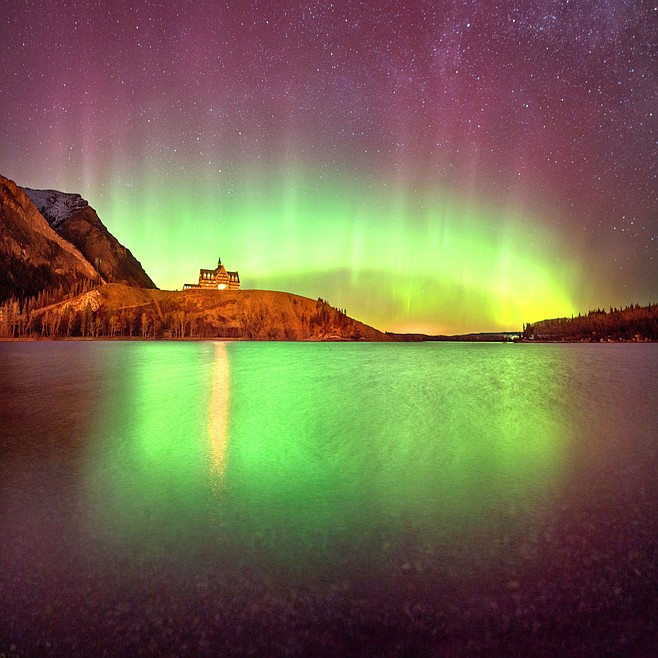
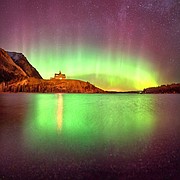
<p><strong>Most northern lights</strong> are caused by a burst of plasma from the sun, but this aurora over the Prince of Wales Hotel in Waterton Lakes National Park resulted from a rare wrinkle in the earth's magnetic field.</p>
Look at a nighttime satellite image of the United States and Montana appears as a desert of darkness with just a few scattered areas of light.
But to photographer John Ashley, it’s the absence of light that makes Montana a special oasis in a country where total darkness is increasingly scarce.
His new book, “Glacier National Park After Dark: Sunset to Sunrise in a Beloved Montana Wilderness,” is the product of three decades of work and contains myriad stunning photographs that capture the brilliance of the thousands of stars still visible in the skies above Glacier.
“Most of the people in the U.S. now live in places where they can’t see the Milky Way and can only see a couple stars at night,” Ashley says. “We take dark skies for granted in Montana, but a lot of people no longer have that and are willing to make the effort to find it.”
The book’s cover photo shows the Milky Way and countless other stars shimmering over Lake McDonald, as Comet Lovejoy streaks through the December sky above Mount Brown. The comet was present throughout the entire month, but only three of those nights were clear — and each was well below zero.
“I think being out there at 11 below zero at 2 a.m. on a moonless night qualifies as a bit extreme,” Ashley says. “You can’t be normal and want to do this stuff.”
Even as photographers go, Ashley is certainly not normal.
A FORMER photojournalist, he holds a biology degree from the University of Montana. That led him to a career with the National Park Service. Among the jaw-dropping landscapes he called his office was Glacier National Park, where he conducted the park’s first studies of its iconic harlequin duck population and became one of the foremost experts on the rare waterfowl.
In “After Dark,” his passion for studying the natural world shines through in his detailed, science-laden essays, where he delves into subjects ranging from the behavior of light waves to the geologic history of the moon to the anatomy of the human eye.
“Hopefully it’s attractive enough that people will pick it up without realizing they’re being educated,” he jokes.
Ashley’s two lifelong passions have served to inform one another in his work.
“Science and photography feed off each other,” he says. “Biology and animal biology teaches you extreme patience. Trying to separate any aspect of an animal’s life from all the other twisted parts of its life is an intellectual exercise and an exercise in patience. The same applies to nighttime photography. There’s a lot of math involved, a lot of calculation, meteorology, the weather in the mountains.”
Producing the dazzling images contained in “After Dark” required no shortage of patience. The long, cold nights spent in the Crown of the Continent posed some unique challenges. In extremely cold weather, camera batteries will die. In 40-mile-per-hour winds, tripods will shake. And in a park renowned for its wildlife, a bighorn sheep bugling nearby may cause enough vibration to destroy a delicately planned long-exposure shot.
In the case of one mountaintop excursion, Ashley remembers having to “act like a bullfighter” to keep a curious sheep from sending his camera and tripod skittering down a shale-laden scree slope.
Nights like that have been a staple of Ashley’s outdoors diet over the past 28 years, although he said he didn’t set out with the intent to turn it into a book. When he started, it was just part of his work as a photographer and as a biologist in the park.
“As I photographed the park over the years, I started noticing light trespass and light pollution around the periphery of the park,” he said. “That got me curious, so I started doing research and learning about light pollution.”
It’s an issue that he says plays out on multiple levels, from the individual health effects of keeping LED lights on at night to the ecosystem-wide impacts of light pollution on nocturnal animal behavior. Beyond his obsessive dedication to photography, many of the essays contained in “After Dark” reflect the extensive research Ashley has conducted on the issue.
He notes that within the United States, total darkness has become extinct in the night skies east of the Mississippi River, and two-thirds of the country’s children have never seen the Milky Way from their own back yards.
“Without realizing it, we have slowly pulled modern curtains across our most ancient view,” he writes. “We traded a palette of Van Gogh’s stars for a nearly barren night sky.”
As a scientist, Ashley appeals for “dark sky friendly” lighting and other measures by making a case grounded in benefits such as energy savings, tourism appeal and the low cost of keeping artificial light out of the sky.
But in the brilliance of his images, he appeals to a less concrete, more human connection to the celestial lights above.
“The stars at night, as far as I know, are the only things we have that link us to every human being that’s come before us,” he says. “We’ve all looked up and pondered at the stars. It’s a deep connection we have. ... There’s something about peering into a starry sky that reaches inside of us, that we can’t quite explain.”
Reporter Samuel Wilson can be reached at 758-4407 or by email at [email protected].
ARTICLES BY SAMUEL WILSON DAILY INTER LAKE
U.S. forest bill may require bonds
The U.S. House of Representatives on passed a bill on Thursday that would, in some cases, require groups and individuals to pay bonds before filing lawsuits against timber projects.
Paving offers new options for mountain road
Blacktail Mountain’s staying power through all four seasons may be getting a significant boost over the next few years.
Campfire starts blaze on Wild Horse Island
A five-acre wildland fire on the northwest shore of Wild Horse Island in Flathead Lake is under control after flaring up Wednesday afternoon from an unattended campfire.