
Painting, fabric arts subjects of winter museum classes
CHERYL SCHWEIZER | Hagadone News Network | UPDATED 10 years, 2 months AGO
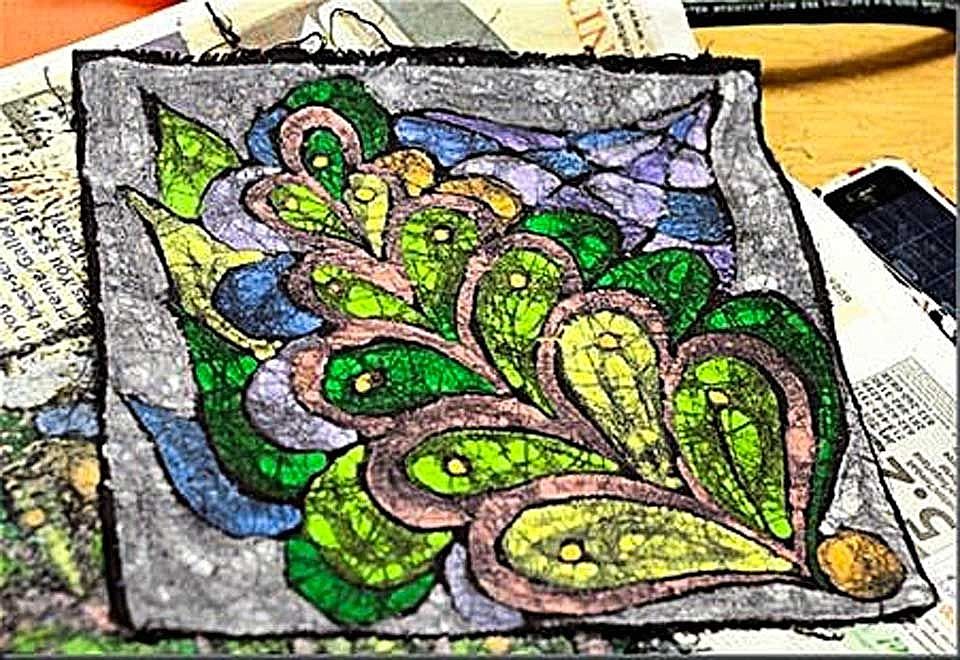
The art of batik will be among the winter classes at the Moses Lake Museum & Art Center.
Senior Reporter Cheryl Schweizer is a journalist with more than 30 years of experience serving small communities in the Pacific Northwest. She began her post-high-school education at Treasure Valley Community College and enerned her journalism degree at Oregon State University. After working for multiple publications, she has settled down at the Columbia Basin Herald and has been a staple of the newsroom for more than a decade. Schweizer’s dedication to her communities and profession has earned her the nickname “The Baroness of Bylines.” She covers a variety of beats including health, business and various municipalities. | January 7, 2016 5:00 AM
MOSES LAKE — Creating batik fabric art and painting selfies with pets will be among the classes offered at the Moses Lake Museum & Art Center in January and February.
The fold-and-dye techniques of batik will be the subject of two classes Jan. 16. The children’s class is scheduled for 10 a.m. to noon, with the adult class from 1 to 3 p.m., both at the museum classroom, 401 South Balsam. The children’s class is open to kids ages 7-12, and the adult class is open to people ages 13 and older.
Batik artists use materials called “resistants” to create a design, then dye the cloth, changing resistants and dyes as often as necessary. The technique dates back past recorded history, originating in Southeast Asia and Africa.
Kathaleen McFarland is the instructor. Cost is $25 per person, $22.50 for museum members.
A painting class for children, focusing on “bug art” as the subject, is scheduled for 10 a.m. to noon Feb 13. Kids The class is for children ages 7-12.
Participants will “spend the morning combining color and imagination. We’ll create a fun painting, maybe even two,” according a press release from the museum.
McFarland is the instructor. Cost is $20 per child, $18 for museum members.
Teens and adults can learn how to use wine corks to make a cork board at a class scheduled for 9 to 11 a.m. Jan 23. The class is limited to people ages 13 and older.
Shawn Cardwell is the instructor. Cost is $25 per person, $22.50 for museum members.
The “self-portrait with a pet” class is scheduled for 1 to 3 p.m. Feb. 13. The class is open to teens and adults ages 13 and older.
“Folk art will be our style. We’ll go through the process, step by step. Explore and exercise your creative side and walk away with a personal painting,” the press release said. Participants are asked to bring a photo of the pet if possible.
McFarland is the instructor. Cost is $20 per person, $18 for museum members.
All classes are in the museum classroom.
Advance registration is available. People can register at the museum or at the Moses Lake Parks and Recreation Department, 411 South Balsam St..
ARTICLES BY CHERYL SCHWEIZER
REC Silicon reports operating loss in 2025
MOSES LAKE — REC Silicon operating revenue dropped substantially in 2025 when compared with 2024, according to the company’s annual report released March 25. The company reported $78.2 million in operating revenue in 2025, compared with $140.8 million in 2024.
Open house for Moses Lake comprehensive plan Monday
MOSES LAKE — Moses Lake residents are being invited to learn more about and give their opinions on proposed updates to sections of the city’s comprehensive plan at an open house Monday at the Moses Lake Civic Center, 411 S. Balsam St.
Samaritan posts operating loss for first two months of 2026
MOSES LAKE — Samaritan Healthcare posted net revenue losses in January and February, and while hospital officials anticipated some red ink, the losses were larger than the budget projections. Samaritan posted an operating loss of about $1.4 million in February and about $486,500 in January.