
Oh deer! The fawns are here! Keep an eye out
Don Bartling Outdoor Writer | Hagadone News Network | UPDATED 9 years, 5 months AGO
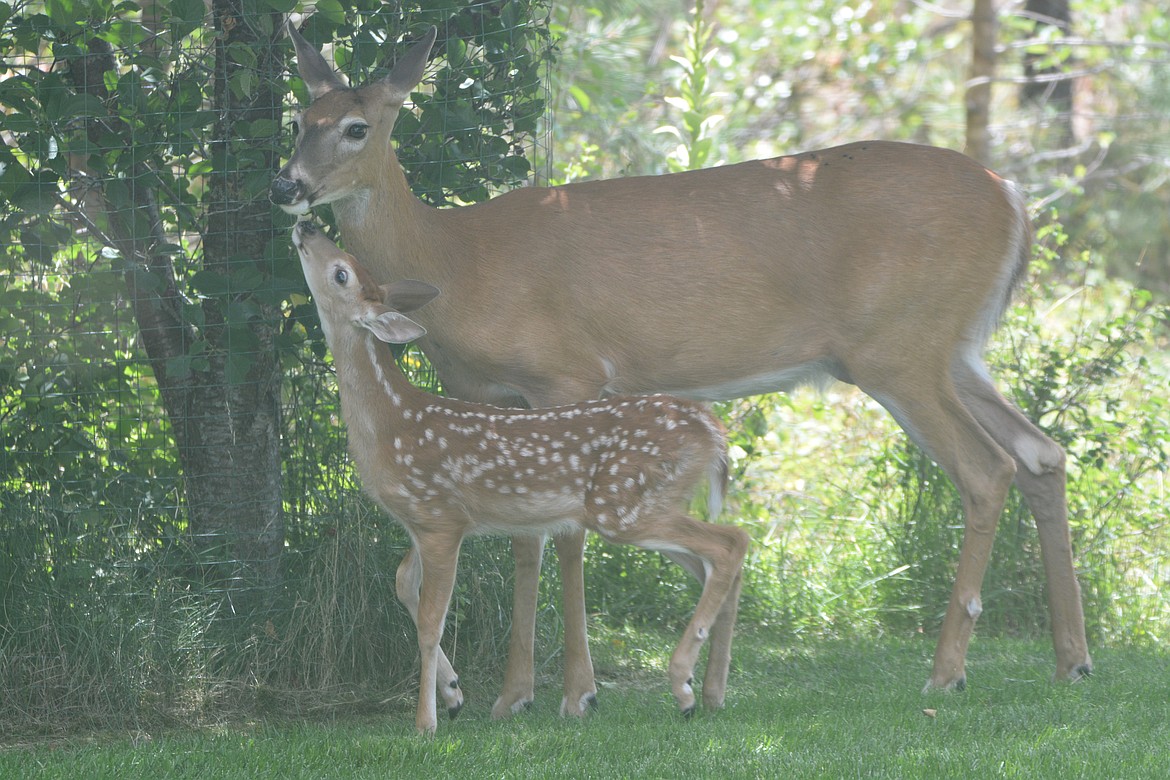
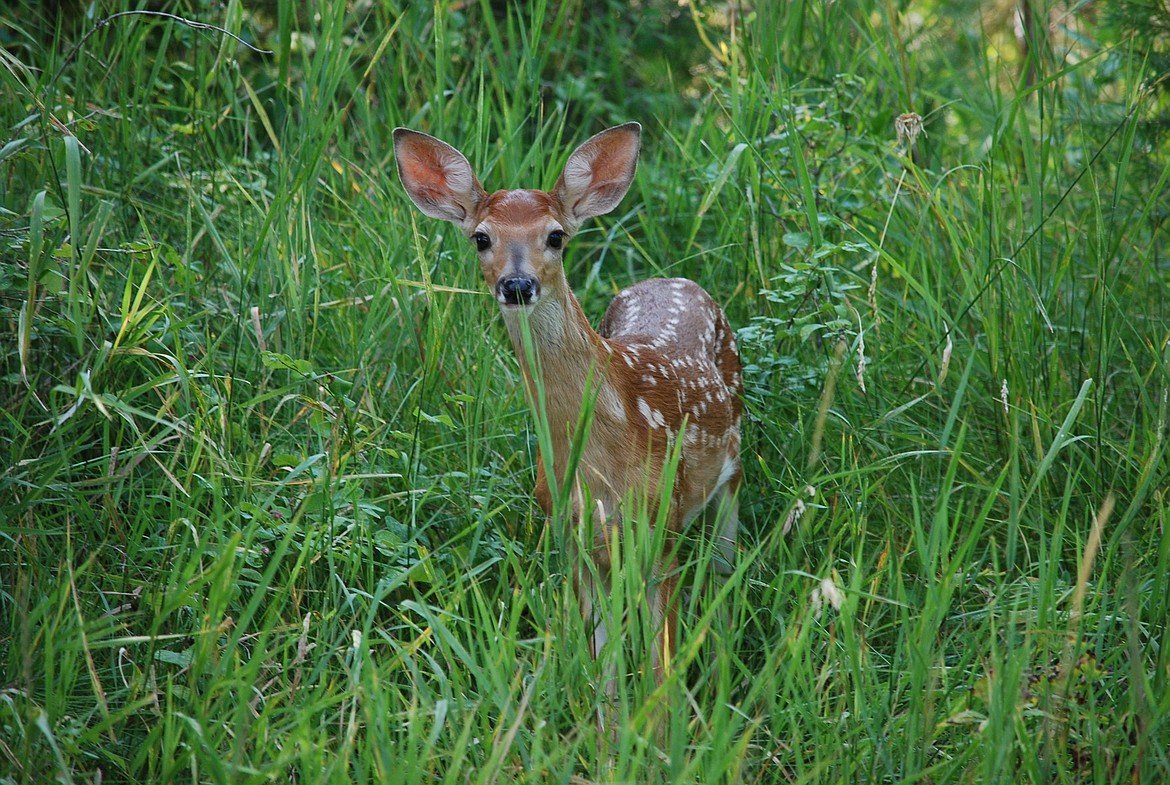
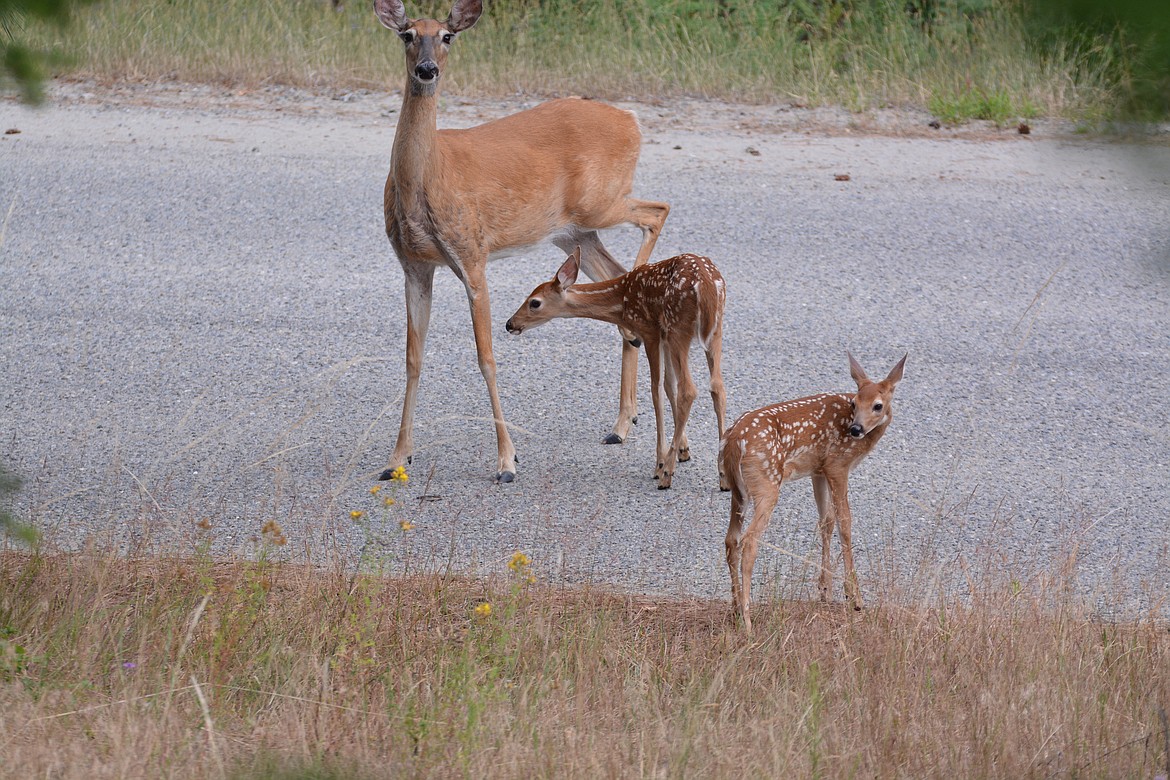


Everyone thinks whitetail deer fawns are cute and playful; and they are! Last week I was driving by the Kootenai River in western Boundary County when I had the good fortune of spotting a pair of Whitetail twin fawns with their mother beside the road in a grassy open area. They were only a few days old and had some difficulty in managing the terrain and running too safety, but were soon out of sight hiding in the grass and brush. The following morning I saw a single Whitetail fawn beside his mother, he appeared to be only hours old and had trouble walking and keeping up with her, but followed his mother’s lead and was soon gone from my vision, vanishing in the pine trees. I thought how wonderful it is to live in north Idaho where there is an abundance of wildlife and to appreciate their habitat.
By the end of June most of this year’s fawns are on the ground. A doe goes into estrus in the fall and usually gives birth approximately 200 days after conception. Both mule deer and whitetail doe’s deliver one to four fawns (normally two). A doe will usually produce a single fawn the first year she gives birth and then produce twins in following years.
The fawn, colored reddish with white spots for camouflage, weighs about 4 to 8 pounds at birth. There may be several hundred spots on the coat. The spots enable the fawn to camouflage itself, with the colors blending well with the surrounding natural environment. It must nurse within the first hour and stand within the first 12 hours. During early weeks of life, the fawn sees its mother only at mealtimes for feeding. A fawn generally loses its spots by the end of October of the same year it was born.
10 Fun Facts about Fawns
Newborn fawns typically can stand and nurse within 30 minutes.
Fawns are capable of walking within a few hours
Does generally move their fawns away from the birthing site within 3 hours
Does with twins typically hide them in thick cover in separate locations
Does usually remain within 100 yards of their fawns
Fawns spend 90 percent of their time bedded for the first weeks of their lives
Newborn fawns typically nurse 2 or 3 times daily; increasing to 6 to 8 times
Nursing times average 20 to 30 minutes
A 3-week-old fawn can outrun most danger
Twins are usually reunited and bed close to each other by 3-4 weeks of age.
For more articles visit www.naturallynorthidaho.com.
ARTICLES BY DON BARTLING OUTDOOR WRITER

Startled by a starling leads to a special moment
Last week I was driving on a gravel road by Myrtle creek when I noticed a 12 foot tall old tree stump or snag. It had been dead for years and had several round holes visible, seemingly the size to fit a bird. I started to study the tree when on the northwest side I saw two small yellow beaks and then two heads and soon another head trying to peek out. Just when I realized there were three young birds waiting for their mother to feed them the mother showed up, landed on the top of the old wooden tree and gave me a scolding. I was startled by her aggressive action. I was impressed with her shiny purple black feathers, long and pointed yellow bill and short tail. However, I quickly reviewed my “Birds of Idaho” book to discover that she was a European Starling. I was startled by a Starling!

The hum of hummingbirds a welcome sound in N. Idaho
For the past 15 years that my wife and I have lived in North Idaho we have enjoyed the wildlife of Boundary County including the migration of many birds. One of our favorite migrating bird is the hummingbird. Last May 1, we heard the welcoming humming helicopter sound of small wings by our west kitchen window. Fortunately the feeder was full and the hummingbird became busy eating the nectar. We don’t know if it was one of the same hummingbirds that had been to our property last year, but we would like to think so. Some studies and some scientist believe many hummingbirds return season after season to the same nesting and feeding area.

Oh deer! The fawns are here! Keep an eye out
Everyone thinks whitetail deer fawns are cute and playful; and they are! Last week I was driving by the Kootenai River in western Boundary County when I had the good fortune of spotting a pair of Whitetail twin fawns with their mother beside the road in a grassy open area. They were only a few days old and had some difficulty in managing the terrain and running too safety, but were soon out of sight hiding in the grass and brush. The following morning I saw a single Whitetail fawn beside his mother, he appeared to be only hours old and had trouble walking and keeping up with her, but followed his mother’s lead and was soon gone from my vision, vanishing in the pine trees. I thought how wonderful it is to live in north Idaho where there is an abundance of wildlife and to appreciate their habitat.