
American White Pelicans pay visit to Boundary County
Don Bartling Outdoor Writer | Hagadone News Network | UPDATED 9 years, 5 months AGO
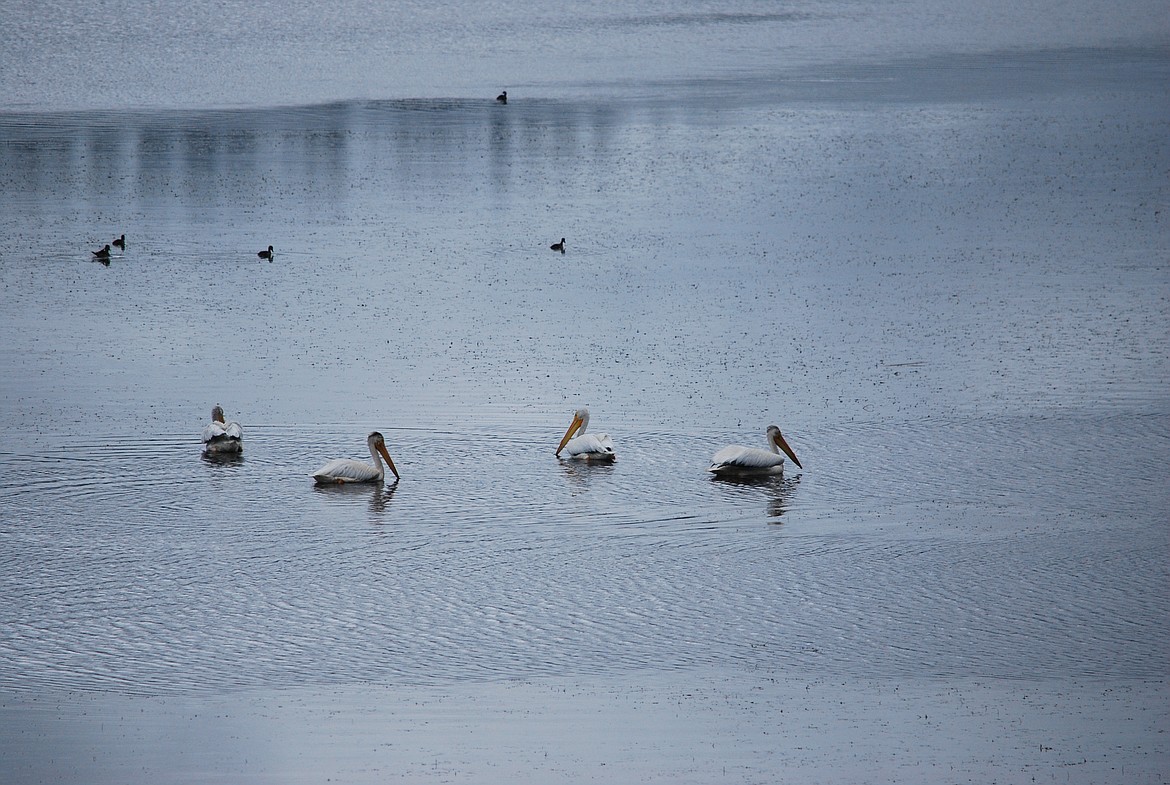
Photo by DON BARTLING American White Pelicans feeding on a shallow Boundary County pond.
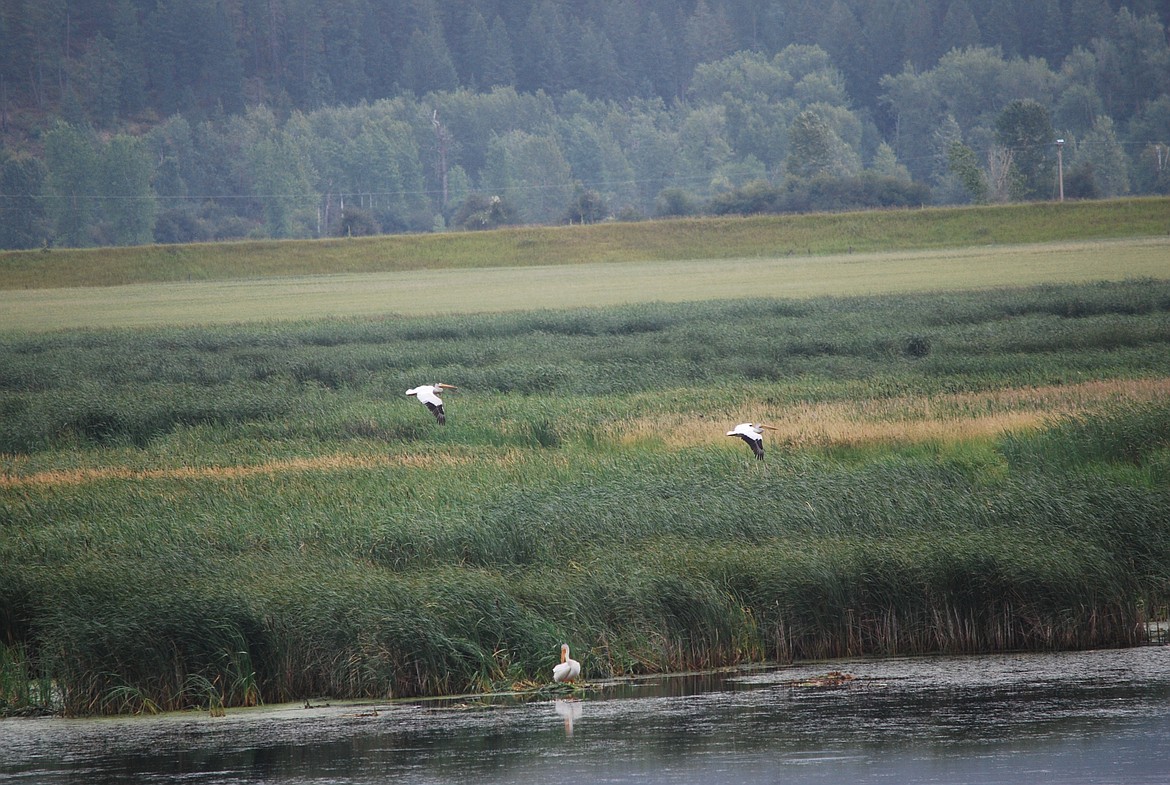
Photo by DON BARTLING Pelicans soaring majestically looking for small schooling fish on ponds beside the west side road.
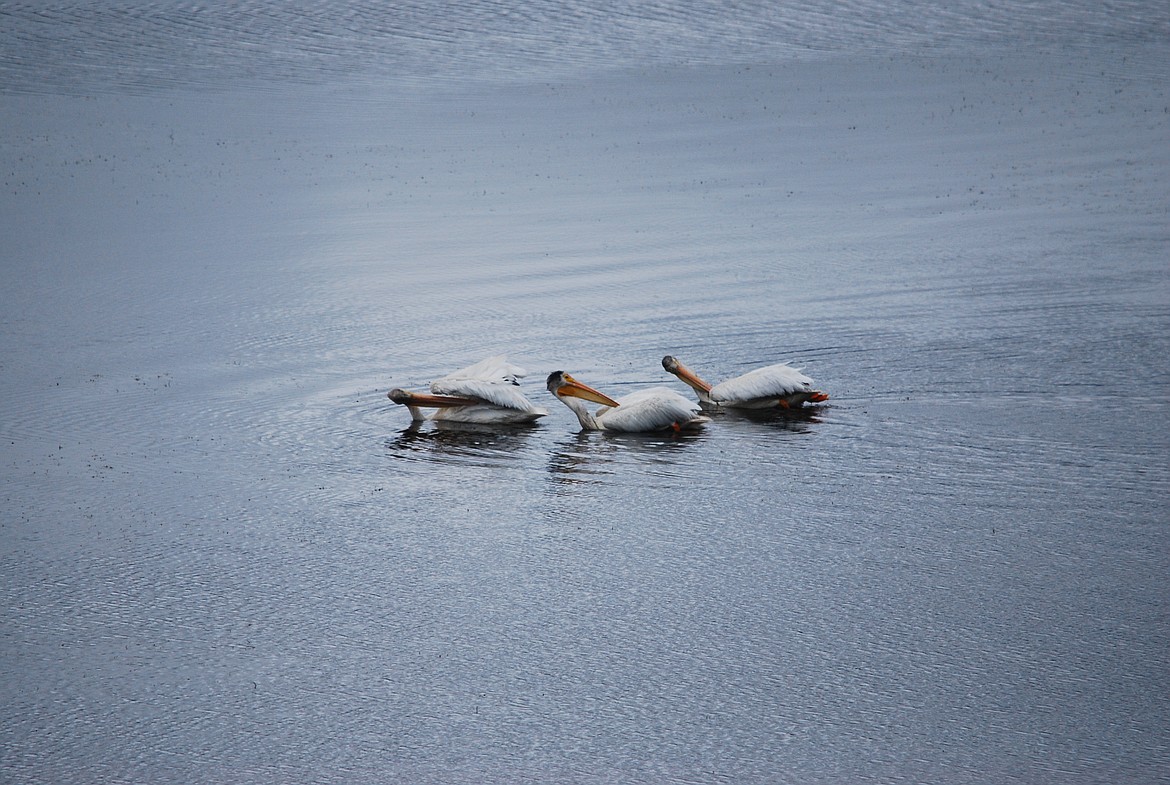
Photo by DON BARTLING Oh the advantages of a long bill!!
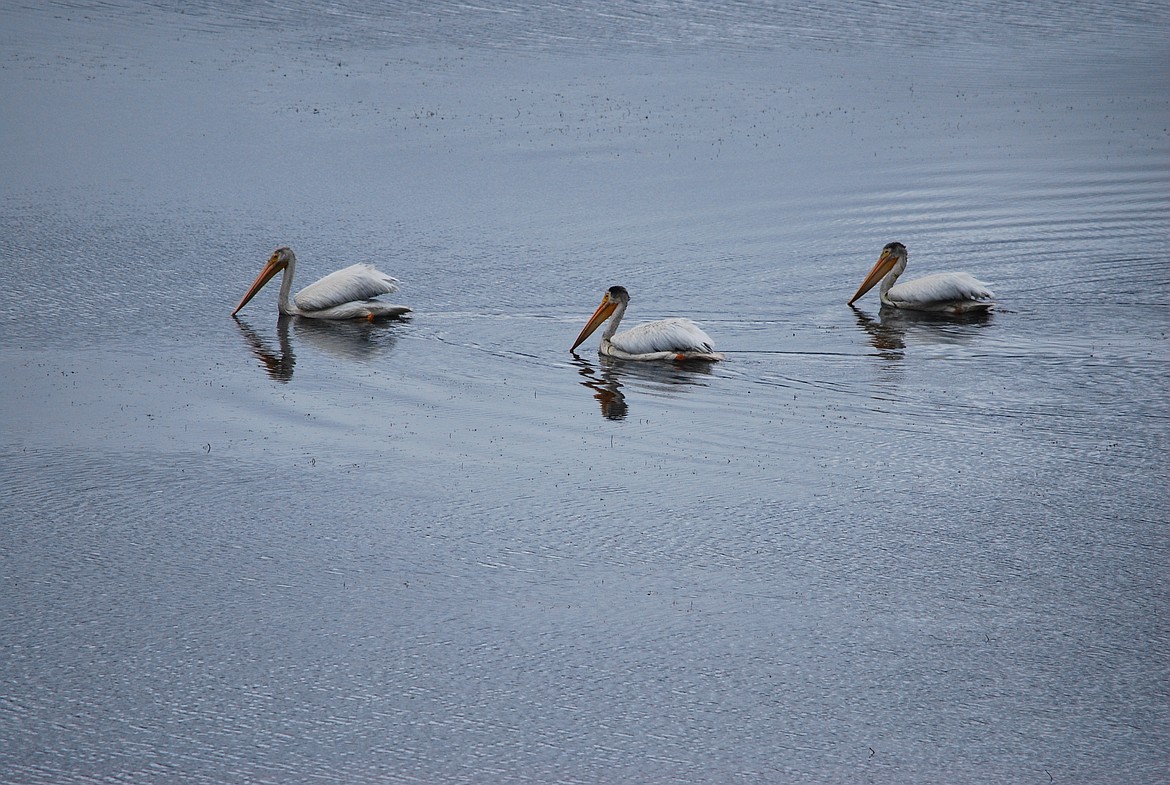
Photo by DON BARTLING White Pelicans focused for a fish snack.
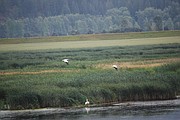
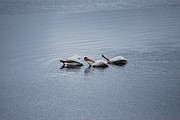
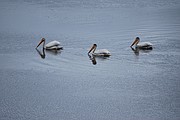
On a sight-seeing trip to Boundary/Smith Creek Wildlife refuge and a drive along the west side road with relatives from Colorado we had the good fortune to see several flocks of migrating American White Pelicans.
One of the largest North American birds with a wing-span up to 8 feet, the American White Pelican is majestic in the air. The birds soar with incredible steadiness on broad, white-and-black wings. Their large heads and huge, heavy bills give them a prehistoric look. On the water they dip their pouched bills to scoop up fish, or tip-up like an oversized dabbling duck. Sometimes, groups of pelicans work together to herd fish into the shallows for easy feeding. They are usually found on inland lakes in summer and near coastlines in winter.
The American White Pelican is a huge water-bird with very broad wings, a long neck, and a massive bill that gives the head a unique, long shape. They have thick bodies, short legs, and short, square tails. During the breeding season, adults grow an unusual projection or horn on the upper mandible near the tip of the bill.
They are snowy white with black flight feathers visible only when the wings are spread. A small patch of ornamental feathers on the chest can become yellow in spring. The bill and legs are yellow-orange. Immatures are mostly white as well, but the head, neck, and back are variably dusky.
Habitat
The American White Pelican is dependent on wetlands for its survival. It nests on islands in freshwater and saline lakes, foraging in shallow waters up to 30 miles or more away. It uses similar foraging sites during migration to its largely coastal wintering sites. Preferred winter habitats are shallow bays, inlets, and estuaries containing suitable prey and loafing sites; it also can be seen on man-made ponds and lagoons. They nest in colonies. Their voice is usually silent; grunts or croaks on nesting grounds.
Range/Migration
American White Pelicans segregate well into two separate geographic groups. Populations breeding east of the Rocky Mountains migrate south and east, mostly along river valleys, to winter along the Gulf of Mexico. Populations west of the Rockies migrate over deserts and mountains to the Pacific coast. Migration occurs mainly during daylight in flocks sometimes numbering in the hundreds, often flying in the familiar V-formation and using thermals when available. Fall migration is protracted, with individuals lingering on southerly breeding grounds as late as December in mild winters. Spring arrival on breeding grounds is as early as February in Nevada, March in Utah, and April in Wyoming, Montana and Idaho, usually before lakes but after rivers have thawed, providing some foraging sites even if nest sites are inaccessible.
Breeding
The American White Pelican is seasonally monogamous, pairing quickly after arrival at breeding sites. Courtship consists of circular flights over the nesting site, often with other individuals, and a variety of displays on the ground, including strutting, bowing, and head swaying. Sub-colonies form and grow as individuals are attracted and stimulated by the breeding activities of their neighbors. The nest is merely a shallow depression, the rim often barely sufficient to keep eggs and chicks from rolling out. Two eggs are laid; incubation is by both parents equally, in two-day shifts, and lasts about 30 days. The young are born naked and blind, but their eyes open within a day. Parents regurgitate food for the young, onto the ground or their feet at first; thereafter the parents regurgitate the food to their own bill tip, then only within their pouch, and finally only into their own throat, whence the young remove it. The first-hatched chick usually harasses its younger sibling until the latter dies of starvation. The parents alternate between brooding and foraging, switching daily, for about 17 to 25 days, after which the surviving young begin leaving the nests and forming creches (day nurseries) while both parents forage. Initially, the young return to their nests from the creches to eat and to be brooded at night, but as they get older they become less attached to the nest. The young take their first flights at about 9 to 10 weeks of age and leave the colony soon thereafter.
Diet/Feeding Behavior
Like all pelicans, the American White Pelican is primarily a fish eater. Its usual prey species are small schooling fish, but it also eats some bottom feeders; within the preferred size range, it is non-selective, taking prey purely on the basis of availability. It also takes salamanders and crayfish opportunistically. The species often uses a characteristic group feeding strategy wherein a flock will form a circle or semi-circle and, using coordinated bill dipping and wing beating, drive prey toward shore where it is more easily caught, scooping them into their pouches.
They also forage individually but with lower success; foraging behavior tends to shift toward cooperation when prey aggregations are located. It commonly forages at night during the breeding season, using tactile means of locating prey; daytime foraging is probably more visual. White pelicans never plunge-dives like the Brown Pelicans. Daily food intake of breeding adults may reach 40 percent of body mass. White Pelicans often steal prey from one another and from other species, especially diving birds in deeper waters.
Get out and enjoy the wildlife of Boundary County!!
For more articles visit www.naturallynorthidaho
ARTICLES BY DON BARTLING OUTDOOR WRITER
Startled by a starling leads to a special moment
Last week I was driving on a gravel road by Myrtle creek when I noticed a 12 foot tall old tree stump or snag. It had been dead for years and had several round holes visible, seemingly the size to fit a bird. I started to study the tree when on the northwest side I saw two small yellow beaks and then two heads and soon another head trying to peek out. Just when I realized there were three young birds waiting for their mother to feed them the mother showed up, landed on the top of the old wooden tree and gave me a scolding. I was startled by her aggressive action. I was impressed with her shiny purple black feathers, long and pointed yellow bill and short tail. However, I quickly reviewed my “Birds of Idaho” book to discover that she was a European Starling. I was startled by a Starling!

The hum of hummingbirds a welcome sound in N. Idaho
For the past 15 years that my wife and I have lived in North Idaho we have enjoyed the wildlife of Boundary County including the migration of many birds. One of our favorite migrating bird is the hummingbird. Last May 1, we heard the welcoming humming helicopter sound of small wings by our west kitchen window. Fortunately the feeder was full and the hummingbird became busy eating the nectar. We don’t know if it was one of the same hummingbirds that had been to our property last year, but we would like to think so. Some studies and some scientist believe many hummingbirds return season after season to the same nesting and feeding area.

Oh deer! The fawns are here! Keep an eye out
Everyone thinks whitetail deer fawns are cute and playful; and they are! Last week I was driving by the Kootenai River in western Boundary County when I had the good fortune of spotting a pair of Whitetail twin fawns with their mother beside the road in a grassy open area. They were only a few days old and had some difficulty in managing the terrain and running too safety, but were soon out of sight hiding in the grass and brush. The following morning I saw a single Whitetail fawn beside his mother, he appeared to be only hours old and had trouble walking and keeping up with her, but followed his mother’s lead and was soon gone from my vision, vanishing in the pine trees. I thought how wonderful it is to live in north Idaho where there is an abundance of wildlife and to appreciate their habitat.