
Avoid the dog days of summer. Kootenai Humane Society offers tips for pet owners
Coeur d'Alene Press | UPDATED 9 years, 6 months AGO
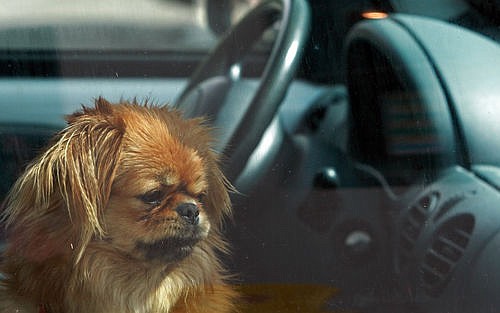
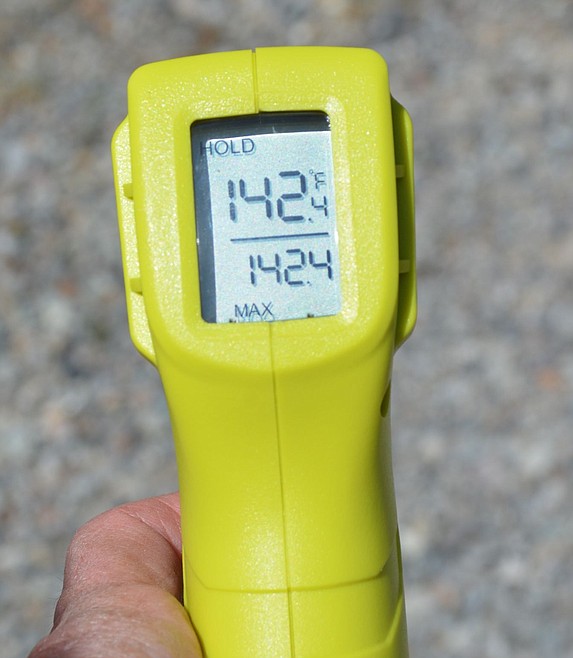
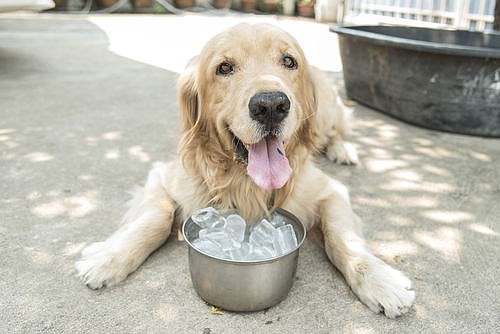
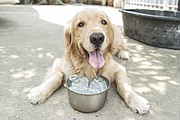
People generally avoid walking barefoot on pavement on a hot summer summer day. It’s not only painful, but prolonged exposure will result in a burn. Yet unwittingly, humans take their dogs for a stroll on scorching hot pavement without thinking about the pain they are inflicting on their pet.
“We have tested gravel in our parking lot at 142 degrees when the air temperature was only 92 degrees,” said Vicky Nelson, director of development for the Kootenai Humane Society. “Our pets can’t tell us it hurts, so we need to remember the conditions before walking them.”
The summer months can be uncomfortable—even dangerous—for pets and people. It's difficult to cope with rising temperatures.
Here are some basic tips for pet safety in the summer.
Never leave your pets in a parked car
Even with the car running and air conditioner turned on. On a warm day, temperatures inside a vehicle can rise rapidly to dangerous levels. On an 85-degree day, for example, the temperature inside a car with the windows opened slightly can reach 102 degrees within 10 minutes. After 30 minutes, the temperature will reach 120 degrees. Your pet may suffer irreversible organ damage or die.
Watch the humidity
"It's important to remember that it's not just the ambient temperature but also the humidity that can affect your pet," says Dr. Barry Kellogg, VMD, of the Humane Society Veterinary Medical Association. "Animals pant to evaporate moisture from their lungs, which takes heat away from their body. If the humidity is too high, they are unable to cool themselves, and their temperature will skyrocket to dangerous levels—very quickly."
Taking a dog's temperature will quickly tell you if there is a serious problem. Dogs' temperatures should not be allowed to get over 104 degrees. If your dog's temperature does, follow the instructions for treating heat stroke.
Limit exercise on hot days
Take care when exercising your pet. Adjust intensity and duration of exercise in accordance with the temperature. On very hot days, limit exercise to early morning or evening hours, and be especially careful with pets with white-colored ears, who are more susceptible to skin cancer, and short-nosed pets, who typically have difficulty breathing. Asphalt gets very hot and can burn your pet's paws, so walk your dog on the grass if possible. Always carry water with you to keep your dog from dehydrating.
Don't rely on a fan
Pets respond differently to heat than humans do. (Dogs, for instance, sweat primarily through their feet.) And fans don't cool off pets as effectively as they do people.
Provide ample shade and water
Any time your pet is outside, make sure he or she has protection from heat and sun and plenty of fresh, cold water. In heat waves, add ice to water when possible. Tree shade and tarps are ideal because they don't obstruct air flow. A doghouse does not provide relief from heat—in fact, it makes it worse.
Cool your pet inside and out
Whip up a batch of quick and easy DIY peanut butter popsicles for dogs. (You can use peanut butter or another favorite food.) And always provide water, whether your pets are inside or out with you.
Keep your pet from overheating indoors or out with a cooling body wrap, vest, or mat (such as the Keep Cool Mat). Soak these products in cool water, and they'll stay cool (but usually dry) for up to three days. If your dog doesn't find baths stressful, see if she enjoys a cooling soak.
Watch for signs of heatstroke
Extreme temperatures can cause heatstroke. Some signs of heatstroke are heavy panting, glazed eyes, a rapid heartbeat, difficulty breathing, excessive thirst, lethargy, fever, dizziness, lack of coordination, profuse salivation, vomiting, a deep red or purple tongue, seizure, and unconsciousness.
Animals are at particular risk for heat stroke if they are very old, very young, overweight, not conditioned to prolonged exercise, or have heart or respiratory disease. Some breeds of dogs—like boxers, pugs, shih tzus, and other dogs and cats with short muzzles—will have a much harder time breathing in extreme heat.
How to treat a pet suffering from heatstroke
Move your pet into the shade or an air-conditioned area. Apply ice packs or cold towels to her head, neck, and chest or run cool (not cold) water over her. Let her drink small amounts of cool water or lick ice cubes. Take her directly to a veterinarian.