
Painted turtles bask in Boundary County sun
Don Bartling Outdoor Writer | Hagadone News Network | UPDATED 9 years, 10 months AGO
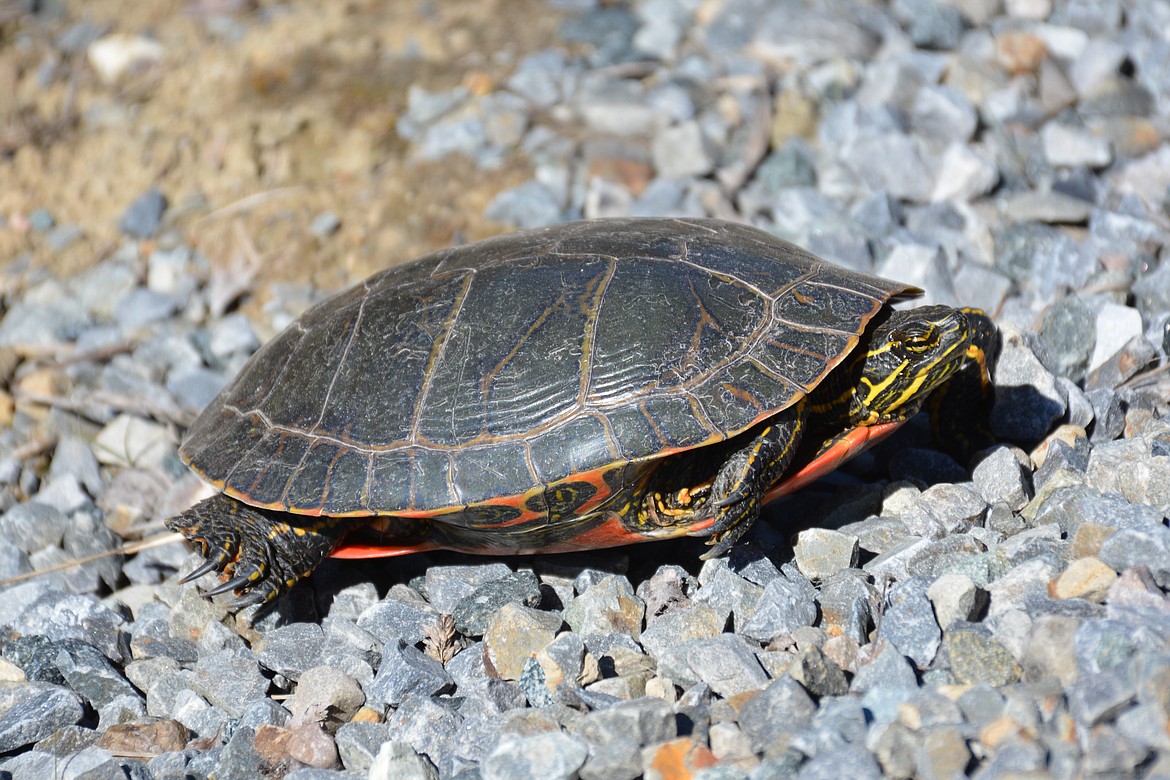
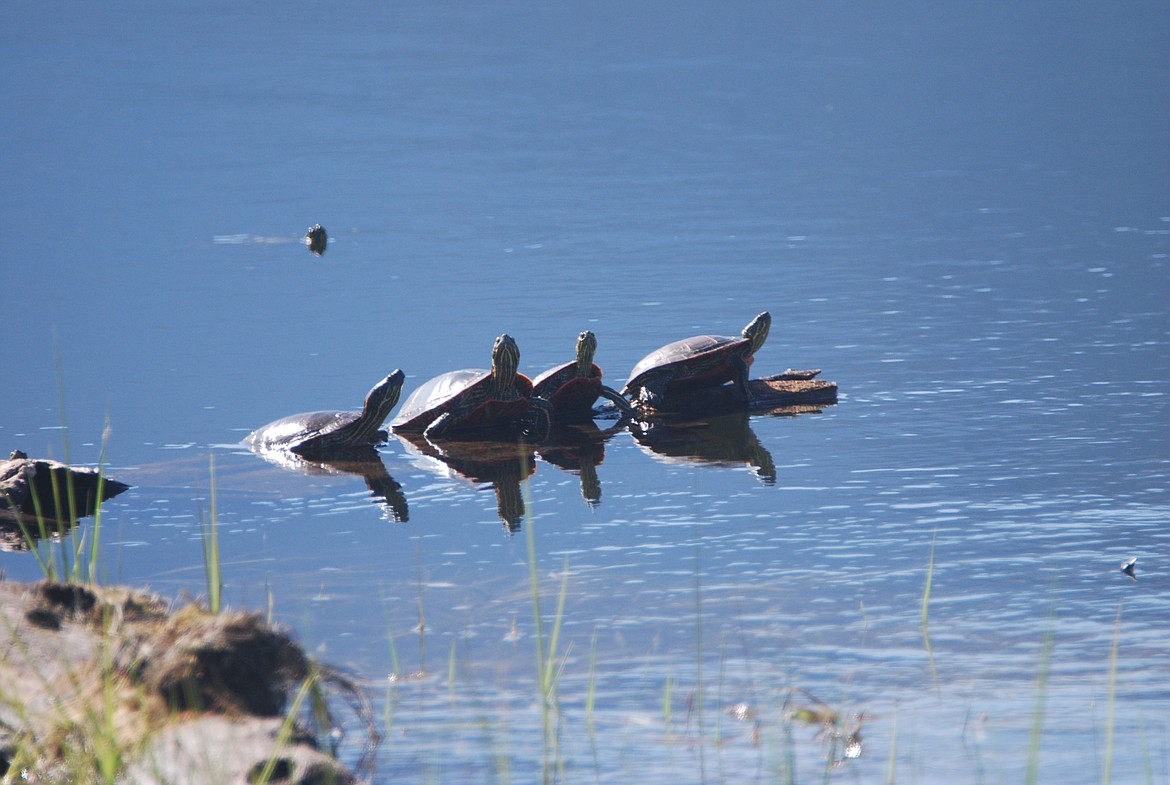
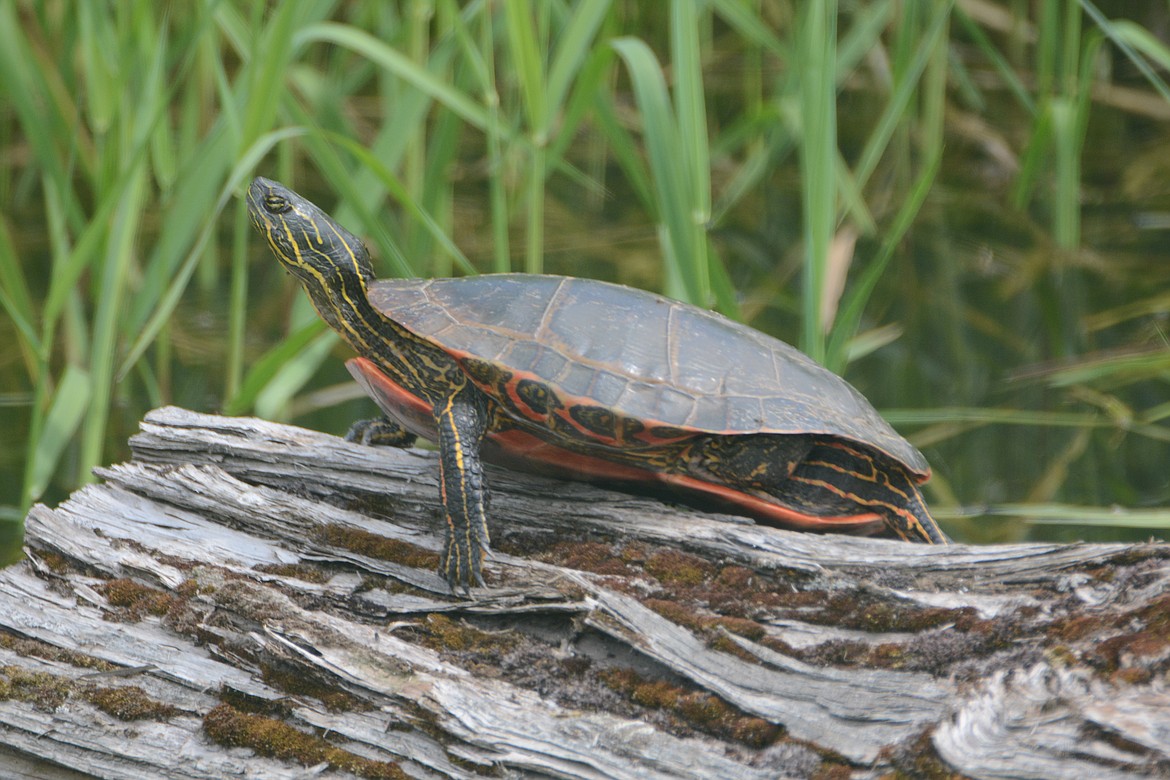

On a trip around the Kootenai National Wildlife Refuge this past week-end I noticed a number of turtles basking in the sun on a log in a pond of water beside a gravel road. On a closer look I noticed the turtles were painted turtles. The Painted Turtle is the only species of turtle that occurs naturally in Idaho so identifying them is simple. Although, due to escaped pets and introduced species, one must become familiar with the general characteristics of Painted Turtles to avoid confusing them with such turtles a Box Turtles, and Red-eared Sliders (both common pet species).
Painted Turtles are easily recognizable, their plastron (under-side) neck and limbs are so brightly colored with yellow or red lines and markings that the common name seems very appropriate. The carapace (hard upper shell of a turtle) is usually a solid olive to black color but some light yellow vertebral lines can be seen. The plastron or underside of the Painted Turtle contrasts sharply with the dull top shell. Like all turtles, Painted Turtles lack teeth, and have ridges or row of tubercules parallel with the margin of the jaw.
WHERE THEY LIVE
Painted Turtles are found in shallow lakes and ponds, as well as in slow moving streams and rivers. Aquatic vegetation is usually present and the turtles will use this as cover to escape capture; the body of water will often have some floating debris, fallen logs and branches that provide basking sites for the turtles. Except for the female traveling over land for egg-laying, Painted Turtles are seldom found on land.
All of the Painted Turtles I observed were found in slow-moving, shallow water (streams, marshes, ponds, lakes, or creeks) containing soft bottom, suitable basking sites, and aquatic vegetation. The turtles are known to colonize seasonally-flooded areas near permanent water.
LIFE CYCLE OF A PAINTED TURTLE
Post hatching, the off springs rest in the yolks of the egg itself. The younger ones grow rapidly. In fact the development of the females are faster than that of the male. Mating may occur in fall and spring. Most nesting occurs from late May to early July. Females often produce more than 1 clutch per year, clutch size ranges from 8-19 eggs. Generally hatchlings winter in their nest and emerge in spring. In the case of the Painted Turtle, the males reach their sexual maturity between 2 to 4 years while females between 6-10 years. The life span of a Painted Turtle is usually around 20 years.
The Painted Turtle hibernates in water in bottom mud and is most active during the day from March through October, though warm weather may stimulate activity in other months. Evening activity on land may occur during nesting. Eggs and hatchlings incur high mortality from various predators. Population density in ponds and lakes varies greatly; some areas may contain up to several hundred individuals, other areas may have a few as a dozen. They search for food on water bottom or among aquatic plants.
As summer progresses and you enjoy the out of doors remember that as the water warms, turtles spend less time basking in the sun and more time searching for food. They feed on aquatic food, bugs, algae, insects, earthworms and snails.
During the night, Painted Turtles swim down to the bottom of their pond and rest in the mud.
The turtles feel comfortable there because the water has a more constant temperature than the night air and there is less fear of predators.
For more articles, visit www.naturallynorthidaho.com
ARTICLES BY DON BARTLING OUTDOOR WRITER
Startled by a starling leads to a special moment
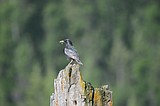
Last week I was driving on a gravel road by Myrtle creek when I noticed a 12 foot tall old tree stump or snag. It had been dead for years and had several round holes visible, seemingly the size to fit a bird. I started to study the tree when on the northwest side I saw two small yellow beaks and then two heads and soon another head trying to peek out. Just when I realized there were three young birds waiting for their mother to feed them the mother showed up, landed on the top of the old wooden tree and gave me a scolding. I was startled by her aggressive action. I was impressed with her shiny purple black feathers, long and pointed yellow bill and short tail. However, I quickly reviewed my “Birds of Idaho” book to discover that she was a European Starling. I was startled by a Starling!

The hum of hummingbirds a welcome sound in N. Idaho
For the past 15 years that my wife and I have lived in North Idaho we have enjoyed the wildlife of Boundary County including the migration of many birds. One of our favorite migrating bird is the hummingbird. Last May 1, we heard the welcoming humming helicopter sound of small wings by our west kitchen window. Fortunately the feeder was full and the hummingbird became busy eating the nectar. We don’t know if it was one of the same hummingbirds that had been to our property last year, but we would like to think so. Some studies and some scientist believe many hummingbirds return season after season to the same nesting and feeding area.

Oh deer! The fawns are here! Keep an eye out
Everyone thinks whitetail deer fawns are cute and playful; and they are! Last week I was driving by the Kootenai River in western Boundary County when I had the good fortune of spotting a pair of Whitetail twin fawns with their mother beside the road in a grassy open area. They were only a few days old and had some difficulty in managing the terrain and running too safety, but were soon out of sight hiding in the grass and brush. The following morning I saw a single Whitetail fawn beside his mother, he appeared to be only hours old and had trouble walking and keeping up with her, but followed his mother’s lead and was soon gone from my vision, vanishing in the pine trees. I thought how wonderful it is to live in north Idaho where there is an abundance of wildlife and to appreciate their habitat.