
A 'cross' you may want to bear
Coeur d'Alene Press | UPDATED 9 years, 2 months AGO
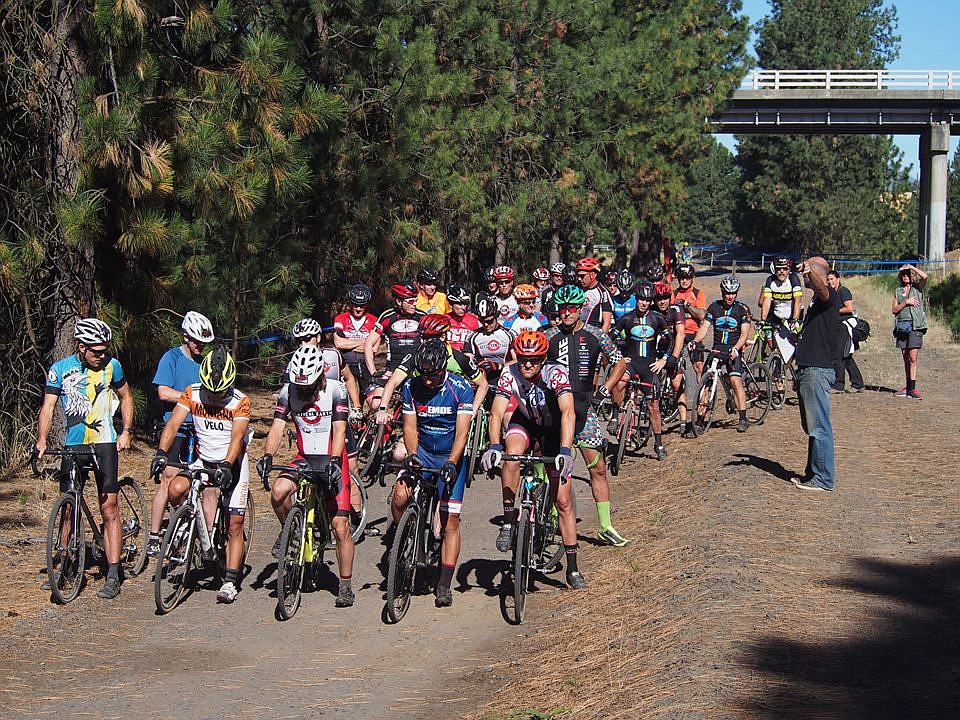
A ‘cross’ you may want to bear
Inland Northwest Cyclocross Series heats up Coeur d’Alene on Sunday
Cyclocross combines the techniques of mountain biking, road cycling and hiking to provide one of the best workouts (and competitions) on two wheels.
Whether you’re taking part or just spectating, the action can be very intense.
I’ve been lining up and mashing the pedals at the start of cyclocross races for three years now, and the anticipation, exhilaration, perseverance and post-race reflection are at the same levels now as they were when I began competing.
Participating in cyclocross runs the gamut; many opt to dress up in some themed outfit and just enjoy a nice ride through the course. Others take it up and try to get the hang of the many disciplines (taking corners efficiently, doing bike carries over obstacles and up hills, setting up passes of slower competition and accelerating out of slow sections).
The last category is the cyclocrossers who either have the natural ability (or have spent years honing their skills) to cover a course in very quick lap times.
Any given race will have participants from these levels, enabling spectators the chance to see how riders will attack specific sections of the course very differently.
Unlike road cycling, most cyclocross riders are more tuned into the course than their competitors. Road cycling, referred to a “rolling chess match” requires riders to simultaneously monitor their own race strategy while analyzing and predicting the strategy and fatigue level of their competition. In road cycling, the fastest rider doesn’t win as often as the smartest rider. Cyclocrossers tend to let the race play out, keeping to their strategy (either starting off quick to build up a lead, or lay back and then pounce when the time is right). However, accidents and equipment problems pop up, and the racer then must show some resilience to get to the finish as quick as possible.
Cyclocross racers are used to adapting, and races are run in all sorts of weather. A two-day race at the Coeur d’Alene course was run in near-80-degree temperatures, while others in late October or November can be wet by muddy, rainy conditions, snow or freezing winds. Through it all, the racers soldier on, knowing that the concentration required for competition will cancel out any misery handed out by Mother Nature.
The Coeur d’Alene Cyclocross Course is a blend of singletrack treed sections, long, straight stretches, a steep downhill and a run up (where riders must dismount and either carry their bikes or push them to the top). Spectators can roam alongside most of the 2-mile-long course between Riverstone and Hubbard Avenue and view the action.
If you see the racers bending down and squeezing the tires of a teammate or competitor, it’s because cyclocross allows for different tire pressures and tire treads and widths. A racer wants to run the lowest pressure possible (for better traction in the corners) while trying to avoid pinch flats from riding over hard or sharp objects. The debate between running clinchers (tires with inner tubes) versus tubeless tires is ongoing.
By the end of the day Sunday, winners from each classification will be crowned and hopefully new participants and spectators have gained a better understanding of what it takes to ride over the hills and through the woods.