
A dime bag of prevention
Bethany Blitz | Hagadone News Network | UPDATED 9 years, 6 months AGO
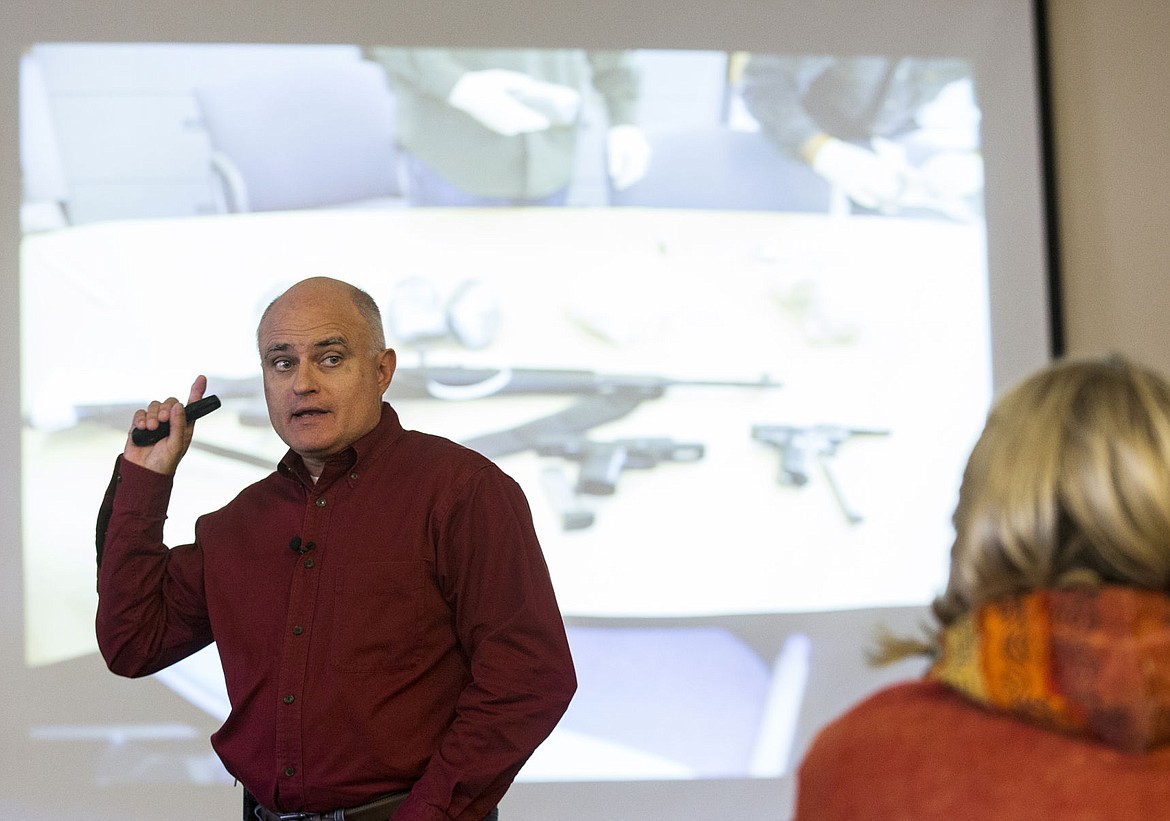
<p>Monte Stiles speaks Friday at a Kootenai County Substance Abuse Council Lunch and Learn meeting about the need for drug prevention, drug policy, law enforcement, youth leadership, and corporate training to maintaining safe communities.</p>
A diverse group of community members listened intently to the man walking passionately about the room as he described horrors, made jokes and told his story of why drug education and prevention is essential.
People in health care, pain management programs, youth programs and many other professions that see a lot of drug abusers attended the program hosted by the Kootenai County Substance Abuse Council.
The council received a grant this year from the Idaho Office of Drug Policy to conduct quarterly programs about drug prevention and education. Friday was the first of the programs held at St. Pius X Catholic Church, and it focused on why drug prevention works.
The next program, Dec. 9, will focus on street drugs and drug trends. People can sign up by going to kcsac.net. Each program comes with a $5 lunch.
Tracy Lang and her partner, Emily Cox, found the event on Facebook and decided to come. Lang is a nurse at Kootenai Health and sees a lot of drug-addicted patients. She said she came to the event because she wanted to learn more about contemporary drug prevention strategies.
Cox is a wellness coach and is “straight edge.”
“I’m here to support what I believe in,” she said.
Both women have family members who are or have been addicted to and dependent on drugs/alcohol.
Monte Stiles, a nationally recognized speaker on drug policy, presented to about 50 community members about how and why drug education is effective.
He started the presentation by sharing how he became a speaker in the first place. He used to be a federal prosecutor in Boise and saw all kinds of criminals go through the system.
No matter the crime, Stiles said about 80 percent of the cases he saw, no matter the crime, the defendants said their decisions were influenced by some sort of substance abuse. He became passionate about solving problems from their roots, which to him meant drug prevention.
He shared stories and photos of horrible, drug-related situations he encountered when he supervised an Organized Crime/Drug Enforcement Task Force as an assistant U.S. attorney for the state of Idaho.
“I was as close to the drug world as you can get without being a drug person,” he said. “The biggest problem in prevention is that people are numb to these things and they only know a little bit. It’s hard to do drug prevention in a world that doesn’t want to know about it.”
In 2010 he became aware of a legislative bill to legalize marijuana in Idaho. He deeply opposed the bill, but his job prevented him from actively doing anything about it, let alone voice his opinion on it. So, he made the decision to leave his job and start doing advocacy.
The presentation greatly focused on the effect drugs and drug culture have on children.
Part of his lecture was showing how he leads by example. He talked a lot about how he instilled his own values in his kids and how important parental influences are on a child’s life style.
“Parents who abuse and sell drugs, their judgment goes away, they can’t take care of their kids, they don’t recognize the environment they put them in,” he said. “Can you imagine anything you wouldn’t do for a child in that kind of environment?”
The last part of the afternoon was dedicated to talking about the misunderstood dangers of marijuana and about the successes of education in changing the public’s mind about unsafe trends or products.
Stiles detailed how drug cartels work and spoke about how legalizing marijuana actually provokes drug dealers instead of denies them customers like everyone thinks.
“Legalizers want you to believe that drug education has failed and we should give it up,” he told his audience. “These people are liars. They want you to have no faith in prevention and to not trust police because they will make a lot of money.”
Stiles went on to highlight cigarettes, wearing seatbelts, tanning beds and wearing helmets as topics where the public’s mind has been changed due to education.
“Education does work,” he said.
After the event, he told The Press, “I wanted this to be more about being healthy citizens than against anything else. Sometimes in order to do that you have to point out the consequences of those bad choices.”
ARTICLES BY BETHANY BLITZ
Never forgotten
The events of Sept. 11, 2001 made their mark on the U.S. with unforgettable force.
Protect the victims
Groups push to address issue of human trafficking in the region
According to Jessica Tschida, founder of the Coeur d’Alene chapter of the Coalition to Abolish Human Trafficking in the Inland Northwest, human trafficking is the fastest growing criminal industry in the world.

Windermere lends Children's Village a hand for cleanup
When Janet Davis told the kids at Children’s Village the volleyball court there would be repaired and usable again, the youngsters jumped up and down and screamed in excitement.