
'Lost City of Z' an engrossing, slow-burn adventure
Coeur d'Alene Press | UPDATED 9 years, 4 months AGO
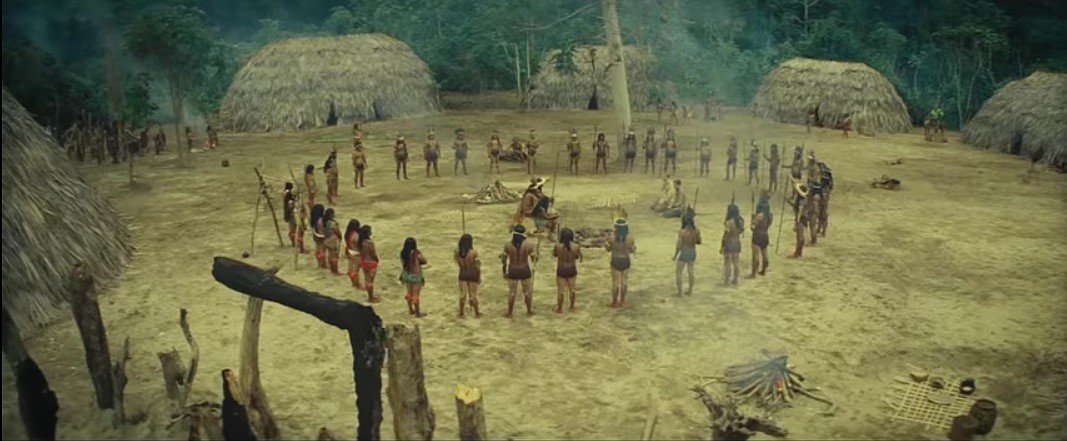
Photo source/LOSTCITYOFZ.COM A scene from the movie “Lost City of Z,” opening in theaters today.
Much of the praise heaped onto writer/director James Gray’s “The Lost City of Z” compares the film to landmark cinema adventures like “Lawrence of Arabia” or Werner Herzog’s “Aguirre, the Wrath of God.”
That praise should still serve as a warning to modern moviegoers — “The Lost City of Z” isn’t an adventure filled with propulsive action set pieces. For as much as the film depicts the perils of the Amazon in the early 20th century, it also serves as a quiet, contemplative piece on how one man’s obsession upended his family, colleagues and the preconceived notions of class dynamics.
Gray, fresh off the excellent 2013 drama “The Immigrant” with Marion Cotillard, demonstrates impressive restraint in the sprawling story of British explorer Percy Fawcett, a man who ventured several times into the Amazon in search of an ancient lost city.
Fawcett’s journeys have been consolidated for the narrative, and the film finds equal time to explore his family life, as well as his time in the trenches during World War I. It all seems like too much on paper, but Gray’s focus on Fawcett’s determination becomes the backbone of his multi-decade excursions.
Fawcett is played by Charlie Hunnam, an actor who hasn’t shown much prowess outside his TV work on “Sons of Anarchy.” Hunnam tends to be stiff in roles where his characters are either underwritten or subdued, and his performance seems to be going that way again in the film’s seemingly sluggish first act.
Eventually Hunnam subtly turns in some of his best work, and he uses his “bland” reputation as a setup for the heavier dramatic lifting later in the film. The opening moments in “Lost City” serve a greater purpose, as Fawcett’s dour status in the British military becomes an anchor for his glory and redemption. The over-familiar early scenes with his wife, played by Sienna Miller, act as a measure for how their marriage evolves after Fawcett leaves her and their children for years at a time.
Danger awaits in the jungle, and “Lost City” plays the struggles with sickness, hostile natives and, yes, even piranha as moments of dread rather than thrills. Predictably, Gray’s film is exquisitely shot, with the jungle taking on dreamlike qualities as the story evolves. History spoils the inevitable result of Fawcett’s pursuits, but the film becomes such a compelling depiction of impassioned pursuit that the facts in the end matter considerably less than the journey getting there.
A couple of strong supporting performances help to better define Fawcett’s motivations. Robert Pattinson is barely recognizable as Fawcett’s loyal right-hand-man in the Amazon, and Angus Macfadyen plays explorer James Murray, who proves to be a foil in more ways than one after he joins one of Fawcett’s expeditions. Current Spider-man Tom Holland also pops in as Fawcett’s grown son.
As historical accuracy goes, viewers can dig into the book in which the film is based, as well as many conflicting accounts of Fawcett’s 1925 expedition. Gray has been up front about dulling Fawcett’s real-life character shortcomings (he was a huge racist), and the movie works better both narratively and thematically with Fawcett as the good guy.
Those looking for Indiana Jones-style thrills won’t be supplied by “The Lost City of Z.” A better recent comparison is “The Revenant,” though Gray’s film provides much more story meat and social context than Leonardo DiCaprio’s survival tale. There are also no CGI bears. “Lost City” gives us the adventure but lets the story breathe enough to be about something more than a guy looking for pottery in the jungle. His journey is relatable, even universal, to the modern world and how we all struggle to claim a piece of it.
“The Lost City of Z” opens today in Coeur d’Alene.
- • •
Tyler Wilson can be reached at [email protected].