
Spring is here it just HAS to be!
Coeur d'Alene Press | UPDATED 8 years, 7 months AGO
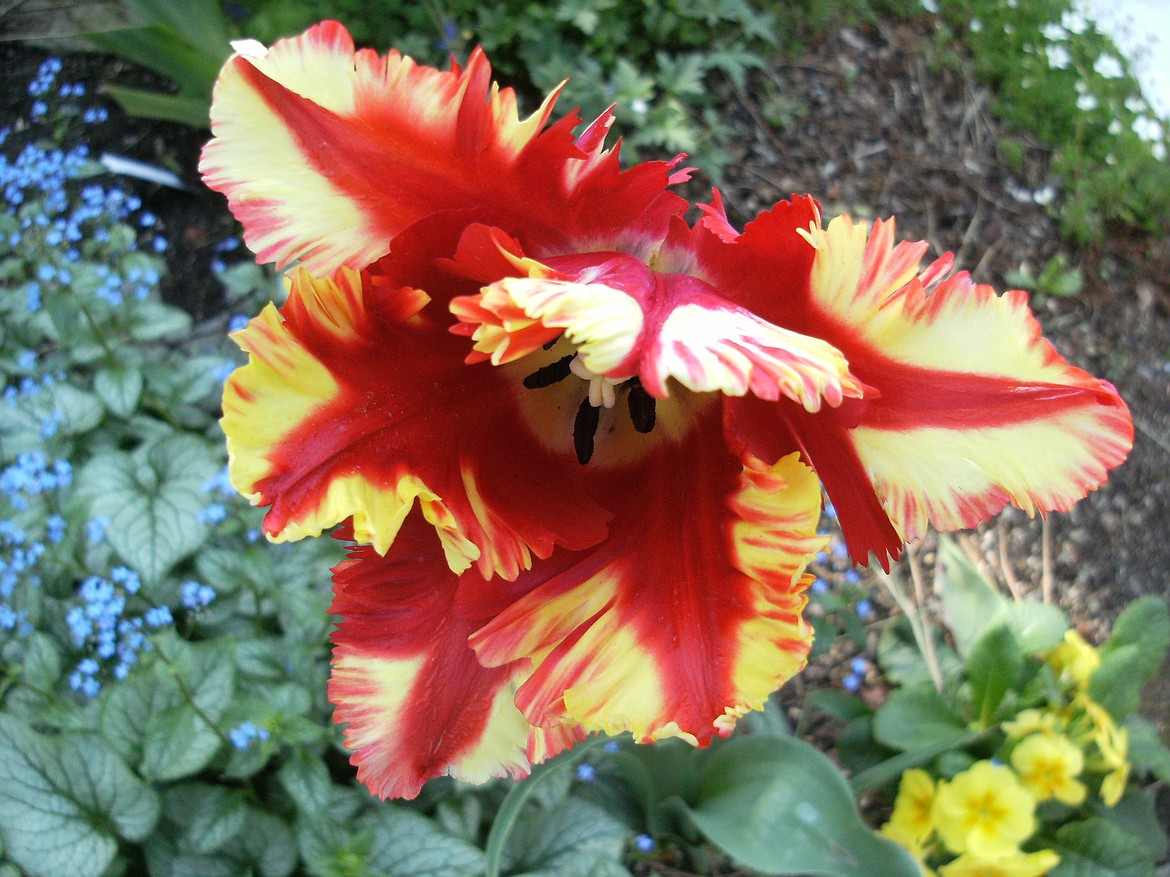
ELAINE CERNY/Special to The Press One of my favorite parrot tulips.
According to the calendar, we’ve now passed Arbor Day. If that doesn’t mean spring is here at last, I give up. It does look like spring as things are blooming right and left with everything from the tiniest spring bulb to the tallest flowering tree. A great reward after a long, cold, snowy, wet winter.
A bit of care is needed to get those tulips, daffodils and other spring bulbs ready to bloom again next spring. Leave the foliage intact for several weeks after blooming. Carefully dig some bulb fertilizer around each plant soon after it’s done flowering. These two steps will go a long way toward next spring’s flowers.
Irises are not heavy feeders but they will still appreciate an application of fertilizer now. This will make a big difference in the size and number of flowers produced.
Here is a quick and simple explanation of the 3 numbers on fertilizer bags:
- N stands for nitrogen, needed for leaves and grass.
- P is for phosphorous, needed for flowers, fruit and root growth.
- K is for potassium which is good for overall plant growth.
So, you can easily see that you need to spread a mainly nitrogen product for lawn grass and one with a high phosphorous number for flowers. Potassium is good for everything.
The wrong fertilizer on a plant can seriously affect its ability to grow and perform as it should. For example, never over spray lawn fertilizer onto flower beds. You will end up with wonderful leaves, but very few flowers, if any.
Remember the golden rule of applying fertilizers. “Not enough, is always better than too much.”
Are you scratching your head, wondering if you should try to save that Easter lily? The big question is whether or not they’re hardy here. It seems they may be, meaning they are borderline hardy. If you want to give them a try, keep them in a sunny window until about mid-May and then plant them in a sunny location which is well drained. They may come back next year and they may not. Even if they do, they won’t be blooming at Easter. They will revert to their normal bloom time of late summer.
I was thrilled to see the first hummingbird at one of my feeders on April 22. That’s a week later than average. I guess we weren’t the only ones waiting for spring. Another first of the season visitor showed up the same day: a gorgeous goldfinch. Other folks are also seeing the spring birds starting to arrive.
If you have seeds that may or may not still be viable, there’s an easy way to test them. Spray water on a paper napkin. Place 10 seeds on it, roll it up and put it into a plastic bag. Seal the bag and keep in a warm spot. Check occasionally. The number that germinate tells you the percentage that are still viable.
Here’s an even quicker way to test large seeds. If you have large seeds like peas, beans and corn left over from last year, an easy way to test for their viability is to fill a shallow pan with water and pour the seeds in. If they sink, they’re fine. If they float, toss them.
Sometimes when the list of yard tasks seems to be awfully long, this could be our slogan: “I don’t grow anything in my garden but tired.”
- • •
Elaine Cerny has gardened most of her life, starting in 4-H. She has belonged to garden clubs in three states and is currently serving as secretary for the River City Gardeners Club in Post Falls. Her column appears in The Press every other Sunday from early March until late October.