
Net impact: Nobody knows
Coeur d'Alene Press | UPDATED 8 years AGO

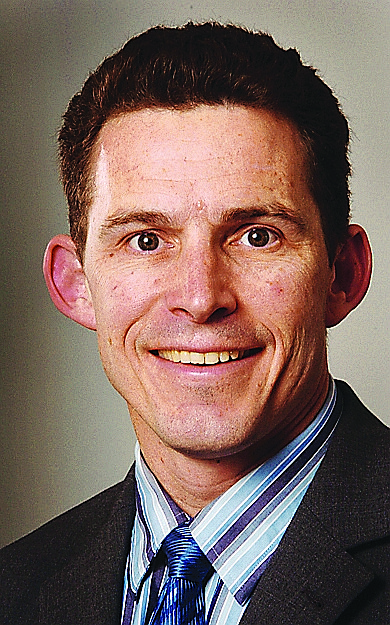
JAKE PARRISH/Press Nick Smoot is the founder of Innovation Collective and a Coeur d'Alene native. He is photographed here on July 6, 2016 in the old Elks building on Lakeside Avenue that will eventually be the location of the Innovation Collective headquarters.
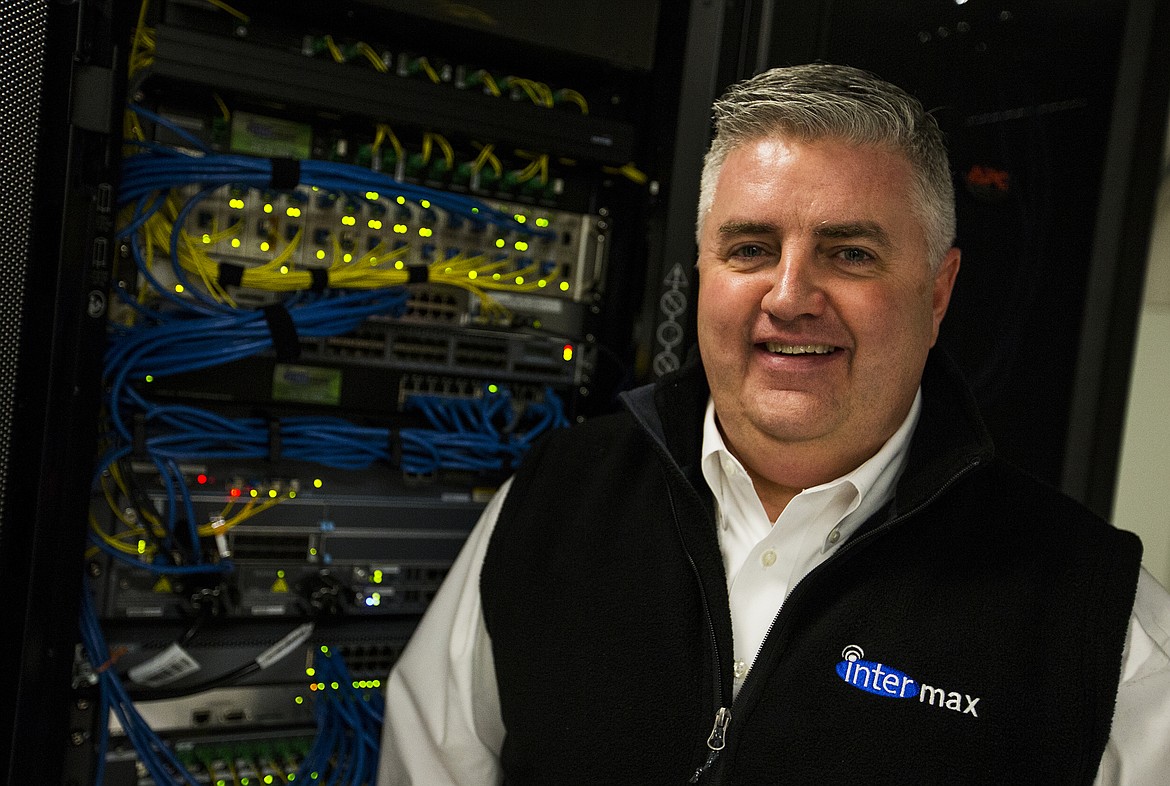
One of the local businessmen who could be most impacted by the FCC’s net neutrality decision is Mike Kennedy. Kennedy is in his 12th year as president of Intermax Networks, a local telecommunications company that provides internet services, data, voice, fiber and more. (LOREN BENOIT/Press)



There’s nothing neutral about this fight.
The vanilla-sounding term “net neutrality” is packed with political TNT that pits regulators and anti-regulators against one another, Democrats on the left, Republicans on the right, and every other American who sends a text message or downloads a college lecture or emails a business colleague or searches a website somewhere in between.
What is net neutrality? In a July 2014 Cd’A Press analysis, Hayden resident and longtime internet expert Uyless Black explained:
“Net neutrality means the companies that provide internet services — such as Comcast, Netflix, Google, Verizon, and AOL — treat all traffic on the internet the same way. There is no discrimination based on traffic from a company or an individual. There is no discrimination on the amount and/or type of traffic sent through the internet. This means all individuals and organizations have equal access to the internet’s bandwidth.”
But a definition is one thing. Unknown impact is another.
What’s got everybody so excited — good excited and worried excited — is the Federal Communications Commission’s expected vote this month to do away with Obama-era regulations that were designed to keep the internet, well, neutral. In a two-part analysis/opinion series, Black weighed in on the subject Saturday and today in The Press. Other opinions abound.
“The Internet Is Dying,” proclaimed a New York Times headline on a recent tech column. “Repealing Net Neutrality Hastens That Death.”
Robert M. Rutledge, CEO of Spectrum, which provides cable service in the greater Coeur d’Alene area, is quoted as saying the FCC plan will “spur investment in and the deployment of the next generation of broadband.”
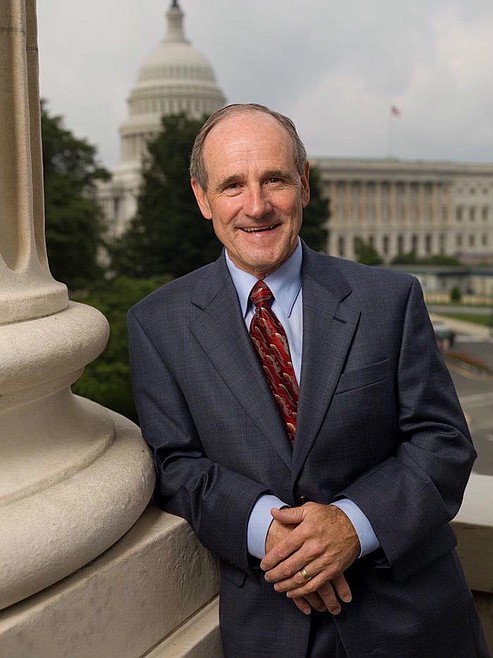
U.S. Sen. Jim Risch stands on that side of the battlefield.
In a phone interview with The Press, the Idaho Republican who chairs the Senate Committee on Small Business and Entrepreneurship issued a bold prediction on the impact the FCC’s rollback of net neutrality regulations will have on Idaho businesses and on rural Idahoans.
“I don’t think anybody’s going to notice it,” he said.
Risch is all for eliminating the regulations, a predictable stance to anyone paying attention a couple of years ago.
“I didn’t think the regulations should have been put on in the first place,” he said, “so obviously, I don’t have any problem with them coming off.”
The former governor, lieutenant governor and state legislator explained that the companies operating internet traffic fall into two groups: “One is telecommunication companies, and the other is not,” he said.
The telecommunication companies are regulated by the FCC, while the nots, he noted, aren’t.
“So before you talk about whether you’re going to regulate or not regulate, you’ve got to have a level playing field and get them both on the same playing field,” he said. “You either gotta say, ‘All internet companies are regulated,’ which they aren’t now, or say that the telecommunications companies, when they’re doing business, are not regulated.”
That, he said, is what FCC Chairman Ajit Pai is pushing.
“My position is that the government ought not to be involved in it,” Risch said. “The technology is changing so quickly that we need to let the marketplace work as it has worked since the internet started, and keep the government out of it.
“There have been a lot of allegations of things that could happen, but so far, we haven’t seen examples of that, and that’s because of the competition out there. It’s entirely possible that the competition will level the playing field for all customers and all businesses across the industry.”
One prominent local entrepreneur and technology leader isn’t so sure. Nick Smoot, founder of the Innovation Collective in Coeur d’Alene, said his biggest concern with a neutrality rollback is access and speeds.
“It’s already hard enough to make sure rural markets have good internet speeds, and now the providers will be able to sell ‘fast lanes,’” Smoot told The Press. “On top of that I’m concerned about giving providers the ability to block content or certain apps if I don’t pay them more.”
So is the internet doom and gloom scenario forecast by net neutrality proponents the end of internet life as we know it?
“Will we survive? Yes,” Smoot said. “Do I like having a former Verizon lawyer [Pai] proposing a rule that gives Verizon more power and ability to monetize the internet and push out small content providers? No.”
Ever the entrepreneur, Smoot offered his own solution: “I say we build a new internet.”
Neutering net neutrality likely won’t have a dramatic impact on one heavy user contacted by The Press. Dr. Charles Buck, an associate VP who oversees University of Idaho-Coeur d’Alene, said UI, UICDA and North Idaho College all use a dedicated fiber network for their internet traffic.
“This is high capacity and substantially not subject to control by a third-party vendor,” he said.
Therefore, eliminating net neutrality probably won’t hurt UI operations, Buck predicted. Not directly, anyway.
“Unfortunately, indirect impact on UI and higher ed in general is likely with elimination of net neutrality,” he added. “With increasing use of online content... internet bandwidth becomes rate limiting.”
Buck gave the example of a student with a bargain internet access package having insufficient bandwidth to receive a real-time video feed for a course. Even for static online content, Buck said downloads could “harken back to 2002-era waiting times to get content. That will be super annoying for students now used to relatively instantaneous content delivery to their devices.”
Like many others, Buck is concerned about the potential “pay to play” setup deregulation might unleash.
“The loss of regulation by the FCC will allow commercial internet service providers to restrict bandwidth from certain sites or apps so that only those who pay more will have access,” he said. “At least some of the big ISPs [Internet Service Providers] say they won’t do that...”
Buck did not finish the sentence.
One of the local businessmen who could be most impacted by the FCC’s decision is Mike Kennedy. Now in his 12th year as president of Intermax Networks, a local telecommunications company that provides internet services, data, voice, fiber, and IT managed services, Kennedy weighed in with measured skepticism. He sees distinct potential for Sen. Risch’s leveled playing field instead tilting more favorably toward the big companies when the regulatory cuffs are removed.
“This is a battle among elephant-sized international companies. Comcast, Spectrum, Frontier and others have invested millions in lobbying for this change, and they don’t do that blindly,” Kennedy told The Press. “This could result in higher costs to consumers, whether from the big carriers or from the content providers like Netflix.”
Kennedy, a former Coeur d’Alene City Council member, says Intermax will compete with anybody, but he rejects the posit that corporate investment will soar once regulations are revoked.
“I don’t believe that argument at all,” he said. “Intermax has invested millions into providing better bandwidth to underserved rural and urban areas before the change in rules in 2015, after the change in rules, and we’ll continue to grow our business and serve North Idaho.”
He also warned that higher costs across the board are possible.
“Changing back to the pre-2015 rules could well increase costs if the huge providers nationally increase their wholesale costs to us to provide ‘fast lanes,’ which would be passed on to the consumers,” he said.
But back in Washington, D.C., Sen. Risch stuck to his guns that this is much virtual ado about nothing.
“My position is almost always that if something is really bad, the only way to make it worse is to get the government involved,” he said. “That’s kind of where you are with this thing.”
Well, OK, but what if the disaster scenarios actually come to pass? What if that playing field doesn’t level out?
“If it doesn’t — and only if it doesn’t — then the government ought to take a look at it if indeed there’s a problem with monopoly conduct or that type of thing,” Risch said. “Then it becomes a different ball game.”