
Cast, wicked humor color 'Three Billboards'
Coeur d'Alene Press | UPDATED 8 years, 9 months AGO
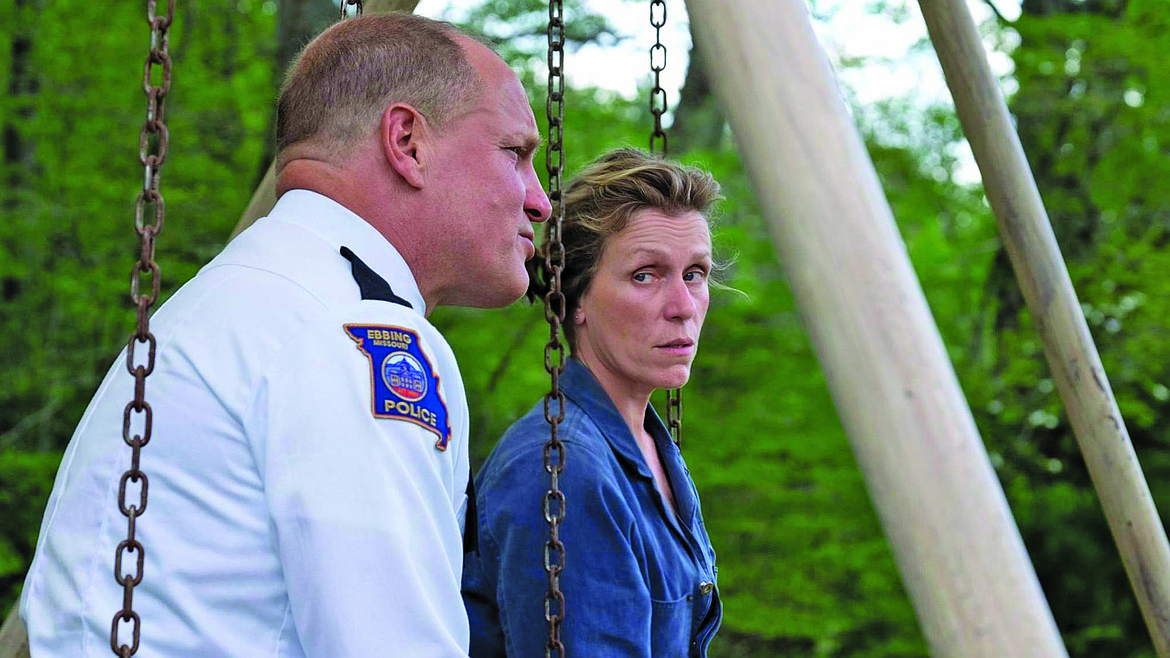
Fox Searchlight via AP Woody Harrelson and Frances McDormand in a scene from “Three Billboards Outside Ebbing, Missouri.”
Any movie headlined by Frances McDormand is a movie worth seeing.
The Oscar-winning actress may never completely evade the shadow of her most iconic role (“Fargo” hero Marge Gunderson), but her performance in “Three Billboards Outside Ebbing, Missouri” comes close to eviscerating that image.
On the surface, “Three Billboards” might be mistaken for a Coen Brothers movie a la “Fargo.” The film follows a web of oddball characters in a specific spread of small-town America. When violence bubbles to the surface, the tension is often cut with black comedy.
While the Coens’ model can serve as somewhat of a barometer to whether or not you’d enjoy “Three Billboards,” the film is very much the product of writer/director Martin McDonagh, the playwright and filmmaker behind “In Bruges” and “Seven Psychopaths.” McDonagh’s characters are complex, clever and deeply morbid. Issues of police brutality, institutional racism, domestic abuse, rape and murder play roles in “Three Billboards,” but the film operates best when those tough subjects are undercut by some truly hilarious blunt talk and behavior.
Much of that shocking humor is committed by McDormand, playing Mildred Hayes, the mother of a teenage daughter who was murdered just outside of town. Frustrated by the lack of progress in the investigation, she rents the three titular billboards and uses them to call out the town Sheriff (Woody Harrelson).
Sheriff Willoughby, though, isn’t some oaf. The case lacks legitimate evidence, and on top of that, he’s got serious medical issues and a staff of police officers with a violent streak. The biggest screw-up on the force, Officer Dixon (Sam Rockwell), especially takes umbrage with Mildred’s attack on his boss.
Just when “Three Billboards” seems to be going down one story path, McDonagh takes the film in a different direction, to the point where the eventual climax is virtually impossible to predict. The story can be too tightly wound in spots, but each scene allows for McDormand, Rockwell, Harrelson and a deep bench of terrific supporting players to dig into McDonagh’s stylized interpretation of small-town wordplay.
McDormand, as you might expect, gets all the best bluster, and Mildred’s rage from the loss of her daughter results in some truly spectacular outbursts (the potty language would be plenty enough to make Marge blush). Rockwell, meanwhile, finds a compelling and surprising way to play the stereotypical “racist cop,” though McDonagh’s screenplay actively works to upend audience expectations of Officer Dixon before the end.
“Three Billboards” streams along well as a domestic drama, as a dark comedy on rural dynamics, and as a murder mystery, but individual sequences conjure even more themes and story threads that shouldn’t work together. McDonagh finds a way to balance the tone — he applies warmth to moments that need it most, and he even installs glimmers of hopefulness in the darkest of circumstances.
The characters are richly drawn, though it helps to have such a high-caliber cast to add dimension to even the smaller players in the film. “Three Billboards,” is an ensemble piece — though it’s hard not to focus on McDormand in a role so good it’s worthy of its own awards category (and a swear jar).
•••
Tyler Wilson can be reached at [email protected]