
NIC vocational building starts brewing future job solutions
Mike Patrick Nibj Writer | Hagadone News Network | UPDATED 8 years, 3 months AGO
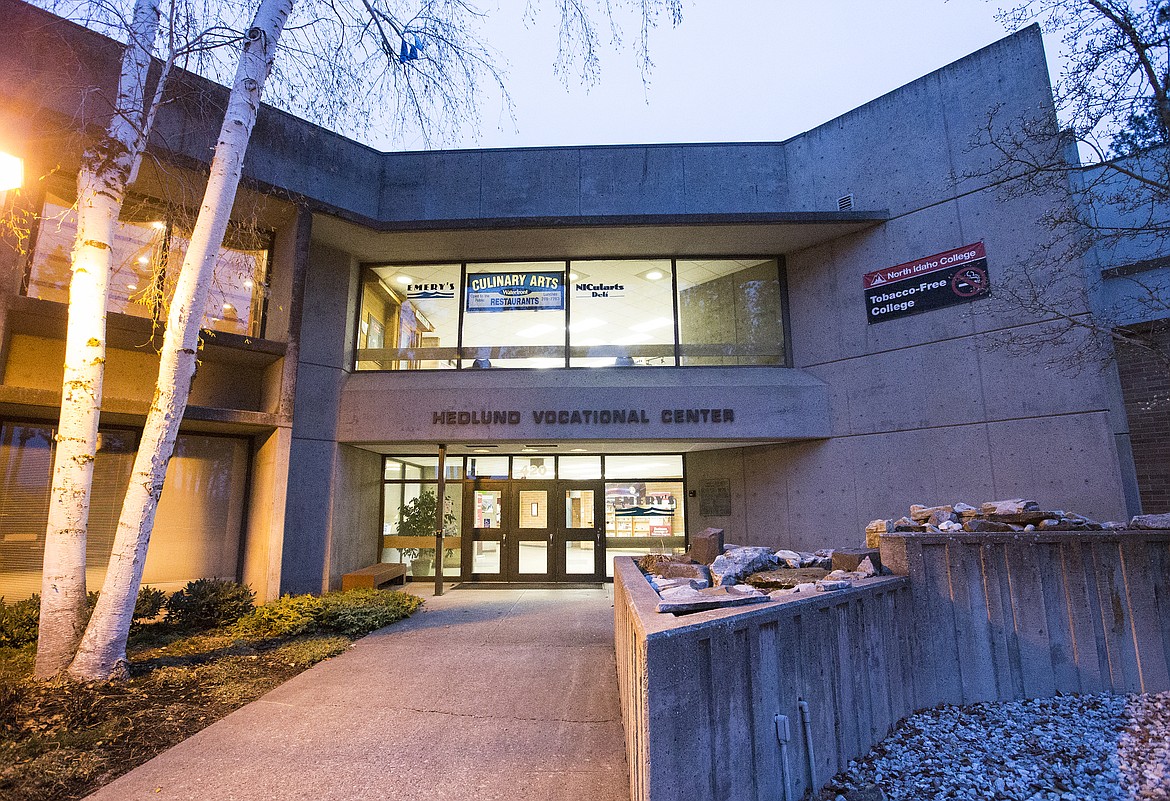
LOREN BENOIT/NIBJ North Idaho College's Hedlund Vocational Center is undergoing a transformation. Gizmo-CDA, a high-tech, nonprofit “makerspace,” and NIC's Small Business Development Center are both in the process of moving into Hedlund.
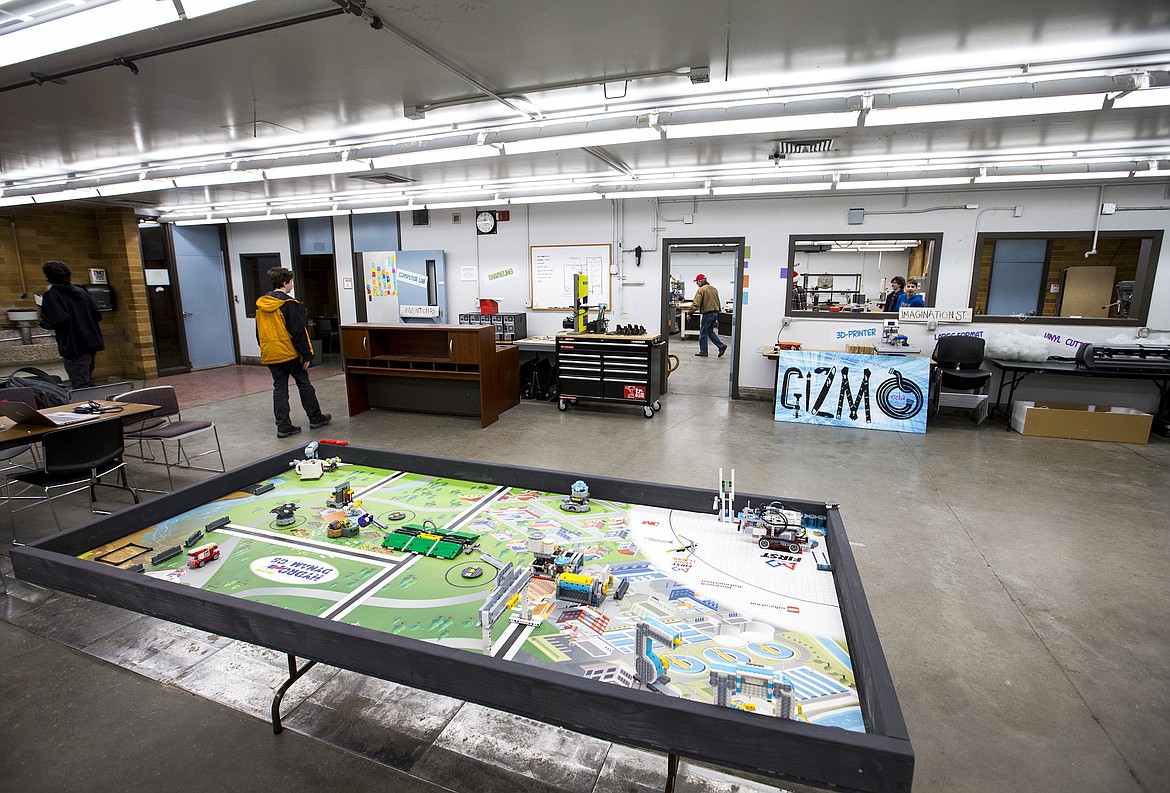
LOREN BENOIT/NIBJ Gizmo-CDA is in the process of moving to North Idaho College’s Hedlund Vocational Center. Gizmo teaches hands-on learning, creativity, system and design thinking.
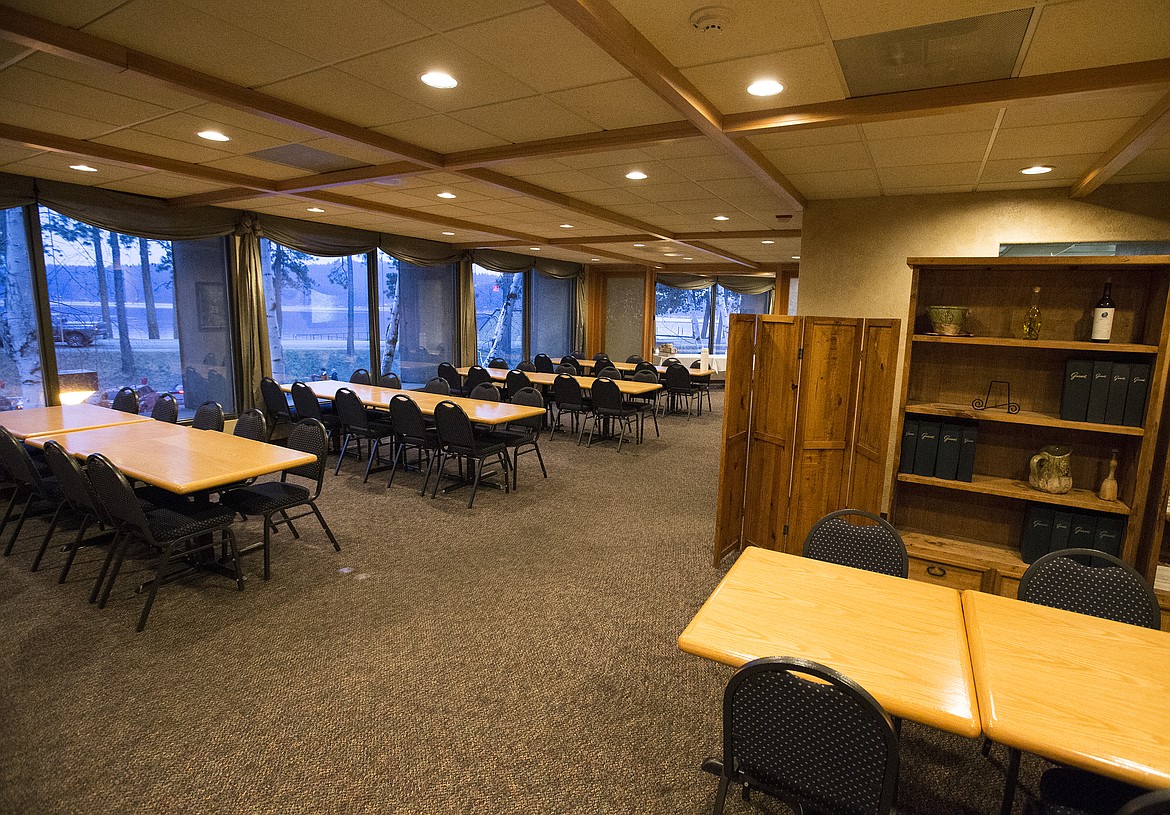
LOREN BENOIT/NIBJ Emery’s, a restaurant on the second floor of North Idaho College’s Hedlund Vocational Center, is in Ryan Arnold’s development plans with other culinary possibilities brewing.
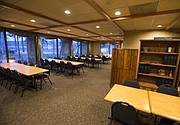
What has room for semi trucks, softball sluggers and kids crafting code — and might hold the key to scores of great North Idaho jobs in the future?
Ryan Arnold's baby, that's what.
Arnold, 34, is the proud papa of a 40,000-square-foot transformation. Instead of chromosomes, Ryan Jr. is comprised of concrete, steel, glass and gray matter.
Its name is the Hedlund Vocational Center, a dull mass on North Idaho College's southeastern corner.
In its co-creation center incarnation, however, Hedlund might one day become the Big Man on Campus.
Old building,
new mission
Now that NIC's vocational infrastructure has moved from Hedlund to a new facility on the prairie, Arnold's charge is to pack the place with brain cells that hatch a batch of bright businesses and good jobs.
“The building is a big step, multi-year with multiple phases,” says Arnold, NIC's director of regional entrepreneurial strategy as of October. “The building itself is fantastic for usage but it's brutal in its design.
“People walk right by it. It's the biggest thing they've never seen. They park right next to it but don't understand what goes inside it.”
What goes inside it is different now than it was yesterday.
The regional strategy is getting a powerful kick start with at least two vital pieces on the move by Jan. 1. Gizmo-CDA, a high-tech, nonprofit “makerspace,” and NIC's Small Business Development Center are both in the process of moving into Hedlund. But strategy is one thing. Reality, meantime, is dealing Arnold a rising fastball he can't quite barrel.
“Right now we've got softball hitting practice in there,” he says, suppressing a laugh. “They've got all the nets up, they've got speakers in there and they can crank softballs all afternoon.”
Arnold steps out of the interview batter's box for a moment, considering.
“It's awesome for ‘em,” he says of players using space designed for six semi trucks to be worked on by auto tech students. “I love that they're there, (but) I would argue that's probably not the highest and best use for a 40,000 square foot facility when we're all fighting for space.”
The fight is headed for new frontiers, with Arnold doing his best to point the way.
“We're calling it a co-creation center,” he says. “We could have called it an innovation and entrepreneurship center, just like any other college or university — that's what they're typically called. But a lot of times what we're looking to do is to bring mentors and business resources in to help students, and for students to be able to help our business community. We don't have right now a strong service learning component...that actually launches really talented students into the community. Instead we have them working at Walmart because they can't find what they need to find.”
Hedlund, here
they come
Arnold agrees that while Hedlund's southeastern campus location is in many ways ideal to house all sorts of activities — easy access, loads of parking space — it's going to take some work to maximize the asset. But the project is off to a good start.
In addition to Gizmo, NIC's Small Business Development Center is moving from Riverbend Commerce Park in Post Falls. The SBDC, under Bill Jhung's stellar leadership, seems a natural complement not just for a high-tech, high-energy gaggle of gadget gonzos but for an entrepreneurial engine in the heart of the college community. Arnold takes none of the credit for that Hedlund pairing.
“That's not necessarily my decision, but these parts were starting to come into place the same time I was asked to put together the vision of what this building should be,” he says.
Gizmo, Arnold explains, is a nonprofit that “teaches hands-on learning, they teach creativity, they teach system thinking and design thinking.” He describes the NIC-Gizmo relationship as essentially landlord-tenant, but with the potential to work together in many arenas. The space is there for great growth.
“We have all these other bays parallel to where Gizmo is now,” he says. “Our vision is that over time, we develop these unique programs and opportunities together.”
As an example, Arnold says, a prototype lab or launch lab is a possibility.
“I could use Barb and Marty's (the Muellers, Gizmo's leaders and resident geniuses) expertise, shared resources like 3D printers, entrepreneur assistance, business assistance with Bill Jhung, and have a business come in and prototype something and be surrounded by experts,” Arnold says.
Brainstorm on
a full stomach
One tenant that apparently isn't going anywhere is Emery's, a restaurant showcasing tangible treats of the college's culinary arts program. Arnold sees it fitting in perfectly with the Hedlund metamorphosis and perhaps building upon it with something like a beverage arts institute next to culinary arts.
“I want this building to reflect what Coeur d'Alene already does and then have aspirations for the future, what it should be doing,” he says. And that is to create a Coeur d'Alene culture.
One of the key partners Arnold has his enterprising eye on is the regional business community.
“NIC's job…is to train the future workforce,” he explains. “We want to be a good community partner. This is the ability for us to create another mechanism to work with the business community. It's a way to invite the whole community in.”
Arnold notes that industrious individuals and companies can rent incubator space with the Panhandle Area Council out at the Coeur d'Alene Airport; they can rent office space at Innovation Den in downtown Coeur d'Alene and be neighbors to others who are focused on high tech/high growth. But he hopes to answer a different question.
“Where do you go to actually do the work and learn from others?” he says. “This is a place where higher education can share building that future vision with everybody else here in the community.”
For his part, Nick Smoot, who co-founded Innovation Collective with Arnold years ago, likes what he sees growing at Hedlund.
“I'm excited to see NIC doubling down efforts to support a strong community of entrepreneurs in North Idaho,” Smoot says. “I'm very hopeful they will creatively engage all citizens in this process alongside of their students.”
That openness and inclusiveness is all part of the still coming together plan, Arnold assures.
“The entrepreneurship program, culinary arts program, engineering, computer science, cybersecurity — all these different programs are parts, and I have to look at it and go, ‘All right, what are we going to do with 21st century education? What is the future model for a college where, not only us but all community colleges, enrollment is down and costs are up?'
“I really see this building being that test model in how we go forward in the future.”
The view from above
NIC President Rick MacLennan isn't sure what Hedlund/co-creation center success will look like, exactly, but he's got an idea. That's because in his four years presiding over Garrett College in rural Maryland, an Appalachian environment that in some ways mirrors higher ed challenges and opportunities on North Idaho's prairie, entrepreneurial efforts were a capstone of his administration.
“It's one of the things that gets me most excited,” he says.
Success might look a little like the Card Caddie, available in drugstores and two for $29.95 (limited time only!) at bizcardcaddie.com. Its inventor was one of 27 or so presenters at Garrett College's first innovation competition.
“Out of that we had nine going concerns that spun off (from the competition),” says MacLennan, who took over at NIC a year and a half ago from another entrepreneurial extremist, President Joe Dunlap. “Several of them actually became ‘a thing.'”
One of the difficulties in defining or quantifying success is that the Hedlund effort isn't standard community college fare.
“This is a unique — I don't want to call it a program,” he says. “What we're creating isn't like things we typically create.”
A typical creation, he gives as an example, might be developing a program in large animal veterinary sciences, where metrics are done on potential enrollment, administrators are required to show demand and performance leading to x number of careers, and approval is needed by a state board. Only then can the real work begin.
That's not this.
“The challenge for us, frankly, is because it's not like other things we do here, we have to figure out how to make this sustainable,” he says.
One thing that is certain, MacLennan says, is leadership's determination.
“We're committed,” he asserts. “We're bringing our open access role in the community to bring people in. We're going to make it work.”
Zeroing in on the overall mission of the Hedlund co-creation center, MacLennan says there's an overarching question: “If this is important, then what should North Idaho College's role be in helping support, develop and educate?”
Enter Arnold.
“When the two of us met, my experience in this world and the absolute terrific talent that he has, it was a no-brainer to bring him in to help us answer the question, and then once we answered the question to have him help build it out strategically,” MacLennan says.
The build-out has begun.
Construction toward a brighter future is now fully under way.
ARTICLES BY MIKE PATRICK NIBJ WRITER

SBA: The business friend you haven't met yet
In a sea of acronyms, SBA might be one of the least understood — and one of the most undervalued.

To this remote worker, life is simply better
Stefan Schwaab’s commute takes seconds, and his MPG is pretty good. In fact, it’s infinite.

Your senator's take on tariffs suggests patience – to a point
On March 2 at 10:50 a.m., the president of the United States sent this message to the world: