
Downtown's The Cellar to close
Keith Cousins Staff Writer | Hagadone News Network | UPDATED 9 years, 2 months AGO
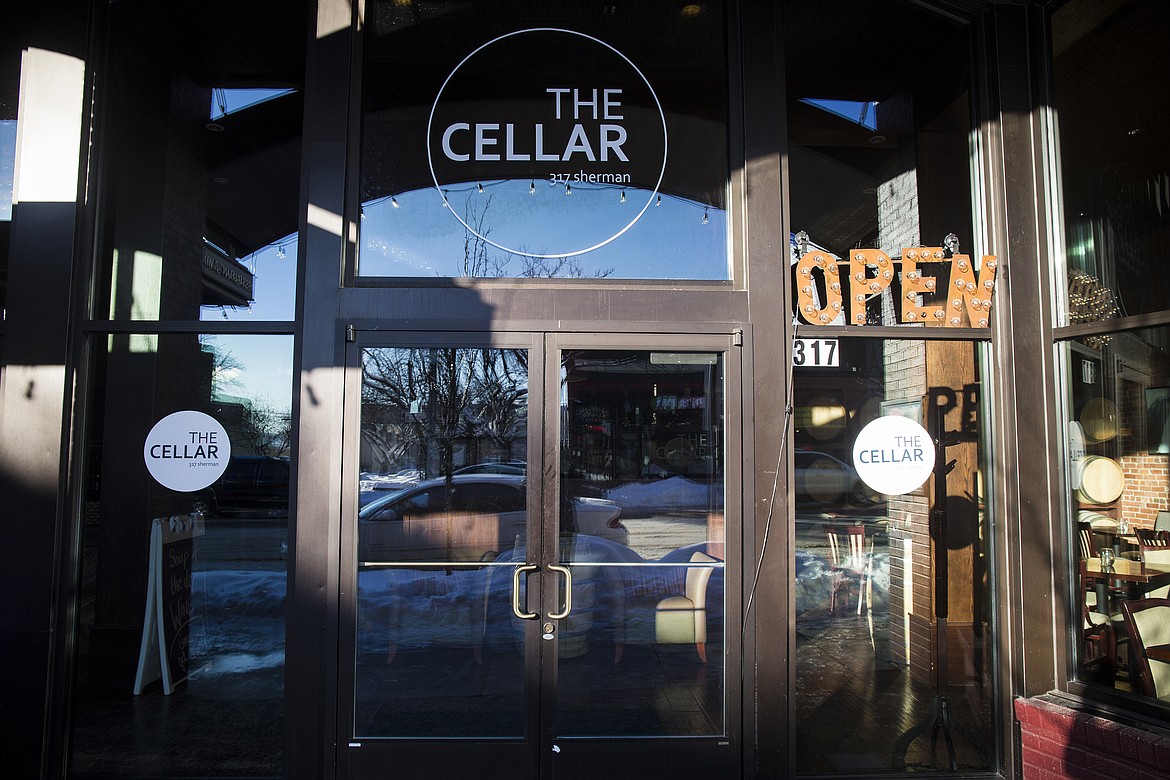
LOREN BENOIT/Press The owner of The Cellar at 317 Sherman announced the bar and restaurant will close on Jan. 20 because of the challenges with obtaining a new liquor license.
COEUR d'ALENE — A downtown institution will shut its doors at the end of the month.
The Cellar at 317 Sherman will close Jan. 20, after operating for more than 5 years under its current moniker and more than 20 as The Wine Cellar, owner Adam Hegsted announced Thursday. In an interview with The Press, Hegsted said the decision to close was a tough one and based primarily on the establishment's inability to get a new license to sell hard liquor.
“It’s been an icon in downtown Coeur d’Alene,” Hegsted said. “The location is right in the center of downtown and I hope whoever takes it over is very successful.”
When Hegsted purchased the business more than a year ago, he said the previous owners had already sold the restaurant's liquor license to another restaurant preparing to enter the Coeur d'Alene market. Once the restaurant was up and running, Hegsted said the liquor license was transferred over, leaving The Cellar without the ability to sell hard alcohol.
“We were trying to secure a license, but there’s only 33 available in all of Coeur d’Alene,” Hegsted said. “They make it very difficult to get them, it’s anti-business.”
Sales of liquor, Hegsted added, accounted for 12 percent of The Cellar's revenue. Although the percentage does not appear high and The Cellar could still sell beer and wine, Hegsted said the business was dependent on the additional revenue.
"It's a hard decision to leave that spot," Hegsted said. "We really value everyone who has supported us and we are really thankful for the loyalty of our guests. Hopefully someone will take it over and do something great."
The Idaho State Police’s Alcohol and Beverage Control Bureau is responsible for issuing liquor licenses throughout the state. Capt. Russ Wheatley told The Press Thursday the agency uses a quota system for issuance of the licenses.
For every 1,500 people in a municipality, one liquor license becomes available. In Coeur d’Alene, 33 licenses are available, but all of them have been issued.
“Once people get a hold of them, they generally don’t let them go,” Wheatley said.
To obtain a license, an individual or entity must submit a formal application, pass a background test, and pay a licensing fee.
After all of the licenses have been issued, Wheatley said a priority waiting list is established by the agency. As soon as the population of a city grows enough to make another liquor license available, the first person on the wait list has the ability to apply for licensure.
Currently there are 24 people on the waiting list for a liquor license in Coeur d’Alene.
In other parts of the state, Wheatley said it is not uncommon for people to be on the wait list for decades.
“Our state constitution speaks to temperance and morality in relation to alcohol,” Wheatley said. “In my opinion, this quota system is our state legislators’ way of addressing that portion of the constitution.”
Those who have liquor licenses are able to sell or lease them to another interested party should they no longer want or need one. When that occurs, Wheatley said, the seller enters into a formal contract with the new licensee, and the state gets 10 percent of the sale. Since the licenses are such a limited commodity, they can often be sold for more than six figures.
ARTICLES BY KEITH COUSINS STAFF WRITER

The Doctor is in
OSBURN — An unusual career path, with twists and turns all over the globe, eventually led Dr. David Lawhorn to the Silver Valley.
What this strike means to the local economy
WALLACE — The strike at the Lucky Friday mine is more economic bad news in a county that doesn’t need any more, said regional economist Sam Wolkenhauer.

Looking to the past
MULLAN — Like its modern counterpart, the last strike at the Lucky Friday Mine near Mullan in 1981 began with a secret ballot and nearly unanimous support from miners to take to the picket lines.