
Hantavirus may have come from Adams County
CHERYL SCHWEIZER | Hagadone News Network | UPDATED 8 years, 8 months AGO
Senior Reporter Cheryl Schweizer is a journalist with more than 30 years of experience serving small communities in the Pacific Northwest. She began her post-high-school education at Treasure Valley Community College and enerned her journalism degree at Oregon State University. After working for multiple publications, she has settled down at the Columbia Basin Herald and has been a staple of the newsroom for more than a decade. Schweizer’s dedication to her communities and profession has earned her the nickname “The Baroness of Bylines.” She covers a variety of beats including health, business and various municipalities. | July 12, 2017 3:00 AM
RITZVILLE — Washington residents are being urged to take precautions while they are in closed spaces that could be infested with mice. The warning was issued after a Spokane County man died of complications from hantavirus; he likely came into contact with the disease while in a barn in Adams County.
The man, in his 50s, was the fifth confirmed case of hantavirus in Adams County since 1994, with one previous death, in 2009. The last hantavirus case in Adams County was 2014. The man was the first case and first fatality in Spokane County.
The disease is very rare, with an average of two confirmed cases per year in Washington, according to a press release from the Adams County Health District and Spokane Regional Health District. But there have been five cases of hantavirus so far in the state in 2017, with three deaths.
The disease is spread in the Pacific Northwest by deer mice. “The greatest risk for exposure occurs when people enter enclosed areas with mice infestation and poor air circulation,” the press release said. “The virus, which is found in mice urine, droppings and saliva, gets in the air as mist or dust when droppings or nests are disturbed.”
Humans can inhale the virus in that situation. The disease “also can be transmitted by handling mice, or touching the nose or mouth after handling infected materials.” It is not, however, transmitted from person to person.
There is no vaccine or treatment “other than supportive care,” the press release said.
Most cases of hantavirus occur in the eastern part of the state, although three of the 2017 cases were on the west side. Symptoms usually start about one to three weeks after exposure, but can appear up to eight weeks after exposure. The first symptoms look like the flu, starting with fever, chills and muscle aches, followed by a rapid onset of shortness of breath and respiratory distress. Other symptoms include nausea, vomiting and abdominal pains. People should contact a healthcare provider immediately if they have cleaned up rodent waste and experience the abrupt onset of flu-like symptoms.
Mice spread the disease, so precautions should be taken when cleaning areas that have mice, whether it’s a house or other building.
Mice should be trapped with a snap trap, according to a press release from the Washington Department of Health. Food attracts rodents, so all food, including pet food, should be in rodent-proof containers.
Rubber or latex gloves should be worn when cleaning rat-infested areas. A dust mask protects against dust, but not the airborne virus, the DOH release said. People shouldn’t sweep or vacuum, or stir up dust any other way. Carpets or furniture that show signs of rodent infestation should be steam-cleaned.
When cleaning up rodent-contaminated areas, the spot should be wet down thoroughly with a 10 percent bleach solution, and must sit for at least 10 minutes. Then the material can be removed, and the area should be cleaned with a mop or sponge and the bleach solution.
Cleaning gloves should be disinfected before they are removed, and once they’re off, hands should be washed with soap and water, or an alcohol-based hand rub if water is not available.
Dead rodents and debris should be sprayed thoroughly with disinfectant and double-bagged for disposal. They should be buried, burned or disposed of in an appropriate disposal system.
Cheryl Schweizer can be reached via email at [email protected].
ARTICLES BY CHERYL SCHWEIZER

Road closures, roundabout, mean construction season underway
EPHRATA — The grass is starting to turn green, the trees are starting to leaf out, construction crews are starting to build roundabouts – hey, it’s spring. At least one roundabout project is in its final phase, held over from fall 2025. The intersection of State Route 282 and Nat Washington Way will be closed the week of April 6 to allow crews to install permanent lights. “This really is the final (closure),” wrote Grant County Administrator Tom Gaines in a media release. “The roundabout will close at 6 a.m. Monday, and we plan to reopen by Friday, possibly sooner if the work finishes early.”

Ybarra announces run for Washington Senate
QUINCY — State Representative Alex Ybarra, R-Quincy, has announced his candidacy for the Washington Senate. If he’s elected, he would replace Judy Warnick, R-Moses Lake, who announced her retirement in March.
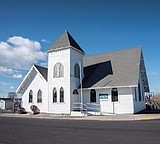
Othello Community Museum to open April 25
OTHELLO — With a couple of new exhibits, a new heating-cooling system, rearranged displays and a thorough cleaning, the Othello Community Museum will open for the summer April 25. The goal, said Molly Popchock, museum board secretary, is to operate for a full season.