
Spud Run showcases classic vehicles
JOEL MARTIN | Hagadone News Network | UPDATED 9 years, 3 months AGO
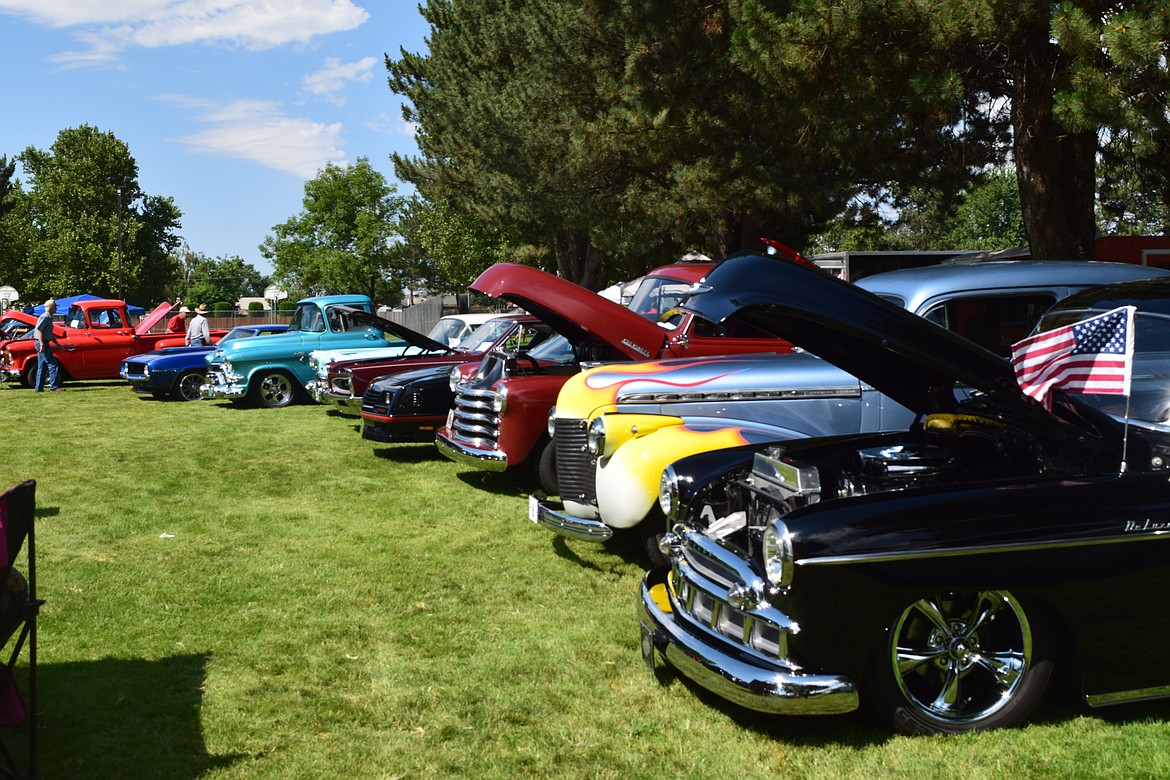
Joel Martin/Columbia Basin Herald Row upon row of classic vehicles packed Kiwanis Park for the annual Othello Spud Run Saturday.
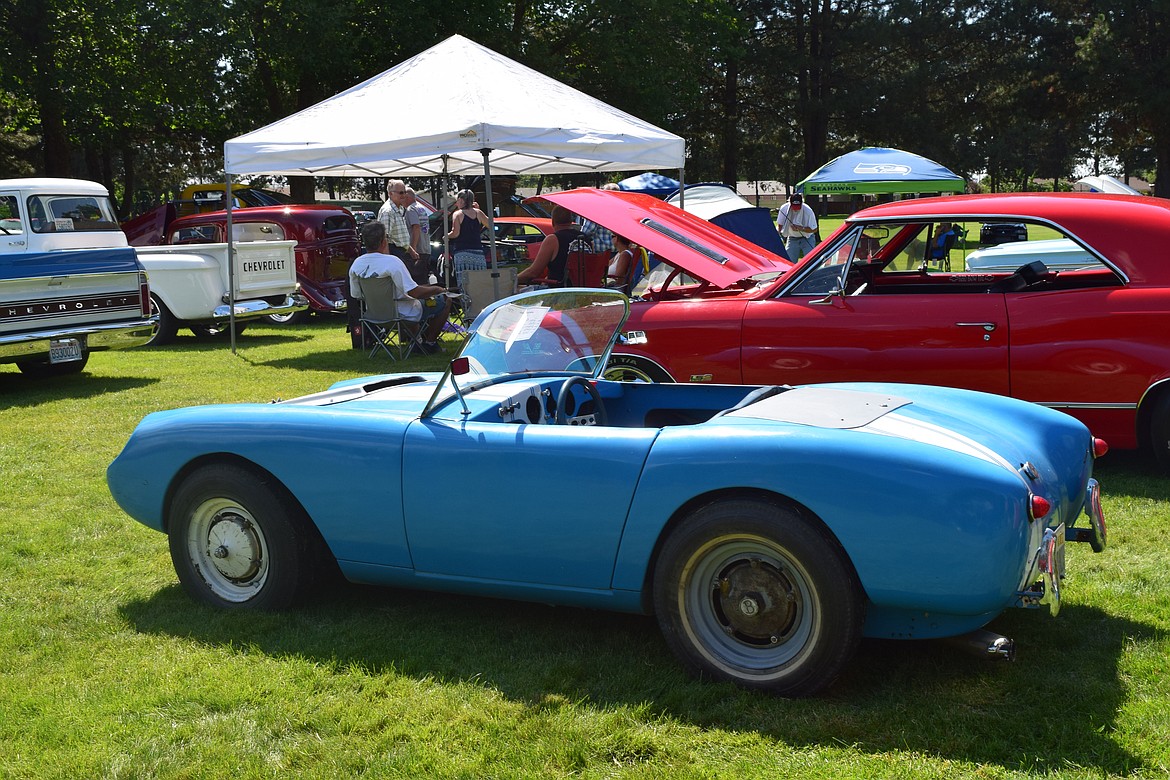
Joel Martin/Columbia Basin Herald This 1959 Berkeley is one of fewer than 700 made.
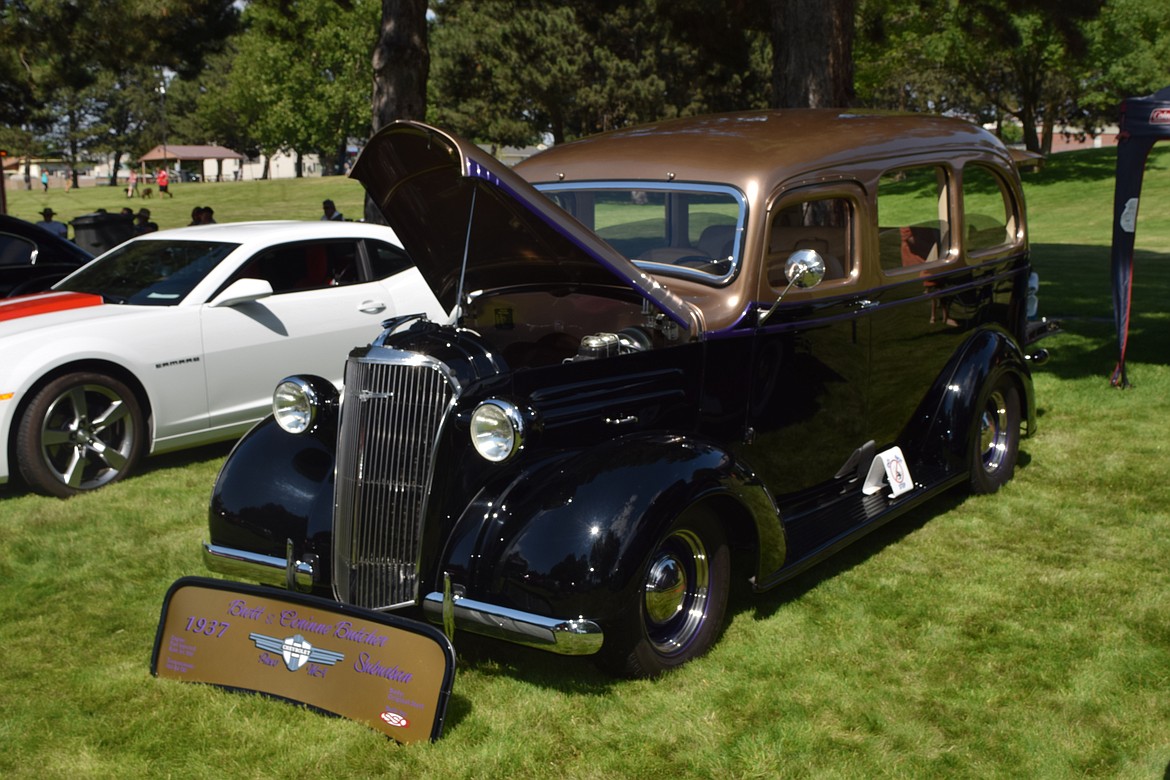
Joel Martin/Columbia Basin Herald This 1937 Chevy Suburban belonged to a sanitarium in the 1950s, as its owner was able to verify.
Joel Martin has been with the Columbia Basin Herald for more than 25 years in a variety of roles and is the most-tenured employee in the building. Martin is a married father of eight and enjoys spending time with his children and his wife, Christina. He is passionate about the paper’s mission of informing the people of the Columbia Basin because he knows it is important to record the history of the communities the publication serves. | July 17, 2017 4:00 AM
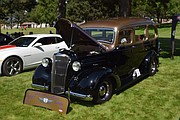
Othello’s Kiwanis Park became hot rod heaven over the weekend, as the Spud Run car show put wheeled beauty on display. The sun did its part by reflecting dazzlingly off the various paint schemes on the vehicles, but the downside was that every available spot of shade was occupied. Some exhibitors had the foresight to bring canopies to keep the sun off. Still, the heat didn’t deter a sizable crowd of visitors from walking around in awe of the array of classics.
The variety of vehicles was impressive. There were muscle cars, Model A’s, pickups and even a few motorcycles covering nearly a century of driving history and ranging from rare models to mundane machines made magnificent.
One of the rare ones was a 1959 Berkeley owned by Jeremy Ross. You’ve never heard of a Berkeley? Neither have most folks, Ross said with a grin.
Berkeleys were manufactured in Britain in the late 1950s. They were a collaboration between a car designer and a travel trailer manufacturer that wanted to fill in the seasonal gaps in its business. Originally meant to be a small racecar, Berkeleys ran on engines derived from motorcycles and sported front-wheel drive. The designer, Ross said, was “experimenting with this new thing called ‘fiberglass.’ The factory runs were small; Ross’ car was one of fewer than 700 of its model manufactured. The company folded in 1960 and only a few hundred of any model still exist today.
Ross has had his Berkeley for about 15 years, he said, although the restoration only took about four years of serious work. That was a common theme at the show. Many exhibitors had been keeping a vehicle under a tarp or in a shed for years before deciding to fix it up to show.
Not Jerry Knebel of Quincy, though. His Chevy pickup has only had one owner: him. Knebel bought it in 1966 brand-new off the showroom floor.
“It was my farm pickup for over 30 years,” he said. About five years ago he and his son Ed made a project of it, lowering it, painting it a deep darkish red and putting in a 383-cubic-inch, 425 horsepower engine.
“Once you change anything on a vehicle, it’s not all original anymore,” Knebel said, “so we just went ahead and gave it a complete restoration. Only things original on it are the body, glass and frame.”
“It was in good enough shape, though, that we could have gone 100 percent original with it,” he added. “It’s my baby.”
Brett and Corinne Butcher of Pasco told a different story of their 1937 Chevrolet Suburban. “For years growing up I wanted a ’37 coupe that my uncle had,” Brett said. “He wouldn’t sell it. Finally in 1984 I came home on leave and he still wouldn’t sell it, but he took me out back of his shed and there standing in the weeds was this Suburban. I yelled ‘sold’ before he even had a chance to ask.”
The vehicle cost Brett $300 and languished until 2012, when he took it into his garage and began restoring it. While he was working on it, Corinne noticed some very faint lettering on the side. Brett gingerly sanded through a layer of paint to reveal the words underneath: “Bethesda Sanitarium.”
A little internet research revealed that the Bethesda Sanitarium had been established as a hospital for tuberculosis patients in Denver in 1910, and continued in that capacity until 1950, when it became a mental hospital. The hospital itself had closed by the time the Butchers went looking, but the library in Missoula, Mont. turned out to have a book written by the director of the hospital in the 1950s. The Butchers tracked down a copy of the book, and sure enough, there was a photo of their van in front of the hospital. The director/author, Meindert Bosch, was alive and well and living in a retirement center built on the grounds of the old hospital, and was happy to sign the book and help the Butchers recreate the photo in 2013 by posing the van in the exact same spot.
Not all the vehicles were restored to their original condition, of course. There was an antique two truck with chrome skulls lined up on the engine head, and a 2012 Lexus that appeared to have been turned into a post-apocalyptic dune buggy.
At a little after 4 p.m., first- and second-place trophies were awarded for different categories and eras of vehicles. A list of those awards was not available at press time.
ARTICLES BY JOEL MARTIN

Endless battle
Noxious Weed Control Board works to keep invasive plants under control
MOSES LAKE — Some of the nastiest plants in Grant County were the topic of a class led by Jay Johnson, a consultant with the Grant County Noxious Weed Control Board, Tuesday. The Noxious Weed Control Board, as its name would suggest, is tasked with keeping weeds under control in Grant County. That’s not a small job; the board’s website lists 129 species of noxious weeds that are found around Grant County. A noxious weed is defined as an invasive, non-native plant that threatens agricultural crops, local ecosystems or fish and wildlife habitat, according to the Noxious Weed Control Board. Washington state law requires that these weeds be identified and their spread kept to a minimum, if not completely eradicated. “We’re one of those agencies a lot of people don’t really understand,” Johnson said. “We’re a county office and … our funding is tax-based assessment. When you get your tax bill and you look down at all the expenses that you pay for, there we are.”

BASIN EVENTS: Oct. 16-24
COLUMBIA BASIN — Whether you feel like shopping, crafting, learning or seeing a show, there’s something happening for you this week in the Basin. Oct. 16 ‘My Family (Mi Familia)’ screening Spanning three generations, “My Family (Mi Familia)” is a heartfelt drama that follows the Sánchez family as they build their lives in East Los Angeles. Through love, hardship, triumph, and sacrifice, the film explores the immigrant experience, the strength of family bonds, and the traditions that connect one generation to the next. Lowrider show and taco truck before the screening. Sponsored by Columbia Basin Allied Arts, EDUBS C/S and the Moses Lake Creative District. $12 per person. Doors open at 6 p.m., film begins at 7 p.m. at the Moses Lake Civic Center Auditorium, 401 S. Balsam St. Tickets and info: www.cba-arts.org.

Moses Lake author encourages women to look beyond church culture norms
MOSES LAKE — A Moses Lake author’s book, “A Christian Woman Striving to Live Her Faith in a Man-Controlled World,” takes aim at the role to which many churches relegate the female half of their congregations. “It’s to encourage women in the faith,” Linda Curran said. “A lot of churches say, ‘Teach Sunday school, do this, do that, but don’t (evangelize.)’" In her book, Curran recounts a time when she moved to a new community and joined a church there. She was surprised to learn that, as a new female member, she had been automatically assigned church cleaning duties. When she questioned it, she wrote, she was met with condescension and her objections were brushed aside. In other churches, she said, women who were capable of teaching were relegated to “women’s ministry.”