
Review begins of PUD rewrite
HEIDI DESCH | Hagadone News Network | UPDATED 9 years, 5 months AGO
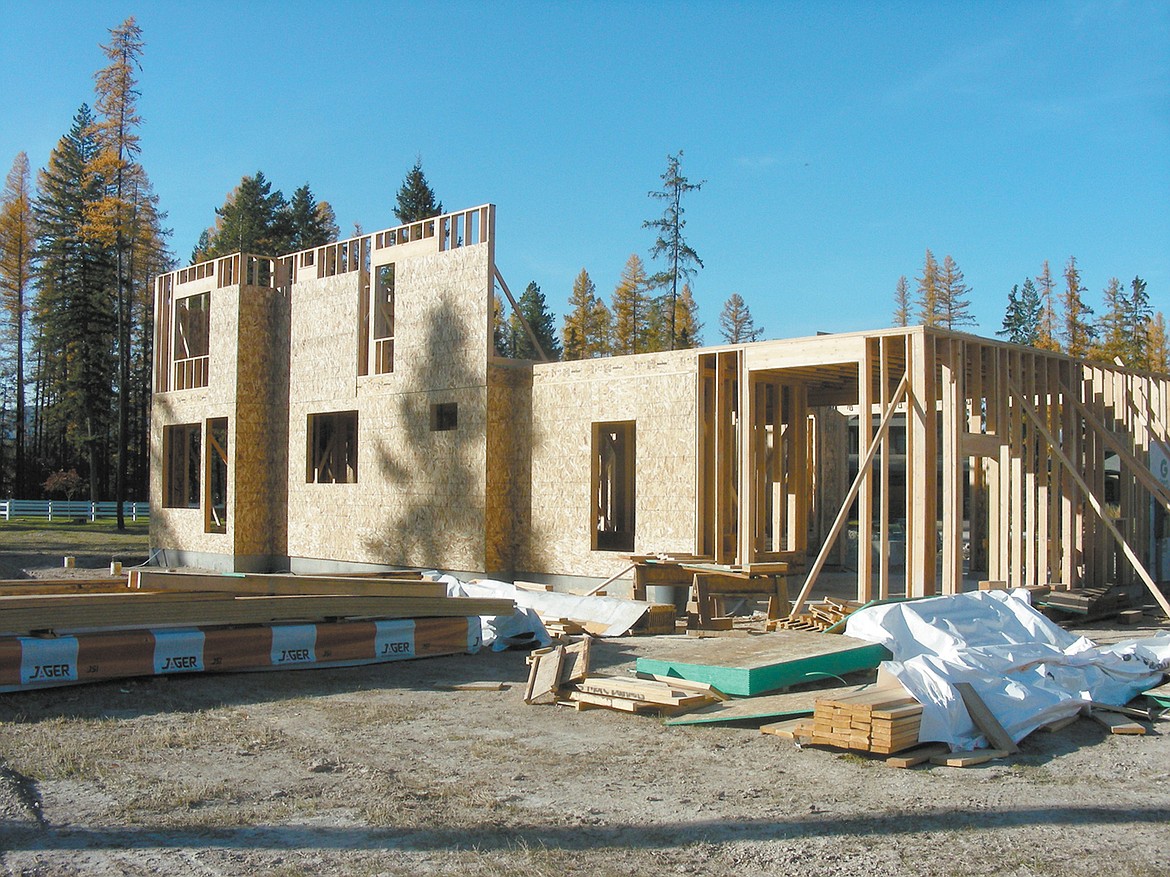
A house under construction in Whitefish.
DEPUTY EDITOR, FEATURES Heidi Desch is the Deputy Editor at the Daily Inter Lake, overseeing coverage of arts, culture, lifestyle, community, and business. Desch leads reporters in developing stories that highlight the people, traditions, and events shaping Northwest Montana, guiding content across print and digital platforms. With more than 20 years of journalism experience, including serving as managing editor of the Whitefish Pilot, Desch is a graduate of the University of Montana School of Journalism. She has received multiple Montana Newspaper Association awards, including part of the team leading the Daily Inter Lake to Best Daily Newspaper in Montana Award and the General Excellence Award in 2024 and 2025. IMPACT: Heidi’s work connects readers with stories that deepen the understanding of the community beyond daily news. | May 16, 2017 3:17 PM
After more than a year of work, a revision of Whitefish’s planned unit development zoning code goes before the Whitefish Planning Board this week.
The board meets at 6 p.m. Thursday at interim City Hall and will take public comment on the proposed changes.
A PUD overlay enables a developer of a property to apply to alter certain standards such as lot size or building height in exchange for providing community benefits such as affordable housing, trails or greater environmental protections. A revision of the code began last year after neighbors of a proposed PUD raised concerns about the impact of blending higher commercial density across lower density portions of the project.
City Council placed a moratorium on PUD overlays that include blending density zoning and created an ad hoc committee to rewrite the regulations.
“A PUD is a powerful developer’s tool that is often used for new subdivisions and other types of typically residential projects,” said Planning and Building Director David Taylor.
It’s an overlay zone that requires a detailed development plan, and it may allow some variation from the underlying zoning standards in exchange for providing increased public benefit such as affordable housing, public bike paths, or additional open space, he noted.
“The developer gets a little extra incentive, but in return they give some benefit back to the community that wouldn’t normally be required,” he said.
The committee has met 30 times over the last nine months to draft revisions to the code. An early draft was presented to members of the development community and their input also prompted changes to the draft document.
Previously the PUD chapter in the city zoning code offered two types — residential and non-residential. The revision creates four types: residential, commercial, industrial and mixed-use. Each of the types has a list of exclusive zones identifying where one of the PUD types can be applied.
Residential PUDs would be regulated to overlay only residential zoning districts, and they could not be blended with commercial zones to increase their allowed density unless it qualifies as a mixed-use PUD. Commercial uses, which previously were allowed for up to 10 percent in residential PUDs are now limited to PUDs of five acres or more.
The commercial PUD is for commercial retail or office type uses in commercial zones, but can also included residential two family and multi-family units.
The committee is recommending to set the high density residential and commercial dwelling unit bonus to a standard 25 percent bonus, while leaving the lower residential zone bonus as is.
A new chapter on affordable housing was added. The language was fleshed out for housing mitigation agreement, long term affordability, housing types consistent with the rest of the development and providing more clarity for options. Options include providing the units on-site, providing them off-site when it is more advantageous such as closer to services and jobs, providing land-in-lieu of affordable units and the fee-in-lieu that would go to the Whitefish Housing Authority.
Don Spivey, the PUD rewrite committee chairman, said citizens are relying on existing zoning when they purchase land near undeveloped properties and can often be unaware of how a new PUD might impact them, especially with regard to increased residential density.
“We believe these proposed changes will better address that as they add more protection for low density residential areas that may be next door to zones that allow higher density development,” he said.
A formal public hearings on the zoning text amendment is expected to go be before the Planning Board in June and the City Council in July.
A draft ordinance and a summary report can be found at the City Planning Office web site at http://www.cityofwhitefish.org/planning-and-building/planning-and-zoning.php Written comments can be emailed to [email protected] or by calling the Planning Office at 863-2410.
ARTICLES BY HEIDI DESCH

Whitefish wildfire protection plan up for City Council review
Fourteen areas of concern that are primed for mitigating wildlife risk are at the center of a draft Whitefish Community Wildfire Protection Plan.

Kalispell resident advocates for more women in the trades after being crowned Mrs. America
Standing on the stage in Las Vegas, wearing a white formal gown accented with feathers on one shoulder, Qadra Evans gripped hands with a fellow competitor.

Whitefish mulls updates to community growth plan
Whitefish City Council on Monday will consider updates to its community plan including language that looks to protect the historic character of its downtown amid state requirements allowing buildings up to 60 feet in height in certain zoning districts.