
Boat or not, all anglers need to get $2 pass on top of license
CHRIS PETERSON | Hagadone News Network | UPDATED 8 years, 7 months AGO
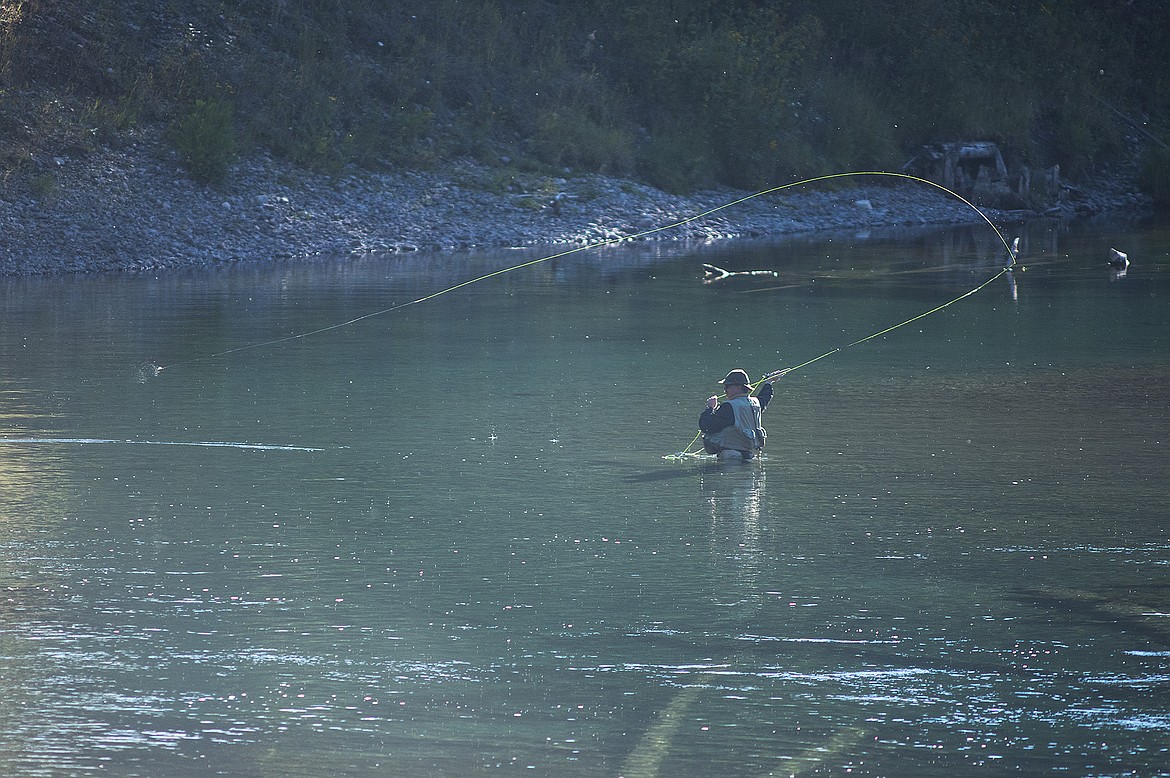
Dave Kamz of Minnesota fishes McDonald Creek last week.
Chris Peterson is the editor of the Hungry Horse News. He covers Columbia Falls, the Canyon, Glacier National Park and the Bob Marshall Wilderness. All told, about 4 million acres of the best parts of the planet. He can be reached at [email protected] or 406-892-2151. | May 24, 2017 7:51 AM
Even anglers who don’t own a boat will have to buck up another $2 to legally fish in Montana.
The Aquatic Invasive Species Prevention Pass was approved as part of Senate Bill 363 in the final days of the legislative session. Gov. Steve Bullock signed the bill into law Thursday. The AIS pass will be required for all anglers, beginning May 19. The cost is $2 for residents and $15 for nonresidents.
The pass requirement is retroactive — meaning that anglers who have already purchased a fishing license will still need to purchase the pass, noted Montana Fish, Wildlife and Parks spokesman Greg Lemon.
Penalties for not having the pass are similar to not having a license, but FWP’s plan is to educate anglers about the pass, rather than write tickets the first year, Lemon said.
FWP claims it’s not a license fee increase, but rather an additional requirement from the legislature to fund the fight against aquatic invasive species.
The AIS Prevention Pass will be available at all Montana Fish, Wildlife and Parks license providers. Anglers who have already purchased licenses will need to go online or to a license provider and purchase the new pass.
“We know this will be an inconvenience for some anglers, but protecting the health of our waterways is critical,” said FWP director Martha Williams. “The AIS program we have in place is our best chance at keeping mussels from spreading to other Montana waters and at keeping other invasive species from gaining a foothold in the state.”
Also included in SB 363 was a fee for hydroelectric facilities. The AIS Prevention Pass is anticipated to generate about $3.2 million in revenue per year. The hydroelectric fee will generate about $3.7 million.
The 2017 Legislature provided additional funding for FWP’s aquatic invasive species program after the discovery last fall of aquatic invasive mussel larvae in water samples from Tiber Reservoir. A sample from Canyon Ferry Reservoir also turned up suspect for the mussel larvae. In response, Gov. Steve Bullock declared a natural resources emergency in November and an interagency incident command team was set to coordinate the response to the detection.
To date, Lemon said, no adult mussels have been found, but the mussels aren’t active until the water temperature gets above 52 degrees.
Another thorough round of testing is planned for later this year, Lemon said.
Locally, Montana boaters don’t need an AIS inspection of their craft to launch on the Hungry Horse Reservoir, provided they haven’t previously fished on eastern Montana waters or haven’t left the state with the boat. Boaters who have left the state or gone to the east side presumably will have to stop at an inspection station before they come home. All boaters must stop at inspection stations.
Out-of-state boaters must have an inspection no matter what.
Boaters who fish the south end of Flathead Lake have to have an inspection as per Confederated Salish and Kootenai Tribes rules. They also have to have an inspection on Whitefish Lake and on Glacier Park waterways, though Glacier is not allowing any motorized or trailered boats this year. It is allowing non-motorized, non-trailered craft.
ARTICLES BY CHRIS PETERSON
Columbia Falls concerned sewer system could be bottleneck for growth
The City of Columbia Falls could see a significant bottleneck in future growth due to its sewage treatment plant, depending how the city and the state calculate the sewage treatment plant’s maximum treatment capacity without a major upgrade.
Columbia Falls City Council tables e-bike law
The Columbia Falls City Council last week voted to table a city ordinance that would restrict e-bikes and e-motorcycles along with other electrically powered vehicles on its sidewalks and city parks.
Oh, Christmas tree!
I usually talk to my mother on the phone once a week or so. She lives alone in Florida and works for a church doing funerals part-time.