
Friends of avalanche victim share lessons garnered from fateful day
HEIDI DESCH | Hagadone News Network | UPDATED 8 years, 11 months AGO
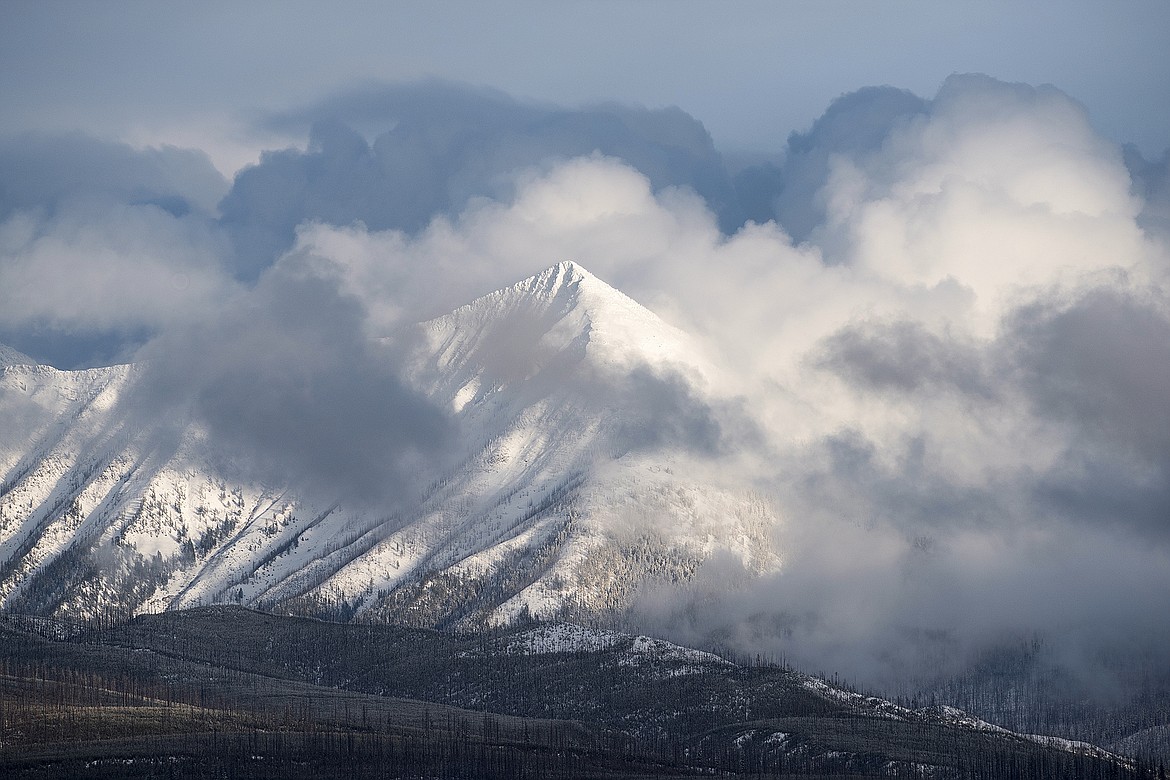
Mount Stanton in Glacier National Park. (Hungry Horse News file photo)
DEPUTY EDITOR, FEATURES Heidi Desch is the Deputy Editor at the Daily Inter Lake, overseeing coverage of arts, culture, lifestyle, community, and business. Desch leads reporters in developing stories that highlight the people, traditions, and events shaping Northwest Montana, guiding content across print and digital platforms. With more than 20 years of journalism experience, including serving as managing editor of the Whitefish Pilot, Desch is a graduate of the University of Montana School of Journalism. She has received multiple Montana Newspaper Association awards, including part of the team leading the Daily Inter Lake to Best Daily Newspaper in Montana Award and the General Excellence Award in 2024 and 2025. IMPACT: Heidi’s work connects readers with stories that deepen the understanding of the community beyond daily news. | November 8, 2017 8:05 AM
When Erich Peitzsch, Joel Shehan and Ben Parsons headed out in Glacier National Park, they were likely as prepared as any group can be when going backcountry skiing.
Still the day ended in tragedy when Ben Parsons, a well-known local athlete and Whitefish firefighter and paramedic, was killed in an avalanche triggered near the summit of Stanton Mountain.
“Through experience you gain knowledge and you’re safer with education that helps you avoid situations and close calls, but that doesn’t help protect us from everything,” Shehan said. “You take all that experience and you can still have a fatality.”
Shehan and Peitzsch told their story Saturday during this year’s Northern Rockies Snow and Avalanche Workshop. While snow fell outside the O’Shaughnessy Center, the friends shared their memories of Parsons and their reflections on the Jan. 5 tragedy.
Shehan noted that he himself has more than 20 years of backcountry skiing experience, while Parsons had even more, and Peitzsch is the former Flathead Avalanche Center director and a professional avalanche forecaster.
Peitzsch also noted that Parsons worked as a guide for RIDGE Mountain Academy.
“He wasn’t a forecaster or an avalanche professional, but he was very experienced,” Peitzsch said.
The slide that took Parsons’ life was possibly triggered when Parsons was weighting his skis in an attempt to test snow stability, according to the Flathead Avalanche Center’s report following the incident. It’s a test employed by experienced skiers to test small slopes with low or no consequence should an avalanche occur, the report notes.
During the climb up the mountain, Peitzsch turned around because he was feeling ill, but Parson and Shehan continued up Stanton, which rises to 7,750 feet in elevation along the shore of Lake McDonald.
After a break at the summit, Shehan and Parsons descended the west ridge they had climbed. They eventually came to a sub-ridge that separates two large southwest-facing avalanche chutes. Parsons traversed across the wide ridge and into the western-most of the two avalanche paths, he made one left hand turn followed by an immediate right turn when he triggered the avalanche, according to the report. The slide was about 270 feet wide and traveled downslope about 2,300 vertical feet. Parsons was carried down slope in the slide and did not survive his injuries.
Shehan recalled the moment when Parsons triggered the avalanche saying it happened “just before he was back to safety.”
“That one piece of the day is where our risk went up,” he said. “That moment lasted 30 seconds or less — nearly our whole day was a low risk level.”
“We’re always going to have those moments of risk — those that cut the margin of error for the day,” he added. “We need to have discussions about it and decided that the composite risk for the day is OK, but there’s also those little moments.”
Peitzsch said it’s important to observe what’s happening during winter outings in the backcountry.
“You rarely know how close you were to an avalanche,” he said. “You rarely think about a great day and how close you were to an avalanche. Experience helps, but allow for uncertainty.”
Professional and experienced backcountry recreationalists shared a similar message during Saturday’s event, noting that no matter the experience or knowledge level of those recreating mistakes can be made during winter backcountry adventures. About 200 attendees participated in the one-day winter safety conference.
“We realize more and more that regardless of your experience in the snow — it’s about how you make decisions,” said Zach Guy, director of the Flathead Avalanche Center, during his presentation termed “tricks to avoid getting tricked.”
Guy, who joined the avalanche center last spring, shared a personal story of traversing up Heavens Peak in Glacier National Park in mid-April. He knew the conditions, the terrain and the weather the previous day and based upon that had decided that he should avoid all windloaded features.
He continued to make observations and check the conditions during the climb, including digging snowpits along the way to gather information about the snowpack. Yet he headed into a wind-loaded ridgeline, and triggered a large slab avalanche.
He estimated the slide at about 600 feet wide and about 2,000 vertical feet in size, easily large enough to bury someone.
Guy said it was one of the few trips he was able to make out on his day off, and wanting to push just a little bit further to enjoy a day in the backcountry, he now realizes that he didn’t look closely at evidence. He says he shouldn’t have ventured so far or followed his own rule that he set before the trip to stay off wind-loaded areas.
“I was this close to the ridge, I thought I could keep going,” he said. “Suddenly I had rationalized myself into going to an area I thought I should avoid.”
Guy offered the steps he takes to prepare for heading out in the winter in the backcountry — check the avalanche forecast and determine where you can go and where should be avoided; look at the weather conditions and asses the route planned; determine the “no go” terrain or areas not to go in before leaving the car; once out in the backcountry continue to gather more information; and after the trip talk about what went well and what didn’t.
He said it’s human nature to want to be right and that can mean thinking conditions are safe and looking to evidence to support that, while ignoring evidence that it’s not safe.
“Slow down and look around,” he said. “Look, listen and feel — try to prove yourself wrong.”
He also asked folks to submit their observations to the Flathead Avalanche Center online, at www.flatheadavalanche.org. Don’t be afraid to share your mistakes, he noted.
“We’ve all made mistakes,” he said. “As forecasters that’s how we can learn and how we can save lives.”
This year’s event was highlighted by six presentations covering a variety of avalanche-related topics to give insight into the technical and human elements of avalanche safety.
The Flathead Avalanche Center is administered by the Flathead National Forest in partnership with the Friends of the Flathead Avalanche Center. For more information call the Flathead Avalanche Center at 406-758-5220 or visit www.flatheadavalanche.org.
ARTICLES BY HEIDI DESCH
Whitefish wildfire protection plan up for City Council review
Fourteen areas of concern that are primed for mitigating wildlife risk are at the center of a draft Whitefish Community Wildfire Protection Plan.

Kalispell resident advocates for more women in the trades after being crowned Mrs. America
Standing on the stage in Las Vegas, wearing a white formal gown accented with feathers on one shoulder, Qadra Evans gripped hands with a fellow competitor.

Whitefish mulls updates to community growth plan
Whitefish City Council on Monday will consider updates to its community plan including language that looks to protect the historic character of its downtown amid state requirements allowing buildings up to 60 feet in height in certain zoning districts.