
Stunning visuals, uneven storytelling in 'Blade Runner 2049'
Coeur d'Alene Press | UPDATED 8 years, 11 months AGO
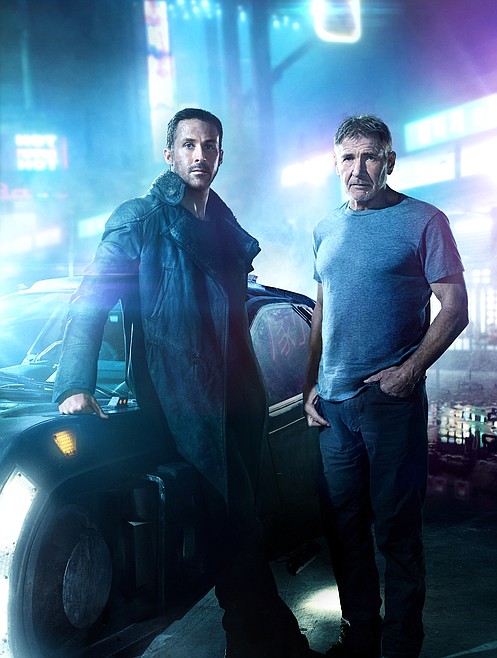
Photo from BLADERUNNERMOVIE.COM Ryan Gosling, left, and Harrison Ford star in “Blade Runner 2049.”
The world probably didn’t need a “Blade Runner” sequel. Ridley Scott’s 1982 sci-fi classic has been magnified and analyzed to the point where any follow-up must contend with the expectations and theories made by its rabid cinephile following.
Then again, the world didn’t need “Grown Ups 2” or “Transformers 5” either, so sure, please welcome “Blade Runner 2049” to the fold.
For “2049,” Scott ceded the director’s chair to Denis Villeneuve, the exciting and talented director of “Sicario” and last year’s Best Picture nominee, “Arrival.” Villeneuve, working alongside esteemed cinematographer Roger Deakins, has created an incredible visual palette for “2049.” Every frame of the film is gorgeous, and the images evoke the mood of the original “Blade Runner” while also crafting its own unique cinematic landscape.
Combine the visuals with a bombastic score by Hans Zimmer and Benjamin Wallfisch, and “Blade Runner 2049” often provides a sensory experience worthy of the biggest screen available.
It also happens to be a two-hour plot told across nearly three hours.
For much of its running time, “2049” tells its own story with little influence from the original film. In a polluted, overpopulated world, humans have created bioengineered androids/clones called replicants. Ryan Gosling plays K, an advanced replicant tasked by the Los Angeles police to work as a “blade runner,” or someone who hunts down and kills rogue replicants.
The central mystery involves a missing replicant thought to be unlike any other before it (no spoilers here). The idea of such a replicant worries K’s superior (played by Robin Wright, excellent as always), who is trying to keep the peace between replicants and the humans who fear their potential autonomy. K’s investigation also piques the interest of an influential replicant manufacturer (Jared Leto, eccentric as always).
A subplot involves K’s relationship with Joi (Ana de Armas), a hologram/computer program who acts as his domestic partner. The movie spends quite a bit of time with the couple, as Joi eventually tags along on K’s investigation, and there is care here to show a meaningful, reciprocated human relationship between two non-humans. Still, “2049” needs to spend more time on their dynamic or cut it way back, as it never earns the emotional heft Villeneuve and writers Hampton Fancher and Michael Green strive for in the film’s final stretch.
The big question about “Blade Runner 2049” is how Harrison Ford’s Rick Deckard figures into the mystery. It takes a long, long while for Ford to enter the film, though he makes the most of his screen time. The actor boosts the movie just when it needs it, and Ford gives one of the most emotive and captivating performances of his career.
Ford is so good it makes much of the material without him seem unnecessary in hindsight. As visually dynamic as it is, the first half of the film needs a more careful edit — trimming 20 minutes out of “2049” wouldn’t be difficult. The movie ends a bit anti-climatically too; it teases story threads clearly intended for another sequel that now, given the lackluster box office, may never come. The film’s final scene, at least, closes the film with a punch.
Credit Villeneuve and his team with one thing — “Blade Runner 2049” doesn’t meddle with the legacy of the original movie. Its visual scope should be celebrated, and Ford especially deserves recognition here. However, the story, while engaging as it plays out, likely won’t resonate as well as the original.
Maybe with a director’s edit or two or three, “Blade Runner 2049” can find an esteemed place alongside its predecessor. Numerous director’s cuts helped make Scott’s “Blade Runner” an essential conversation piece. A little tinkering, and a little cutting, might do the trick for “2049.”
- • •
Tyler Wilson can be reached at [email protected].