
City embraces new tech for wastewater plant
HEIDI DESCH | Hagadone News Network | UPDATED 7 years, 10 months AGO
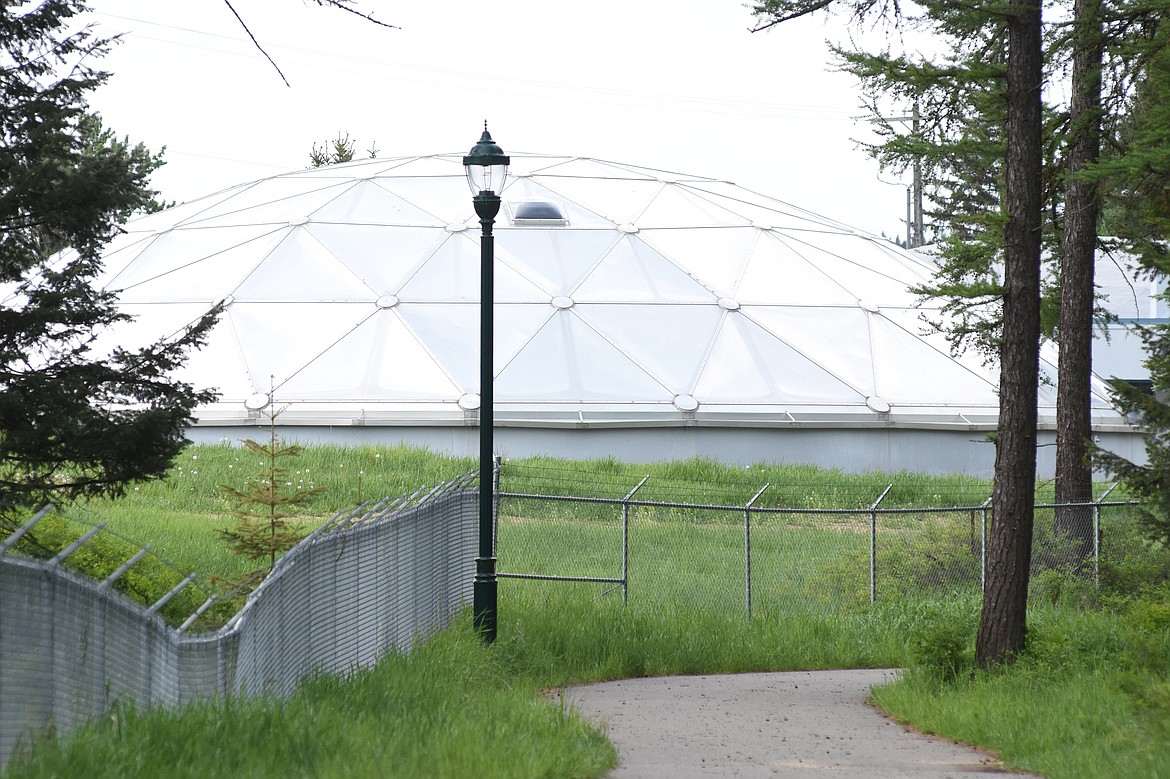
The Whitefish wastewater treatment facility.
DEPUTY EDITOR, FEATURES Heidi Desch is the Deputy Editor at the Daily Inter Lake, overseeing coverage of arts, culture, lifestyle, community, and business. Desch leads reporters in developing stories that highlight the people, traditions, and events shaping Northwest Montana, guiding content across print and digital platforms. With more than 20 years of journalism experience, including serving as managing editor of the Whitefish Pilot, Desch is a graduate of the University of Montana School of Journalism. She has received multiple Montana Newspaper Association awards, including part of the team leading the Daily Inter Lake to Best Daily Newspaper in Montana Award and the General Excellence Award in 2024 and 2025. IMPACT: Heidi’s work connects readers with stories that deepen the understanding of the community beyond daily news. | December 12, 2018 4:24 AM
Whitefish is planing to implement relatively new technology at a cost of $2.3 million in its planned new wastewater treatment plant that it expects to work more efficiently and also save in the overall price tag of the project.
City Council on Dec. 3 approved the purchase of wastewater treatment plant equipment from Aqua-Aerobic Systems, Inc. for the AquaNereda system.
“This system will allow us to build a much smaller plant, which is a more efficient and more cost-effective plant,” Public Works Director Craig Workman said.
The technology will allow the city to construct treatment basins that are roughly half of the size of traditional basins for the type of plant being designed.
The AquaNereda system uses a biological wastewater treatment technology that provides advanced treatment using the unique features of aerobic granular biomass.
In wastewater treatment systems, the most typical treatment processes function by converting dissolved and particular organic matter in the raw wastewater into a microbial biomass called “activated sludge,” which is then settled out and removed to produce clean effluent suitable for discharge.
In certain processes, Workman explained, the activated sludge is just slightly denser than water and settling can be difficult. In the AquaNereda, he says, specific conditions are established which cause the activated sludge to become relatively large known as aerobic granular sludge, which has excellent settling properties.
“Within a single tank, the process creates proper conditions to develop and reliably maintain [aerobic granular sludge] which allows for unprecedented reduction in ammonia, total nitrogen, and phosphorus — the primary constituents in the city’s wastewater discharge permit,” Workman said.
The estimated cost for the new wastewater treatment plant is $18.4 million. After factoring in concrete and foundation expense, as well as energy and overall operating costs the AquaNereda system is expected to lower the estimated overall project cost by $1.6 million.
“We hope this system will bring us under that cost estimate,” Workman said of the whole project.
In addition, the system is expected to be 15 percent more energy efficient than originally planned, Workman noted.
In 2012 Whitefish was issued an administrative order from the state Department of Environmental Quality as a result of several violations of the city’s wastewater collection and treatment system and it is now required to complete construction of a new wastewater plant by May 2021.
The city has been for the last several years planning for the construction of a new plant that will bring it into compliance with updated requirements for removal of ammonia, nitrogen and phosphorous.
The type of wastewater treatment plant selected for construction in Whitefish is a sequencing batch reactor, which is a type of activated sludge plant with multiple unit processes contained within the same concrete basin that saves space and cost.
Workman said when selecting this type of system, the plant is designed around a specific type of equipment allowing for a better and more cost-effective design, and why the city is selecting the equipment now.
“This is the single largest project Public Works will take on,” Workman said. “This is an important step in part of that.”
While the AquaNereda technology is new to the United States, it’s not untested and uses a type of activated sludge process that has recently evolved into a viable treatment technology. A public-private research partnership in the Netherlands led to the development of the technology, and there are 30 full-scale plants in operation or under development using the system across five continents. The oldest is now more than a decade old.
The city has had conversations with others who operate the treatment plants, which Workman says, “further supports the effectiveness of this relatively new technology in its capability to accomplish a high degree of treatment in a much smaller package.”
In addition, the city has spent considerable time further researching the technology and developing working agreements with the vendor to insure that the city is adequately protected with warranties and process performance guarantees.
“We have spent the last two months going through the agreements,” Workman said. “We have been favorable impressed with the company that stands behind this process and we are excited to move forward with this new technology.”
ARTICLES BY HEIDI DESCH

Whitefish wildfire protection plan up for City Council review
Fourteen areas of concern that are primed for mitigating wildlife risk are at the center of a draft Whitefish Community Wildfire Protection Plan.

Kalispell resident advocates for more women in the trades after being crowned Mrs. America
Standing on the stage in Las Vegas, wearing a white formal gown accented with feathers on one shoulder, Qadra Evans gripped hands with a fellow competitor.

Whitefish mulls updates to community growth plan
Whitefish City Council on Monday will consider updates to its community plan including language that looks to protect the historic character of its downtown amid state requirements allowing buildings up to 60 feet in height in certain zoning districts.