
Work requirements added to healthcare bill
Kyle Pfannenstiel Contributing Writer | Hagadone News Network | UPDATED 8 years, 2 months AGO
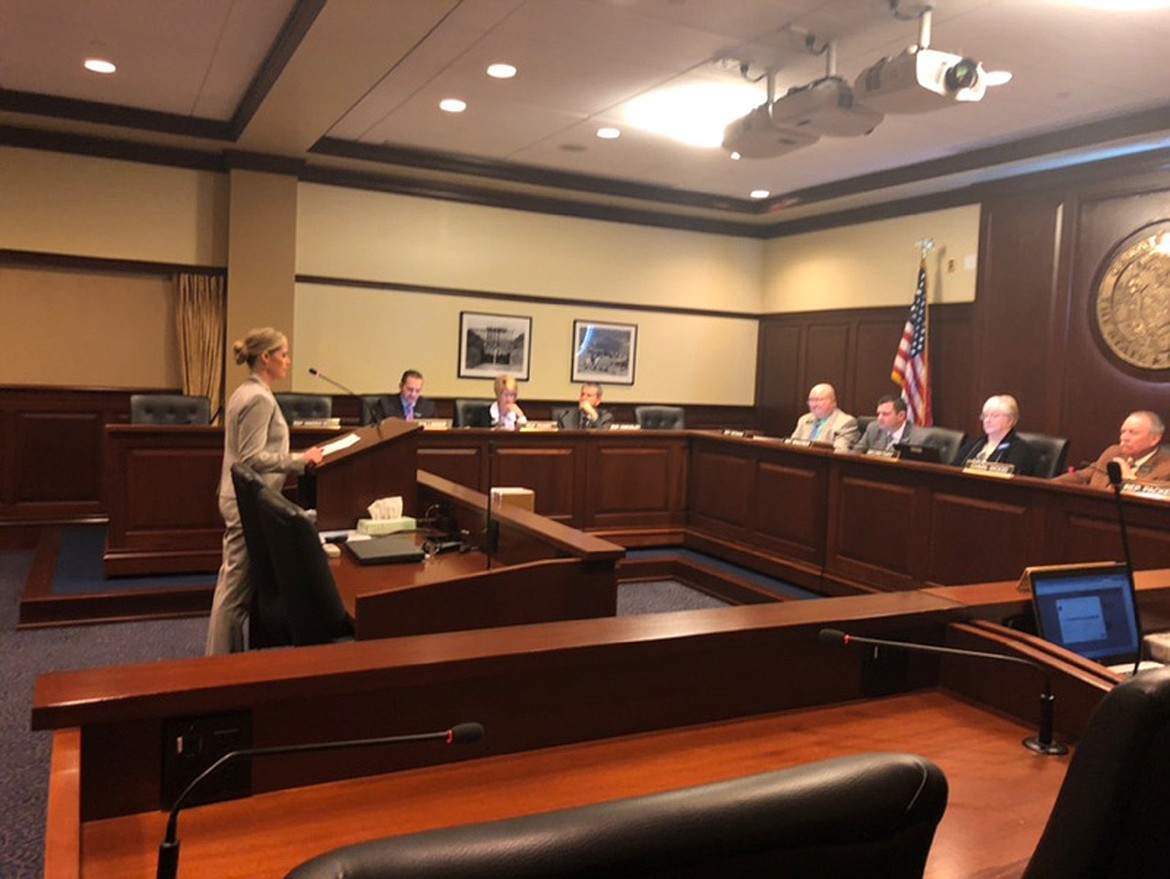
(Photo by KYLE PFANNENSTIEL) Department of Health and Welfare Deputy Director Lori Wolf presenting the changes to the healthcare proposal Jan. 30.
BOISE — Idaho may soon join Kentucky in requiring able-bodied Medicaid recipients to work, as part of a newly proposed waiver to the Idaho Health Care Plan.
The plan, which calls for a dual-waiver approach to reduce soaring healthcare premiums, was approved for consideration in a 10-1 vote by a House panel Jan. 30.
The proposal’s addition comes amid federal lawsuits challenging the legality of work requirements. The suits argue congressional action is necessary to enact the requirements.
New additions to state health reform would direct the Department of Health and Welfare to create a waiver requiring able-bodied adults who receive Medicaid to work.
A draft bill indicates the requirements would resemble those in the state’s SNAP food stamps program and the temporary assistance programs for families. SNAP requires able-bodied adults work, while also placing limits on income to remain eligible, according to DHW’s website.
Department of Health and Welfare Deputy Director Lori Wolf said those with medical conditions that prevent them from working would be exempt.
“The number of individuals who would be impacted by these requirements would be low,” Wolf told the House Health & Welfare committee. “The importance of helping these individuals though our work and training programs promotes long term work stability and self-reliance (and) was consistent with Idaho values.”
Some disagreed with the change, which could potentially affect the plan’s other two waivers.
One of the plan’s original waivers would move those with “medically complex conditions” off the individual insurance market to Medicaid. Wolf estimated it would remove $200 million off the individual marketplace.
“My understanding is that we have very stringent standards for who can qualify for adult Medicaid, and that those who are there are disabled. But even within the non-formally disabled community, those making under 26 percent of the poverty line are predominately afflicted with some degree of mental illness,” Assistant Minority Leader Ilana Rubel said.
The other waiver aims to close the Medicaid gap by waiving the tax credit ban for those who make less than 100 percent of the federal poverty limit. In a spending hearing two weeks ago, state officials estimated it would give coverage to 36,000 Idahoans.
The Idaho Health Care Plan was approved for a public hearing. If approved by the committee, the reform bill wills be considered by the full House.
Kyle Pfannenstiel covers the 2018 Idaho Legislature for the University of Idaho McClure Center for Public Policy Research.
ARTICLES BY KYLE PFANNENSTIEL CONTRIBUTING WRITER
Panel OKs bill to restrict lobbyists
BOISE — A bill that would ban state agencies, universities and public schools from lobbying was approved for a public hearing with three dissenters by the House State Affairs committee recently.

Rally calls on legislators to fill Medicaid gap
BOISE — After years of the Medicaid gap population being left largely uninsured, some Idahoans are taking direct action to try to make lawmakers listen.
$200M tax cut bill moves forward on party-line vote
BOISE — Idaho Gov. C.L. “Butch” Otter’s $200 million tax cut bill was approved for consideration on a party-line vote by a House panel Jan. 30.