
2018 is designated as 'Year of the Bird'
Bonner County Daily Bee | UPDATED 7 years, 11 months AGO
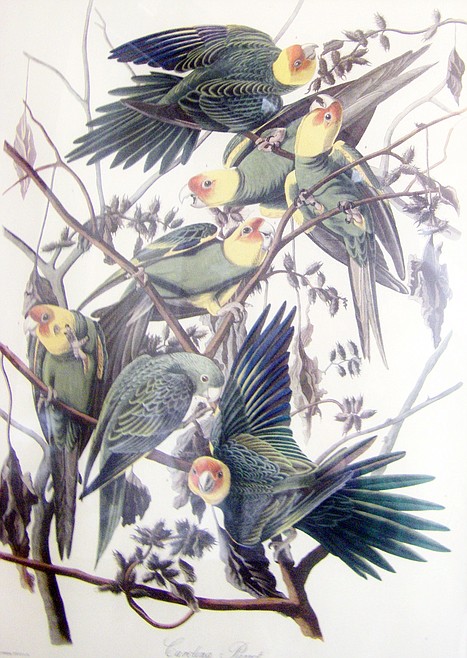
(Photo by VALLE NOVAK) Audubon print of “Carolina Parrot” (Psittacus Carolinensis) depicts the now-extinct species which once numbered in the hundreds of thousands during migration.
In a new year that would seem to hold trepidation for many, especially as regards the environment, a bright light has been kindled by the collaboration of a group of prestigious entities.
The current issue of Audubon magazine points out that 2018 marks the centennial of one of the “earliest environmental laws enacted anywhere” — the Migratory Bird Treaty Act — created by Audubon’s “genesis” chapters outraged by the wanton destruction of birdlife by the plume trade.
They presented their findings and rules they had created to Congress, which wisely adopted them — and now 100 years later, they still stand.
However, the challenges faced today by the poisons of Monsanto, Bayer’s Neonics and habitat-loss by burgeoning human expansion, along with other considerations such as pipelines, have brought about a horrendous decimation of bird-life that includes songbirds, water-birds and other migrators, and ground-dwellers (burrowing owls, Cactus wrens, Prairie chickens, Sage hens, etc.), totaling an average of over 60,000 bird deaths a day.
This has spurred an alliance — actually begun by the “what if” musings of Susan Goldberg, editor-in-chief of National Geographic magazine — resulting in a (beginning) partnership of National Geographic, Audubon, Bird Life International and the Cornell Lab. of Ornithology.
The enthusiastic joining-in of other organizations is mind-boggling: It includes conservatories, parks, zoos, wildlife refuges and city, state, and even governmental entities — such as the U.S. Fish and Wildlife Service — and more continue to join in.
The thrust is education about the importance of birds in our lives and the roles they play in the web of life. During the year all participating partners over the entire nation will offer special events, information, stories, photos, opportunities for participation by bird-lovers and those who want to learn. What a great undertaking!
All of us are familiar with the historical negatives regarding birds — the ostrich plume and egret feather travesties, the wanton shooting en masse of the Carolina parakeets for the cooking pot.
Our illustration of that lovely doomed bird is a copy of a painting by John J. Audubon but is unfortunately not dated; it appears to have been from actual observation, however, and is a sad example of the short-sightedness of the human persona. How beautiful they must have been in the landscape!
However, we must remember too, that caring people have saved the California condor and the bald eagle. And there are still those who wrap their ultra-lights in gauze and lead flocks of young orphaned geese to homing territory to imprint it in their minds. Perhaps the happy event of dedicating 2018 to the life of birds will burgeon into a wonderful awakening in the minds and hearts of people who never really gave it much thought. Hope springs eternal!
For years, this column has touted caring for the area bird population. Many of us who feed the songbirds and woodpeckers, et al, during the winter have seen the alarming decrease in numbers of our resident chickadees, nuthatches, Juncos and various finches — as well as the “travelers” such as the waxwings and grosbeaks who swoop through in flocks headed for easier pickings.
In all cases where there used to be great flocks of them there are now only a few in comparison. I — who once counted 125 chickadees at my feeders — now have probably 12 or 15; and the nuthatches number even less. This is a cold, mean, tough winter — and we must really take special care to see that they have access to shelter and plenty of black-oil sunflower seeds.
In-town residences differ from my pine/fir/spruce landscape and doubtless have birds that prefer shrubs and other cover — rosy, house, and purple finches and various sparrows — but the same rules apply: Food and shelter — and water when possible. Daughter Diane was entranced when she saw a chickadee sipping the droplets from a large icicle the other day. They do that, but in deep freezes, icicles don’t drip!
Augment your seed feeders with any number of nourishing things — apple cores, dried corn on the cob, peanut butter in pinecones or slathered on the tree bark (don’t forget peanuts in the shell for visiting jays).
Suet feeders provide needed extra protein and are a great inexpensive way to provide some “heat” to small bird bodies.
If you’re really into helping out the birds (and probably an opportunistic pine jimmy or two) you can create some pretty hearty mixtures to stuff into pinecones, tree bark or in a container of your choice.
Here are some ideas: Whole rolled oats, (raw or cooked/cooled if desired); rendered suet; pure maple syrup; peanut butter (plain or chunky OK).
Make your own mixtures of softened suet stirred into the warm cooked oats; maple syrup into the peanut butter, etc. Form into balls to contain in a net bag or press into pinecones or the holes of a suet log.
Simple does it: Even plain old “chicken scratch” from the Co-op, stirred into either peanut butter or suet makes a great attractant when pushed into the various “containers;” too, chunky peanut butter alone is very acceptable.
For those of us who love and watch the birds closely, the warnings are all too clear.
The dedication of 2018 as The Year of the Bird” will hopefully shine a bright light on the many problems out there, and provide some awakenings and action. Happy New Year to you — and the Birds.
Valle Novak writes the Country Chef and Weekend Gardener columns for the Daily Bee. She can be reached at [email protected] or by phone at 208-265-4688.