
State Parks: Harriman
Christian Ryan Correspondent | Hagadone News Network | UPDATED 7 years, 8 months AGO
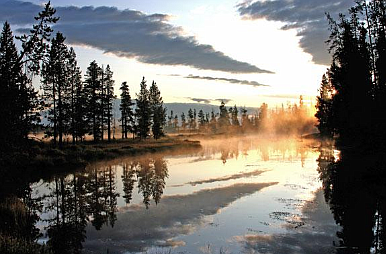


Located in eastern Idaho 130 miles north of Pocatello is Harriman State Park. Not to be confused with the state park of the same name in New York, Idaho’s Harriman State Park is an 11,000-acre wildlife refuge.
The park is within Henry’s Fork Caldera, a crater formed by a major volcanic eruption that caused the mouth of the volcano to collapse. But not to fear; you’re not at risk of getting burned alive or blown to bits by a volcano if you choose to visit this park.
The land making up the park was donated to the state of Idaho in 1977 by Roland E. and W. Averell Harriman. It is also part of a much larger region located within areas of northwestern Wyoming, southwestern Montana and other parts of eastern Idaho, called the Greater Yellowstone Ecosystem.
The Greater Yellowstone Ecosystem is known for being one of the last largely undisturbed ecosystems in all of the earth’s northern temperate zone. As far as flora and fauna are concerned, this region looks much like it did when the first European settlers crisscrossed the area hundreds of years ago. Harriman State Park specifically is home to a large number of moose and elk, and fortunate people may even catch a glimpse of the occasional black or grizzly bear.
Many tourists are drawn to the park every year in the hopes of seeing an amazing array of birds. One of the most common is the trumpeter swan. How common? Well, two-thirds of all trumpeter swans who winter in the lower 48 states reside here! Trumpeter swans are the largest species of waterfowl, weighing as much as 30 pounds and possessing a maximum wingspan of 10 feet. Another common bird seen in the park is the sandhill crane. These birds are distinguished by their long bill and even longer legs, gray plumage and red patches on top of their heads.
The park is known for other activities as well. In the summer, visitors often go horseback riding, bird-watching, hiking, and even take historic Railroad Ranch tours. On the other hand, wintertime in Harriman State Park can be fun too, especially if you like skiing, snowshoeing or fat bike riding. There’s so much to do in Harriman State Park that there’s a little something for everyone here.
HARRIMAN STATE PARK SCAVENGER HUNT
As you explore Harriman State Park, see if you can find all of the items on this list. Ask a ranger or park employee if you need help identifying one or more of the items on this list. Be sure to check them off as you go!
[ ] a park sign
[ ] a waterfowl
[ ] a pinecone
[ ] an animal with visible ears
[ ] a tall tree
[ ] a winding river
[ ] an animal that lives in a tree
[ ] an insect that can fly
[ ] a peculiar-shaped leaf
[ ] an animal that is neither a bird nor mammal (e.g. bat, beetle, spider, frog, lizard, etc.)
ARTICLES BY CHRISTIAN RYAN CORRESPONDENT

Critters of North Idaho: American Coot
If you see this bird swimming across the water’s surface from a distance, chances are you will mistake it for a duck.

Critters of North Idaho: Northern pike
When we talk about human disturbance of the environment, we usually think of the overharvesting of trees, overhunting and littering. But we can also disrupt the natural balance by introducing species of animals and plants into non-native habitats. This is what happened in the case of the northern pike.

Critters of North Idaho: Ye ol' vole
If you see a little rodent scurrying about in the thicket or under the snow, you may think it’s a mouse. And it may be a mouse, but at first glance it is very difficult to tell a mouse apart from another little rodent, the vole. So difficult, in fact, that voles are often mistakenly referred to as “field mice.” What makes these little scurriers so different from each other? For starters, they belong to different families.