
Soil testing continued
Mark Amara Wsu Grant-Adams Master Gardener | Hagadone News Network | UPDATED 7 years, 6 months AGO
Today we backtrack a bit and then continue with soil testing.
Many of our soils are on the alkaline side of the pH scale.
If pH gets much above 8 gardeners should consider adding sulfur to bring the pH closer to 7, which is considered neutral and the optimum level for growing just about anything.
High (above 8) or low pH (below 5) can tie up nutrients making them unavailable to plants, so it is important to monitor soil often and find ways to maintain or improve conditions. Our soils are low in organic matter.
In the native condition, organic matter is at 1 percent or less. Ideally, the higher the organic matter (2-4% percent or more), the more healthy and productive soils become. Improving soils constantly with organic matter on an annual basis is recommended by incorporating plant residues, adding straw or alfalfa or other untreated materials like leaves and (pesticide-free) grass clippings, or planting cover and/or green manure crops.
Adding manures should be minimized as they tend to accumulate nutrients to excessive levels. For example, when cow manure is added year after year to build organic matter, phosphorous can reach levels which may be too high for many plants to endure.
Then, it may be necessary to find ways to ameliorate these conditions like growing plants which help utilize the nutrients and help moderate its levels or avoid adding fertilizers with phosphorus. Similarly, growing plants on high pH soils can be done without amending it if you know what plants will tolerate higher pH. When blueberries are grown in eastern Washington soils must be amended to bring the pH down into the acid range because the plants will not produce well otherwise.
There are several soil testing firms in our area. The WSU Master Gardeners cannot recommend one firm over another and it is up to the gardener to check out possibilities and determine which one works best for their needs.
Many of our soils in Grant County have thin topsoil horizons underlain by sand and gravel that require copious amounts of organic matter and fertilizer (and water) to stay productive.
For answers to gardening questions, contact the Master Gardeners at the WSU Grant-Adams Extension office at 754-2011, ext. 4313 or email your gardening questions to [email protected]. Visit our web page at grant-adams.wsu.edu.
ARTICLES BY MARK AMARA WSU GRANT-ADAMS MASTER GARDENER
Get to know your soils better
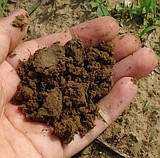
Getting to know the soils in the garden or yard can provide insights into what they consist of, what they are capable of producing, what their water holding capacity is, what they are best suited for, how they can be managed, and many other details.
Julie Sanderson: Eco-Gardening Symposium speaker of note
The fifth annual Columbia Basin Eco-Gardening Symposium promises to offer a sensational diversity of speakers, resource exhibitors, door prizes, and food. The event takes place Saturday, April 13 from 9 a.m. to 1 p.m. at the Technical Skills Center at 900 Yonezawa Blvd. in Moses Lake. It is co-sponsored by the Grant County Conservation District and the Grant-Adams Master Gardener Foundation.
More on recruiting new WSU Master Gardeners
Many people are curious about what the WSU Master Gardener Program is all about. Questions and answers continued.