
City's impact fees for new homes to increase
HEIDI DESCH | Hagadone News Network | UPDATED 7 years, 10 months AGO
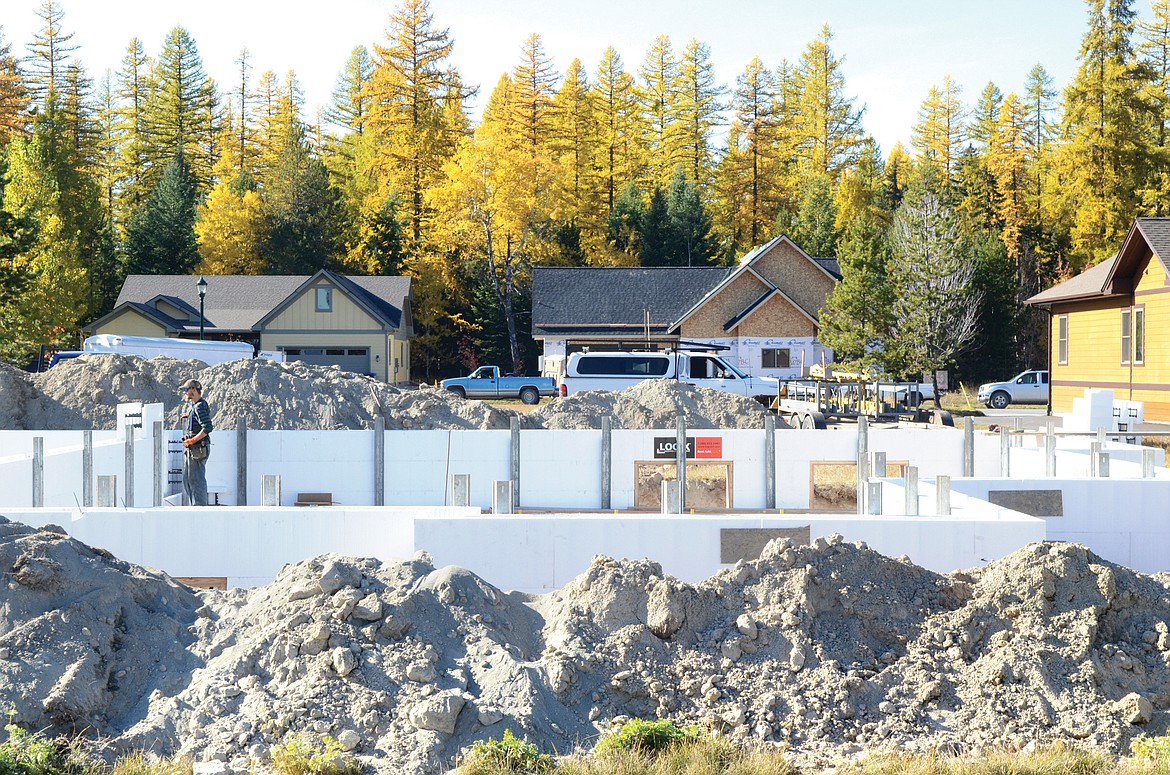
Houses under construction in Whitefish. (Pilot file photo)
DEPUTY EDITOR, FEATURES Heidi Desch is the Deputy Editor at the Daily Inter Lake, overseeing coverage of arts, culture, lifestyle, community, and business. Desch leads reporters in developing stories that highlight the people, traditions, and events shaping Northwest Montana, guiding content across print and digital platforms. With more than 20 years of journalism experience, including serving as managing editor of the Whitefish Pilot, Desch is a graduate of the University of Montana School of Journalism. She has received multiple Montana Newspaper Association awards, including part of the team leading the Daily Inter Lake to Best Daily Newspaper in Montana Award and the General Excellence Award in 2024 and 2025. IMPACT: Heidi’s work connects readers with stories that deepen the understanding of the community beyond daily news. | November 28, 2018 6:23 AM
Impact fees for new homes in the city of Whitefish will increase about $1,300 beginning next year.
The total impact fee for a new single-family home will be $7,972 as of Jan. 1. Currently the impact fee is set at $6,659.
City Council last week approved an increase in impact fees, which are one-time charges for new development that increases the demand for city services.
The city collects fees in seven areas — water, wastewater, stormwater, City Hall, Emergency Service Center, park maintenance building and paved trails — that make up the total impact fee.
FCS Group earlier this year completed a study of the city’s impact fees that suggested increases or decreases to the individual fees. Under state law, the city is required to review and update its impact fee study every five years.
In addition, recently the city updated and adopted its capital improvement plan with significant changes to the water plan.
“Based on previous Council direction, the water impact fee and the paved trails impact fee will not be increased to the maximum defensible amounts,” said Dana Smith, Assistant City Manager and Finance Director. “All other impact fees will be either increased or decreased to the maximum defensible amount.”
The water impact fee will remain at $2,241 per home, despite the fact that the city could charge a maximum of $4,119. The wastewater impact fee will increase from $1,943 to the maximum defensible amount of $3,975.
The stormwater impact fee decreases from $200 to $172. The Emergency Services Center fee decreases from $775 to $446.
The paved trails impact fee increases from $421 to $583. The maximum fee allowed for paved trails is $2,464.
Smith noted that based upon Council’s previous direction the paved trails fee is increasing up to 50 percent of the maximum fee allowed over the next five years due to other funding sources required for future projects not being readily available in the next 20 years.
The city may be looking to adjust its water fee in the near future, also. The city is currently examining expanding its water service on the south side of town, as well as, searching for an additional source for water, which may lead to costs in the future.
“We will be bringing back the impact fees when we have more solid numbers,” Smith said. “We can adjust the fees at anytime, but we are required to review them every five years.”
Whitefish’s impact fees will still remain lower than Kalispell by almost $2,000 and lower than Bozeman by $1,173. Columbia Falls does not have impact fees, but the city does have connection fees for water and wastewater.
“When you compare our rates to other communities we remain comparable,” Smith noted.
As Whitefish looks to create affordable workforce housing, questions have come up on how impact fees might affect affordable housing projects in the city.
“Montana law is silent on whether we can waive impact fees for affordable housing,” Smith said.
She suggested that the city’s Strategic Housing Steering Committee look into the issue as it has previously been suggested the city create some kind of grant program for assisting affordable housing projects with paying impact fees.
The city can spend impact fees for public improvements, including planning, site improvements, land acquisition, construction or engineering. Impact fees can be used for public improvements and to recoup the costs previously incurred by the city.
ARTICLES BY HEIDI DESCH

Whitefish wildfire protection plan up for City Council review
Fourteen areas of concern that are primed for mitigating wildlife risk are at the center of a draft Whitefish Community Wildfire Protection Plan.

Kalispell resident advocates for more women in the trades after being crowned Mrs. America
Standing on the stage in Las Vegas, wearing a white formal gown accented with feathers on one shoulder, Qadra Evans gripped hands with a fellow competitor.

Whitefish mulls updates to community growth plan
Whitefish City Council on Monday will consider updates to its community plan including language that looks to protect the historic character of its downtown amid state requirements allowing buildings up to 60 feet in height in certain zoning districts.