
Quincy celebrates a tapestry of cultures
JOEL MARTIN | Hagadone News Network | UPDATED 8 years AGO
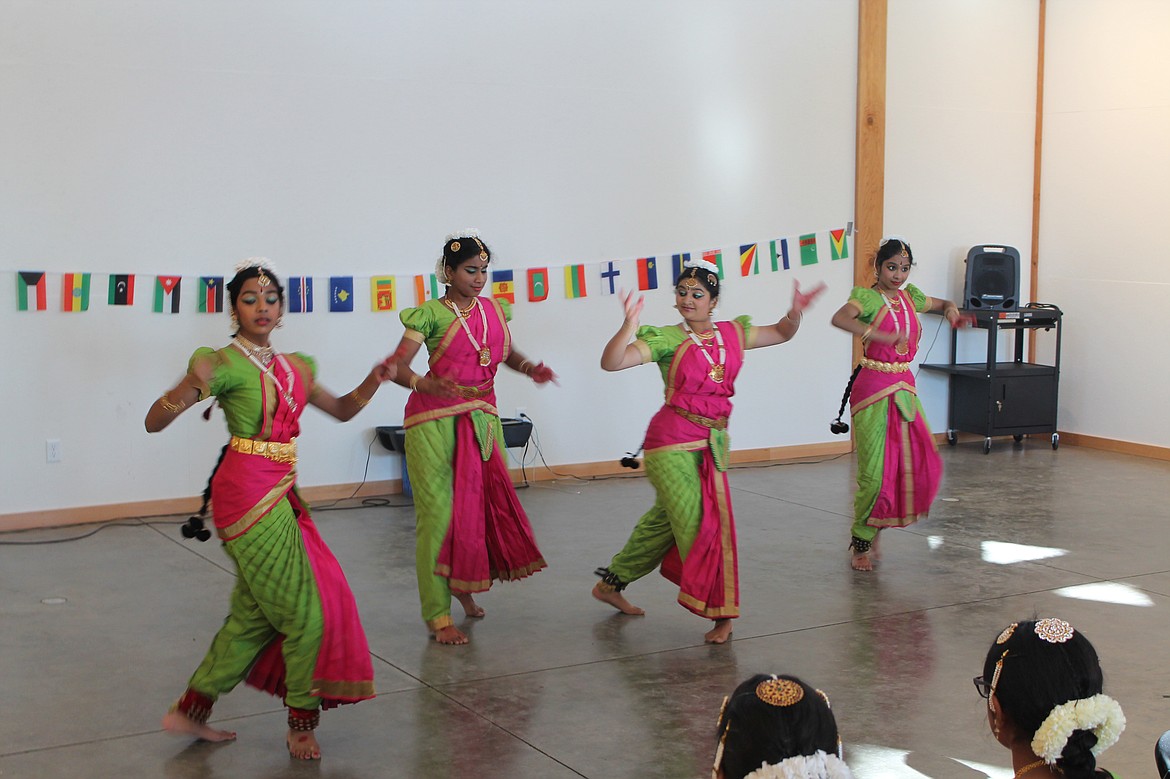
Joel Martin/Columbia Basin Herald A quartet of young ladies demonstrates classical Kalalaya dance from India at the Quincy Celebration of Cultures Saturday.
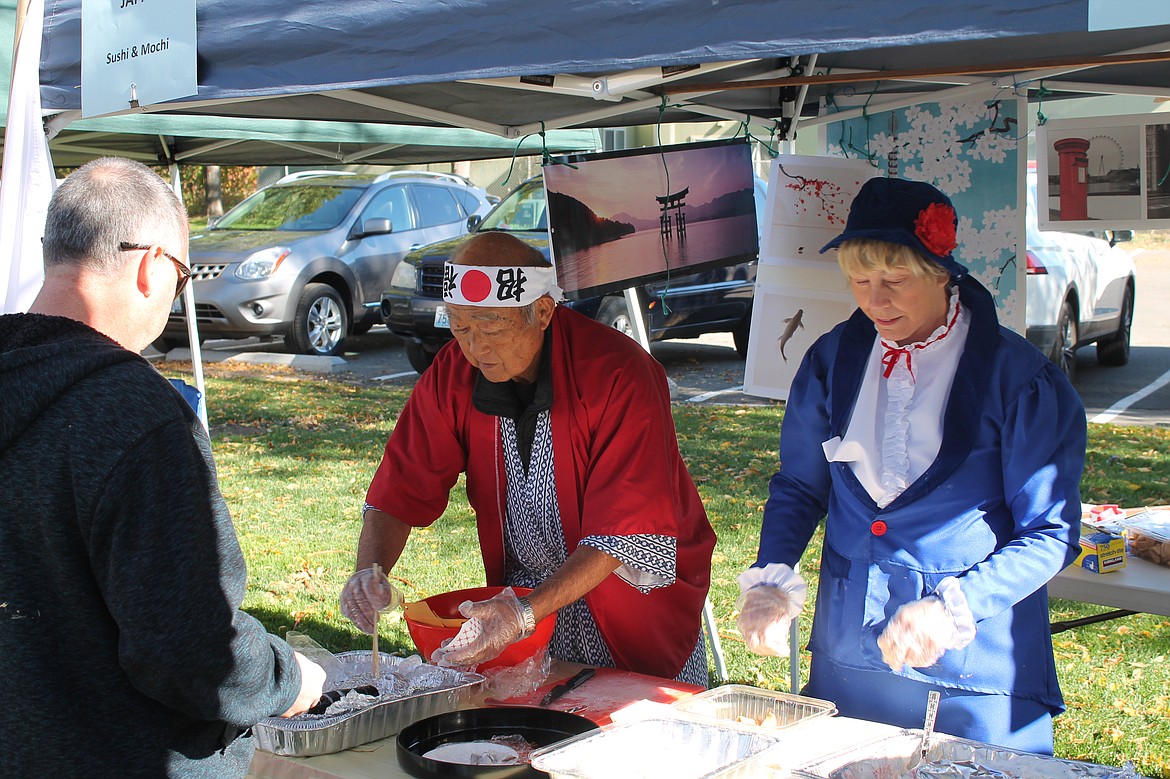
Joel Martin/Columbia Basin Herald Andy and Beryl Goto of Quincy serve up sushi and English trifle at the Quincy Celebration of Cultures Saturday.
Joel Martin has been with the Columbia Basin Herald for more than 25 years in a variety of roles and is the most-tenured employee in the building. Martin is a married father of eight and enjoys spending time with his children and his wife, Christina. He is passionate about the paper’s mission of informing the people of the Columbia Basin because he knows it is important to record the history of the communities the publication serves. | October 14, 2018 11:39 PM
QUINCY — The weather may have been windier than a truckload of campaign promises, but the first annual Celebration of Cultures in Quincy still drew a good-sized crowd to Heritage Park Saturday. Around 500 people came out for food, art, music and dancing from around the world, organizer Harriet Weber estimated.
One enjoyable way to experience a new culture is by trying its food, and yummy stuff was in abundance. Attendees bought tickets at the entrance to the park to spend at the food booths rather than using cash directly. Pupusas from El Salvador, German sausage and Jalisco-style tacos were popular offerings.
What makes Jalisco tacos different from other tacos? Fidencio Lopez stopped serving them up for a moment to answer.
“Jalisco makes the best tacos...”
“On the planet,” supplied his son Edwin.
“In the universe!” Fidencio finished proudly.
Not far away Janet Van Dienst of Quincy, assisted by some friends from Lynden in northwestern Washington, was serving up cookies and pastries from the Netherlands. Especially popular were her freshly deep-fried olie bollen, which are sort of like donut holes. The name means “oil balls,” which may not sound like the most appetizing of names, but that didn’t seem to deter the line of people waiting to get their hands on some.
Japan and England shared a booth, not for lack of space but because the couple representing those countries are married and have been for 45 years. Beryl Goto, who emigrated from London, served out English trifle while her husband Andy, born in Seattle to Japanese parents, offered up sushi. Beryl made all the food for both of them, they said.
Food wasn’t all that was available. In the barn, various performances were going on including mariachi, Irish step dance, American clogging and classical Kalalaya dancing from India. Meanwhile, Mandy Ottley taught kids to do primitive knitting from Scotland, wrapping yarn around two thick sticks to form rows that could be combined into a blanket, while other craft enthusiasts learned about gyotaku, or Japanese fish painting. The Wanapum tribe brought its Native American Discovery Unit, a large bus with displays of traditional Wanapum culture.
The event replaced the annual Harvest Festival in Quincy, Weber said. For next year, “we’ve already had people come forward and say that they would like to share food or something from their culture.”
“There’s at least 24 distinct countries of origin from people that we know of who are living in Quincy,” she added. “We can’t do them all every year, but highlighting five or six a year might be a good goal.”
Sonia Padron, who was selling food tickets, was gung-ho about the future.
“As soon as we shut this one down we’ll be talking about next year,” she said.
ARTICLES BY JOEL MARTIN

Endless battle
Noxious Weed Control Board works to keep invasive plants under control
MOSES LAKE — Some of the nastiest plants in Grant County were the topic of a class led by Jay Johnson, a consultant with the Grant County Noxious Weed Control Board, Tuesday. The Noxious Weed Control Board, as its name would suggest, is tasked with keeping weeds under control in Grant County. That’s not a small job; the board’s website lists 129 species of noxious weeds that are found around Grant County. A noxious weed is defined as an invasive, non-native plant that threatens agricultural crops, local ecosystems or fish and wildlife habitat, according to the Noxious Weed Control Board. Washington state law requires that these weeds be identified and their spread kept to a minimum, if not completely eradicated. “We’re one of those agencies a lot of people don’t really understand,” Johnson said. “We’re a county office and … our funding is tax-based assessment. When you get your tax bill and you look down at all the expenses that you pay for, there we are.”

BASIN EVENTS: Oct. 16-24
COLUMBIA BASIN — Whether you feel like shopping, crafting, learning or seeing a show, there’s something happening for you this week in the Basin. Oct. 16 ‘My Family (Mi Familia)’ screening Spanning three generations, “My Family (Mi Familia)” is a heartfelt drama that follows the Sánchez family as they build their lives in East Los Angeles. Through love, hardship, triumph, and sacrifice, the film explores the immigrant experience, the strength of family bonds, and the traditions that connect one generation to the next. Lowrider show and taco truck before the screening. Sponsored by Columbia Basin Allied Arts, EDUBS C/S and the Moses Lake Creative District. $12 per person. Doors open at 6 p.m., film begins at 7 p.m. at the Moses Lake Civic Center Auditorium, 401 S. Balsam St. Tickets and info: www.cba-arts.org.

Moses Lake author encourages women to look beyond church culture norms
MOSES LAKE — A Moses Lake author’s book, “A Christian Woman Striving to Live Her Faith in a Man-Controlled World,” takes aim at the role to which many churches relegate the female half of their congregations. “It’s to encourage women in the faith,” Linda Curran said. “A lot of churches say, ‘Teach Sunday school, do this, do that, but don’t (evangelize.)’" In her book, Curran recounts a time when she moved to a new community and joined a church there. She was surprised to learn that, as a new female member, she had been automatically assigned church cleaning duties. When she questioned it, she wrote, she was met with condescension and her objections were brushed aside. In other churches, she said, women who were capable of teaching were relegated to “women’s ministry.”