
CRITTERS OF NORTH IDAHO: Wild Turkey
Christian Ryan Correspondent | Hagadone News Network | UPDATED 6 years, 11 months AGO


On Jan. 26, 1784, Benjamin Franklin described in a letter to his daughter the bird he championed as the perfect national bird for the newfounded United States: the bald eagle? Nope, Franklin argued that the role of national bird should have actually gone to the wild turkey. While he never publicly voiced his opinion, Franklin’s reasoning for this was that the bald eagle is “a bird of bad moral character. He does not earn his living honestly … too lazy to fish for himself.
“He watches the labour of the fishing hawk [osprey]; and when that diligent bird has at length taken a fish … the bald eagle pursues him and takes it from him.” On the contrary, Franklin described the wild turkey as “in comparison a much more respectable bird … He is besides, though a little vain & silly, a bird of courage, and would not hesitate to attack a Grenadier of British Guards who should presume to invade his farm yard with a red coat on.”
The wild turkey (Meleagris gallopavo) is a terrestrial bird found throughout the United States and Mexico. Unlike its portly descendant, the domestic turkey, wild turkeys are swift movers on the ground and are capable of flying over short distances. Hens, adult females, usually weigh between 5.5 and 11.9 pounds and stretch 30-37 inches in length.
Toms, adult males, are larger and about the size of a goose, weighing 11-24 pounds and are about 39-49 inches long. There is little differentiating toms from the hens aside from size, as they are both covered mostly in dark plumage that shimmers bronze-green in the sunlight. Their heads and necks are void of feathers, the skin of which can be gray, red, blue or anywhere between.
Unless you happen to spot them along the road, as I often do, you are likely to find the turkeys inhabiting open woodlands with plentiful nut trees, like beech, hickory and oak, and the occasional clearing.
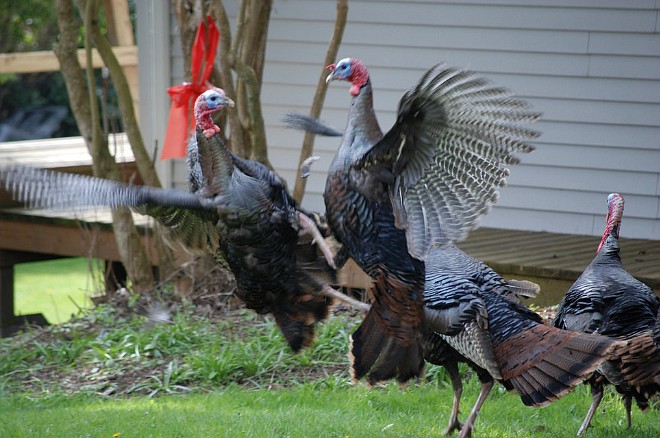
During the winter, the turkeys congregate in large flocks made up of both genders. Now, in the months of March and April, the toms take advantage of this and begin to strut. This is the way they get the hens’ attention. Toms lower and stretch out their wings, puff out their chest feathers, and display their brilliant tail feathers — all while making that distinctive gobbling sound we are all familiar with.
This display is also used to keep other toms at bay. If displaying does not work, then the turkeys resort to brute force. Toms can be surprisingly violent when they are fighting for the right to breed. They leap almost 5 feet in the air to attack each other with their sharp foot claws, and they bite each other’s faces with their pointy beaks. Face-biting is not uncommon either.
Wildlife photographer Donald Jones described this behavior as looking like they “are trying to eat each other’s faces.” Toms are known to hold this position for up to 20 minutes! Perhaps Benjamin Franklin thought the turkey was the perfect national bird after watching some toms having a duel.
Toms will typically mate with multiple hens before the mating season is over before going their separate ways. Hens take full responsibility when raising the chicks, which are adorably known as poults.
Wild turkeys are omnivores, eating nuts (they especially love acorns), fruit, insects and even the occasional amphibian, lizard or small snake.
•••
Christian Ryan can be reached at [email protected].
HOMESCHOOL PROJECT
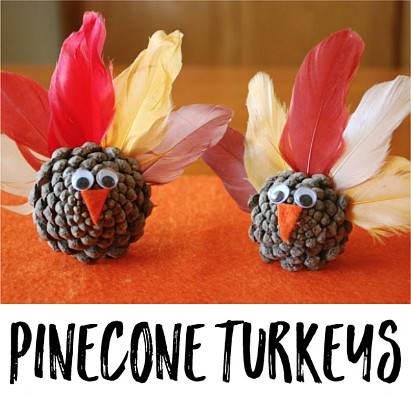
This is a very fun and easy project to do. Even though it is not Thanksgiving you might still want to check out this project. There is nothing wrong with getting prepared for the holiday ahead of time.
MATERIALS:
Pine cones
Orange felt
Feathers
Eyes
Glue
INSTRUCTIONS:
For a complete tutorial please visit the website below.
https://apumpkinandaprincess.com/pinecone-turkeys/
Note …
I am sorry to say that no one submitted their word list from the last Water Shrew Word Game Homeschool Project.
If you have been finding these projects helpful please let us know. We would love your feedback.
•••
Project provided by Angel Dominiq
ARTICLES BY CHRISTIAN RYAN CORRESPONDENT

Critters of North Idaho: American Coot
If you see this bird swimming across the water’s surface from a distance, chances are you will mistake it for a duck.

Critters of North Idaho: Northern pike
When we talk about human disturbance of the environment, we usually think of the overharvesting of trees, overhunting and littering. But we can also disrupt the natural balance by introducing species of animals and plants into non-native habitats. This is what happened in the case of the northern pike.

Critters of North Idaho: Ye ol' vole
If you see a little rodent scurrying about in the thicket or under the snow, you may think it’s a mouse. And it may be a mouse, but at first glance it is very difficult to tell a mouse apart from another little rodent, the vole. So difficult, in fact, that voles are often mistakenly referred to as “field mice.” What makes these little scurriers so different from each other? For starters, they belong to different families.