
City sees increase in impact fee collections
HEIDI DESCH | Hagadone News Network | UPDATED 6 years AGO
Heidi Desch is features editor and covers Flathead County for the Daily Inter Lake. She previously served as managing editor of the Whitefish Pilot, spending 10 years at the newspaper and earning honors as best weekly newspaper in Montana. She was a reporter for the Hungry Horse News and has served as interim editor for The Western News and Bigfork Eagle. She is a graduate of the University of Montana. She can be reached at [email protected] or 406-758-4421. | December 11, 2019 1:00 AM
Whitefish collected roughly a half million dollars more in impact fees in fiscal year 2019 than it did the previous year.
In FY19 it collected a total of nearly $1.3 million in impact fees compared to FY18 when it collected about $700,000.
Total building permits stayed the same for the year at about 250, but increases in the fees effective on Jan. 1, 2019 appears to have upped the total collections.
City Manager Dana Smith said impact fee revenues exceeded budgeted expectations for FY19 and excluding water and wastewater impact fees were up almost 69% from FY18.
“Whitefish continues to see strong building and growth over the past few years, which has continued into the first few months of fiscal year 2020.”
Impact fees are one-time charges for new development that increases the demand for city services. The city collects fees in seven areas that make up the total impact fee.
FY19 runs from July 1, 2018 to June 30, 2019.
The water impact fee revenue total was 188% of budget and the wastewater impact fee revenue was 224% of budget.
The city increased its impact fees on Jan. 1, 2019, and then this fall increased the water portion of the fee beginning in September. The impact fee total for an average single family home is $9,944.
The increase in the water portion of the impact fees was in response to required expansion by the Montana Department of Environmental Quality to the city’s water treatment plant.
In addition to the impact fees charged, administrative expenses are charged to developers at a rate of 5% in addition to the fee rates. In FY19, the city collected $65,000 in administrative fees.
Impact fee revenues are continuing to trend higher, Smith notes.
“This is a great forecast of strong building permits and continued growth in the city during the first quarter.”
Impact fees apply to new units in subdivisions as well as new homes built on single lots and some remodeling. Impact fees can be spent on public improvements, including planning, site improvements, land acquisition, construction or engineering.
In FY19, Whitefish spent about $790,000 from the impact fees revenue for various projects around the city.
The paved trails impact fees were used for expansion of the city’s trail system.
Stormwater impact fees were expended on the Whitefish Avenue stormwater system, as well as other stormwater improvements.
The water impact fees were used for water main replacements throughout various parts of the city and the water main extension for Flathead Avenue.
For wastewater impact fees, funds were used on sewer improvements on Flathead Avenue.
ARTICLES BY HEIDI DESCH

Whitefish Council looks at cell tower contract
Whitefish City Council on Monday will consider a new agreement for a cell tower located at Memorial Park.
Whitefish hotel expansion goes before City Council
A hotel along the Whitefish River is looking to expand by converting an office building on the same property into lodging.
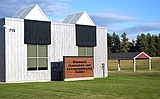
Ideas into opportunities: FVCC's entrepreneurship center to support future leaders
Billed as a place to cultivate solutions while fostering business innovation, Flathead Valley Community College on Thursday opened the doors to the Wachholz Innovation and Entrepreneurship Center.