
CRITTERS OF NORTH IDAHO: The Pacific lamprey
Christian Ryan Correspondent | Hagadone News Network | UPDATED 7 years, 1 month AGO
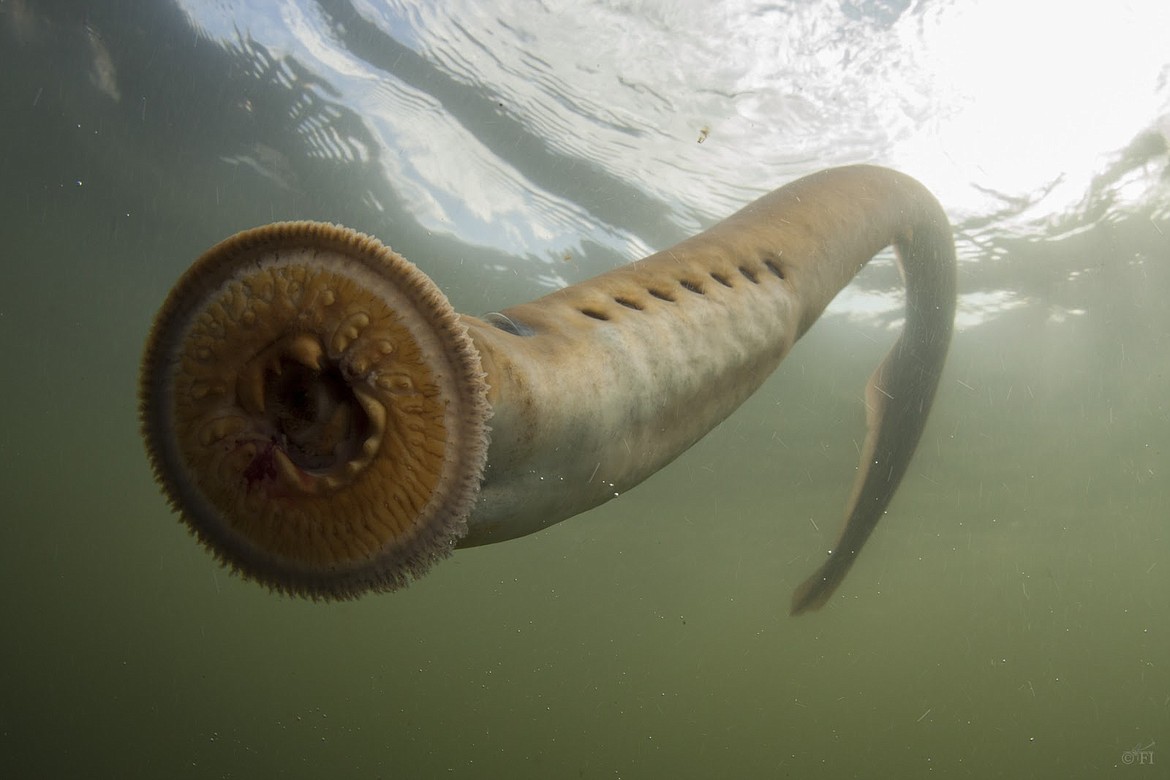




Despite its appearance, this little water-dwelling creature isn’t a mutant snake or worm. Instead, scientists classify the Pacific lamprey (Lampetra tridentate) as a fish, even though it lacks many of the features we generally associate with fish. It has no fins along the sides of its body, no scales and no jaws. Before you swear to never step foot in Idaho’s water sources again, rest assured that these terrifying-looking fish are quite small, generally no bigger than 30 inches from head to tail.
The existence of a “jawless fish” may seem rather unusual to us today, but the fossil record reveals that jawless fish were much more abundant in ancient times, coming in a myriad of shapes and sizes. Lampreys themselves are commonly found as fossils as well, and they look almost identical to the ones swimming in our oceans, rivers and streams today. This is why lampreys are often called “living fossils.”
So just what is going on with the Pacific lamprey’s mouth? Instead of possessing jaws like most fish, the Pacific lamprey stands out from the crowd with a sucker-like mouth consisting of a circular disk set of horny teeth! While they sometimes feed upon fish that have already died, lampreys are primarily parasitic fish, meaning they rely on other animals for nourishment; while they’re still alive. When they find a suitable prey — usually a Pacific salmon, flatfish, rockfish or pollock, but also animals as large as whales — they latch on with their peculiar tooth arrangement and dislodge a bite-sized chunk of flesh.
Much to the relief of Idahoans who spend time in the water, humans are usually not on the menu. In turn, Pacific lampreys are prey for sea lions, sharks and other large marine predators.
The appropriately named Pacific lampreys spend most of their adult lives in the Pacific Ocean. When it is time to spawn, they migrate en masse into low-gradient freshwater rivers and streams, much like salmon are well-known to do. Once there, a pregnant female can lay more than 100,000 eggs at a time, which the males then fertilize. All the adults die within four days of spawning. This might sound bad for the lampreys, but it actually benefits not only the species as a whole, but the entire ecosystem! When so many of the lampreys die around the same time, they release nutrients into the water. This helps keep the young lamprey and other river and riverside plants and animals healthy.
Not long afterward, the young lampreys are born to the world. At this point they are too small to fend for themselves in the open ocean, so they spend the first five or six years of their lives in the river or stream where they were born. They reside in a burrow on the riverbed, filtering out diatoms and algae from the water and mud.
After a two-month metamorphosis is complete, the lampreys emerge from their burrows as 5-inch adults and migrate to the oceans, allowing the life cycle of these strange, almost “alien-looking” fish to continue.
•••
Christian Ryan can be reached at [email protected].
HOMESCHOOL PROJECT
A SCIENCE and DRAWING ASSIGNMENT
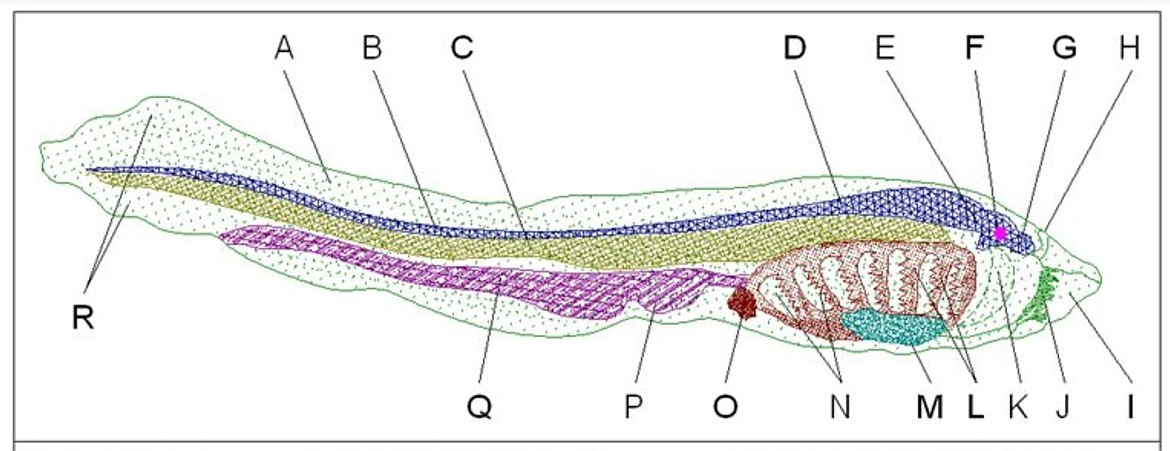
This week you will have a chance to test your drawing skills in addition to learning about the circulatory / respiratory systems of the Pacific lamprey function.
MATERIALS:
Drawing paper
Colored pencils
INSTRUCTIONS:
1. Draw the picture of the Pacific lamprey that is in this article, including the lines for labeling.
2. See if you know any of the organs first and write your answer next to the line. If you do not know what the organs are use, the answer key below to fill in the blanks.
3. Now, go to the internet and look up each organ to see how it functions.
If you have been finding these projects helpful please let us know. We would love your feedback.
Project provided by Angel Dominiq
ARTICLES BY CHRISTIAN RYAN CORRESPONDENT

Critters of North Idaho: American Coot
If you see this bird swimming across the water’s surface from a distance, chances are you will mistake it for a duck.

Critters of North Idaho: Northern pike
When we talk about human disturbance of the environment, we usually think of the overharvesting of trees, overhunting and littering. But we can also disrupt the natural balance by introducing species of animals and plants into non-native habitats. This is what happened in the case of the northern pike.

Critters of North Idaho: Ye ol' vole
If you see a little rodent scurrying about in the thicket or under the snow, you may think it’s a mouse. And it may be a mouse, but at first glance it is very difficult to tell a mouse apart from another little rodent, the vole. So difficult, in fact, that voles are often mistakenly referred to as “field mice.” What makes these little scurriers so different from each other? For starters, they belong to different families.