
IDFG uses cell tower ear tags to study mule deer bucks
Ralph Bartholdt Staff Writer | Hagadone News Network | UPDATED 7 years AGO
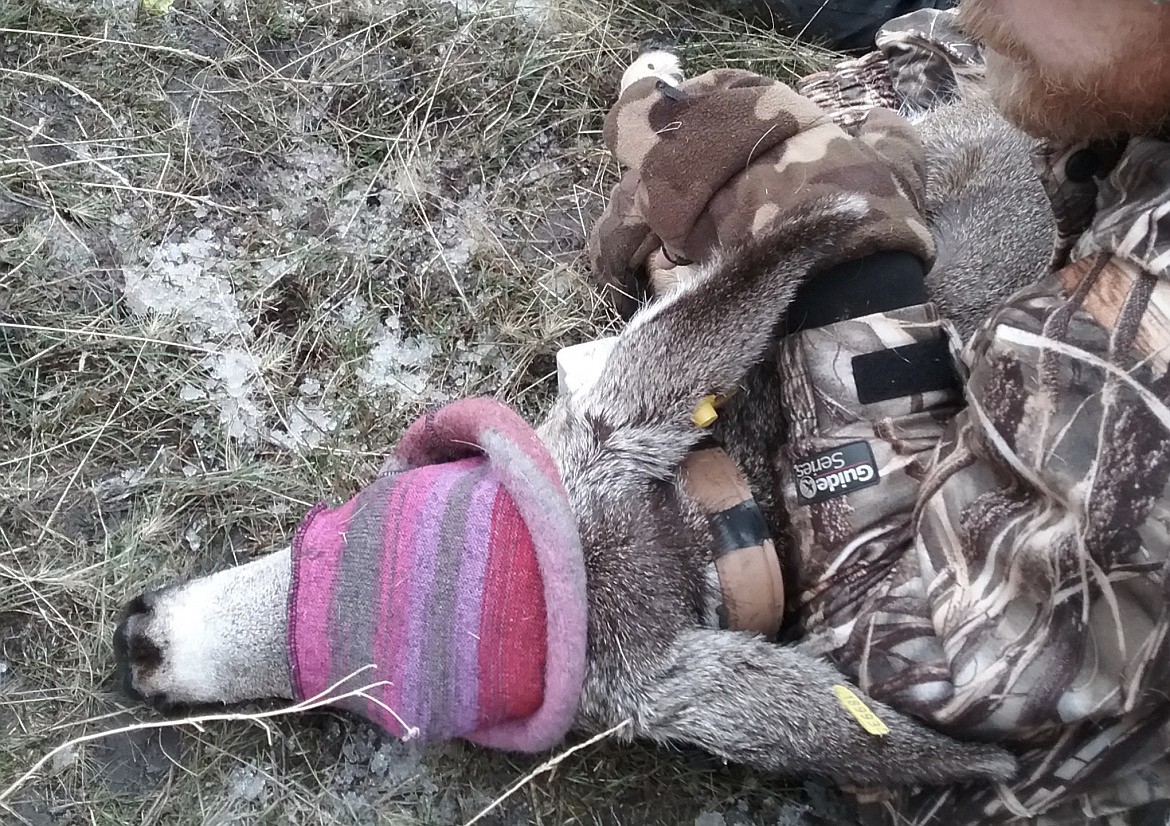
IDAHO FISH & GAME/Courtesy To track mule deer bucks in the backcountry, Idaho Fish and Game biologists are using the small tags that send data via cell towers to track deer movements in southern Idaho units 22, 32, and 39.
A small, solar-powered ear tag will help biologists track mule deer bucks to help manage the herds that have decreased over the past decades in Idaho.
To track mule deer bucks in the backcountry, Idaho Fish and Game biologists are using the small tags that send data via cell towers to track deer movements without worrying about draining a battery in a telemetry collar.
Last winter the department employed 20 solar-powered GPS ear tags to bucks in southern Idaho units 22, 32, and 39.
The tags will record and save locations of tagged bucks every 30 minutes, including during the hunting season, and the information will be transmitted to a Fish and Game database that researchers can access from their computers or smartphones.
This will help biologists better monitor the locations, movements and behavior of the tagged animals. It will also allow biologists to determine how hunting seasons affect the movement of mule deer bucks, and how wildlife managers influence mortality with the hunting season, said Mark Hurley, Fish and Game’s wildlife research manager.
“From a management perspective, we are trying to figure out how we can optimize hunting without over-harvesting our bucks,” Hurley said.
The tags should work better than collars because male mule deer fawns generally lose their collars within a year because the circumference of a buck’s neck can vary significantly.
During the rut, the circumference can increase up to 50 percent before shrinking back to normal, which makes keeping collars on bucks difficult. The new ear tags solve the problem of swelling necks in adult bucks. And because the tags are solar charged, they also enable biologists to affix a GPS device to bucks when they are fawns and continue to monitor them throughout their lives.
There are downsides, according to Fish and Game. The smaller battery doesn’t have enough power to remotely transmit data back to researchers via satellite like collars do. And because cell service is hard to come by in much of mule deer country, the tags compensate by storing data and transmitting it to researchers when they find service. They also send out a “mortality signal” when a tag hasn’t moved for an extended period, Brian Pearson, of Fish and Game said. If a buck is killed or dies in an area without cell service, researchers will rely on hunters to return some of the ear tags.
ARTICLES BY RALPH BARTHOLDT STAFF WRITER

Traffic fatalities on Super Bowl Sundays? Nope
Super Bowl Sunday may invoke images of tailgating and revelry that exceed the merriment of other annual sporting events, but local law enforcement aren’t kicking off special patrols to tackle errant — or intoxicated — drivers.

Isenberg: No plea at murder hearing
Her shackles jangling, Lori Isenberg walked in single file with other inmates into a downtown Coeur d’Alene courtroom Tuesday afternoon, wearing red, high-security jail pajamas and shower shoes.

Police: Man sought in assault case
The 53-year-old man who likely died during a standoff with police this week in Post Falls was wanted for failing to appear at his sentencing hearing after being convicted for assaulting a group of Jehovah’s Witnesses.