
Capital projects lead to increase in city budget
HEIDI DESCH | Hagadone News Network | UPDATED 7 years, 5 months AGO
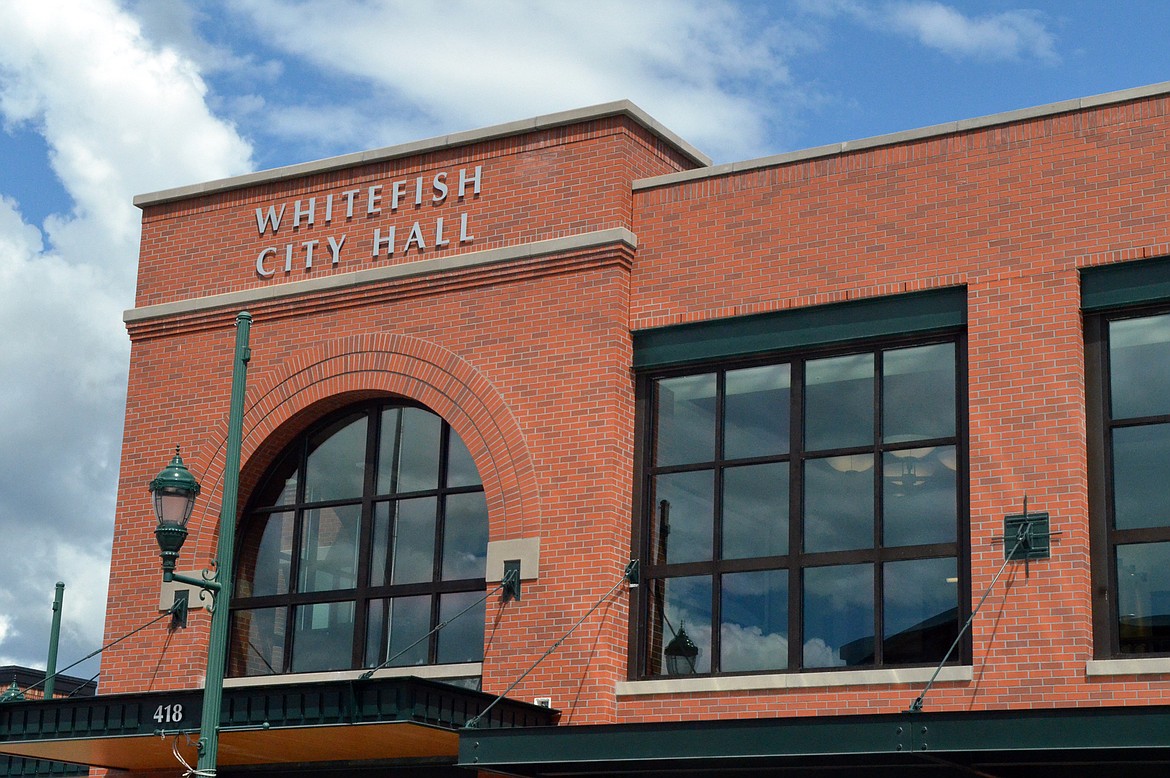
Whitefish City Hall in downtown Whitefish. (Pilot file photo)
DEPUTY EDITOR, FEATURES Heidi Desch is the Deputy Editor at the Daily Inter Lake, overseeing coverage of arts, culture, lifestyle, community, and business. Desch leads reporters in developing stories that highlight the people, traditions, and events shaping Northwest Montana, guiding content across print and digital platforms. With more than 20 years of journalism experience, including serving as managing editor of the Whitefish Pilot, Desch is a graduate of the University of Montana School of Journalism. She has received multiple Montana Newspaper Association awards, including part of the team leading the Daily Inter Lake to Best Daily Newspaper in Montana Award and the General Excellence Award in 2024 and 2025. IMPACT: Heidi’s work connects readers with stories that deepen the understanding of the community beyond daily news. | May 15, 2019 6:49 AM
While capital projects are driving an increase in the City of Whitefish’s proposed budget total, the document released last week anticipates a decrease in city property taxes.
The fiscal year 2020 draft budget plans for total spending to increase by $9.2 million or at a rate of 20 percent higher than last year’s budget mostly due to an increase in capital projects listed at $8.3 million.
“Wastewater and water projects make up the bulk of this increase and these sizable increases have been planned for,” City Manager Adam Hammatt said in his budget memo.
The total budget is $53.5 million compared to the fiscal year 2019 budget of $44.2 million.
The draft budget plans for a 6.58 percent increase in property tax revenue for the city as a result of a projected increase in the city’s mill value. Based on building permits, annexations and growth in the real estate market, Hammatt says the city is projecting an increase in the mill value.
“During a reappraisal year, the growth of property tax revenue includes both newly taxable property from construction and annexations, as well as the change in market values of existing taxable property for the past two years,” he said in his budget memo.
The proposed budget calls for levying 118 mills, compared with 120 in FY2019 and 120 levied in FY2018.
Topping the list of capital projects for FY20 is the new wastewater treatment plant construction with $9.4 million budgeted to be spent on construction as the project begins this year.
“Capital improvements programs are vital to providing excellent services to the community,” Hammatt said. “Capital improvement programs tend to have ups and downs in spending due to the cyclical nature of infrastructure and equipment needs.”
Other capital projects are the water treatment plant expansion of $1.4 million, the Depot Park improvement project at $1.1 million, resort tax funded projects and stormwater fund projects including for the reconstruction of State Park Road.
Staffing increases are planned in the budget, including adding a full-time police officer to increase the capabilities of the police department both in patrol activities and investigations. The position is budgeted at $39,000 for a partial year.
Additional seasonal staffing is also planned for downtown maintenance and cleaning of sidewalks. The city is budgeting for a 16-week seasonal position at a cost of $9,000. The Heart of Whitefish is set to contribute funds for the cost of the position.
Seasonal staff is also expected to be added to run the aquatic invasive species decontamination station near City Beach.
The budget proposes a 4 percent pay increase for city workers. Two of the three city employee unions are still in negotiations, but Hammatt says the budget has assumed a 4 percent increase for those employees also. In addition, the city is planning to cover 5.5 percent of an 8 percent increase in medical insurance premiums.
The budget is projecting an ending cash balance in property tax supported funds of almost 16 percent compared to last fiscal year’s budgeted amount of almost 15 percent. Hammatt says the goal is to increase cash reserves and he is recommending that the city work toward establishing reserves of 20 percent to 25 percent of annual expenditures or up to about $2.4 million.
“As in prior years, it will be important to build cash reserves back up if we are to maintain service levels during the next recession,” he said. “These reserves are also important for emergencies.”
To keep up with the annual Consumer Price Index increases and continue to address capital needs in some departments, the budget proposes increases to some assessments. An increase in the street maintenance assessment would result in an increase of about $3.89 per household, an increase in both street lighting districts of about 38 cents per household and $2.56 for commercial, and a parks and greenway assessment increase of about $3.14 per household.
No increase is planned for the stomwater assessment fee this year after the fee was increased by $50 per lot last year. The jump in the fee last year was to adjust for the fact that since 2010 other departments have been subsidizing the stormwater fund.
Under revenue, the budget anticipates a 22.8 percent increase in revenue at $40.39 million for the 29 budgeted funds.
Most of the increase is the result of $5.4 million in anticipated loan proceeds from the State Revolving Fund Loan Program to finance a portion of the new wastewater treatment plant construction.
Additionally, Hammatt notes, increases in water service charges of $100,000, in wastewater service charges of $407,000, resort tax collections of $236,000, tax increment finance district revenue of $656,000, and the city’s general property tax revenue of $200,000 contribute to the remaining increase in revenue.
In the budget memo, Hammatt points out that Whitefish’s property tax mills were second lowest in the state in fiscal year 2018 when compared with other Montana cities with a population of more than 4,500.
In 2018, Whitefish’s tax mills levied were 120, Kalispell’s was 206, and Columbia Falls’ was 216, according to the city.
“Whitefish has historically had very low property tax mill levy rates, which are even lower due to our resort tax rebate for property tax reductions, high property valuations and maintenance district assessments,” Hammatt noted. “While levy comparisons are of interest, caution should be exercised in drawing hard conclusions based on such information. Cities use property taxes to support similar, but not always the same mix of public services.”
City Council is set to hold its first budget work session on May 28 and a second session on June 10. It will hold a public hearing on the adoption of the preliminary budget on June 17, and hold a second hearing on Aug. 19 when it is expected to approve the final budget document.
The entire proposed FY20 budget document is located under city news on the city’s website at http://www.cityofwhitefish.org/.
ARTICLES BY HEIDI DESCH

Whitefish wildfire protection plan up for City Council review
Fourteen areas of concern that are primed for mitigating wildlife risk are at the center of a draft Whitefish Community Wildfire Protection Plan.

Kalispell resident advocates for more women in the trades after being crowned Mrs. America
Standing on the stage in Las Vegas, wearing a white formal gown accented with feathers on one shoulder, Qadra Evans gripped hands with a fellow competitor.

Whitefish mulls updates to community growth plan
Whitefish City Council on Monday will consider updates to its community plan including language that looks to protect the historic character of its downtown amid state requirements allowing buildings up to 60 feet in height in certain zoning districts.