
Don't fear bats (unless you're a bug)
Christian Ryan Correspondent | Hagadone News Network | UPDATED 6 years, 5 months AGO
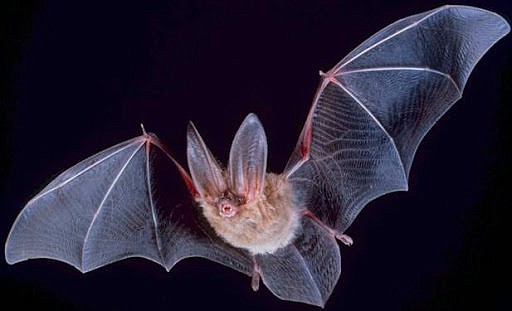
Image Credit: National Park Service, Public Domain
Three types of vertebrates fly. Most well known of the three are birds, which fly by means of feathered wings.
Eons ago, pterosaurs, a diverse group of now-extinct reptiles, could take flight using large, membranous wings supported by the arm and an elongated finger bone.
The third type of flying vertebrate is the bat, which you might catch a glimpse of as it darts through the night sky.
Here in the Panhandle, you’re most likely to see the Townsend’s big-eared bat, corynorhinus townsendii. Unlike other flying vertebrates, bats are just as much mammals as dogs, horses and humans are. This is because, like us, they are warm-blooded, covered in fur and give birth to live young they nurture with milk.
Townsend’s big-eared bats range between 11.7 and 12.6 inches from wingtip to wingtip, and they weigh 5 to 13 grams. It’s no secret that this bat gets the middle part of its name from its enormous ears, which are usually around 25 millimeters long. This bat is also called the ram’s head because, when asleep, the ears curl back and look like the horns of a sheep.
Aside from its ears, another feature that sets the Townsend’s apart from other bats it coexists with — including the big brown bat — are the tiny, fleshy lumps on either side of the nose.
The bat’s reputation for carrying rabies has garnered it much dislike. This is a bad rap: While bats can be infected with rabies, they’re no more likely to carry it than a cat or a dog. Fear notwithstanding, bats are great creatures to have around: they’re nature’s pest control.
Townsend’s big-eared bats are specialists at catching moths, which make up 80% to 90% of its diet. Other insects that plague mankind are also preyed upon by this bat, including pesky flies and beetles.
Like most other insect-eating bats, the Townsend’s doesn’t use sight to find its food. Instead, it sends out a high-pitched call — usually too high for humans to hear — and then uses its large ears to listen to the echo that bounces off nearby objects.
Its ears are so precise that it can tell the shape and distance of objects around it based on its echoes alone.
Male Townsend’s big-eared bats typically live alone; females spend the spring and summer roosting together in maternity colonies with their young. In North Idaho, maternity colonies are usually located in mines, though caves or abandoned buildings do just as nicely. The baby bats cluster together on the ceiling in the safety of their roost as their mothers spend the night feeding under the cover of darkness. Come daybreak, the mother bat returns and she spends all day hanging upside down by her feet with her offspring clinging tightly to her side.
Fall is here, and, with it, air that feels a lot like winter, with nightly temperatures often descending below freezing. The Townsend’s high metabolism usually requires it to eat a lot of moths and other insects every night. When winter comes in earnest, bats hibernate.
The bats cluster together and fold their wings against their bodies to keep the cold at bay. When all snug in their roost, these little guys are ready for a long Idaho winter.
- • •
Email Christian: [email protected]
ARTICLES BY CHRISTIAN RYAN CORRESPONDENT

Critters of North Idaho: American Coot
If you see this bird swimming across the water’s surface from a distance, chances are you will mistake it for a duck.

Critters of North Idaho: Northern pike
When we talk about human disturbance of the environment, we usually think of the overharvesting of trees, overhunting and littering. But we can also disrupt the natural balance by introducing species of animals and plants into non-native habitats. This is what happened in the case of the northern pike.

Critters of North Idaho: Ye ol' vole
If you see a little rodent scurrying about in the thicket or under the snow, you may think it’s a mouse. And it may be a mouse, but at first glance it is very difficult to tell a mouse apart from another little rodent, the vole. So difficult, in fact, that voles are often mistakenly referred to as “field mice.” What makes these little scurriers so different from each other? For starters, they belong to different families.