
Impeachment inquiry has a CHS connection
Craig Northrup Staff Writer | Hagadone News Network | UPDATED 6 years, 4 months AGO
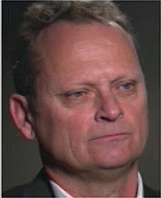
Perry
When Dale Perry graduated as valedictorian of Coeur d’Alene High School in 1980, he looked forward to a future outside any spotlights.
“I had no ambitions or aspirations for any kind of fame whatsoever,” the Coeur d’Alene High School graduate said this week from his home on Bainbridge Island. “I didn’t have any expectations of anything like this.”
Hard work in high school led Perry to a promising engineering career that started at an Ivy League college, then to a career as a submariner, then beneath the Arctic pole to map some of the last of our uncharted Earth.
He followed an unlikely path into the energy industry before becoming a figure in the historic impeachment of a sitting president. All of it began with a decision he made right out of Coeur d’Alene High.
“Dartmouth required [students] take two years of a foreign language,” he said. “I needed to take something they offered there. So I picked Russian.”
That decision would eventually catapult Perry into the national spotlight. His claim to fame is now as the first person to catalogue the business dealings of Lev Parnas and Igor Fruman, two associates of President Donald Trump’s personal attorney, in an alleged attempt to alter the internal hierarchy of a state-run energy company in the Ukraine. That alleged move was one of the first in a series of steps that would eventually lead to the House of Representatives heading up an impeachment inquiry.
“I was raised in Coeur d’Alene with some very clear, ethical, religious upbringings of doing the right thing,” Perry said. “I think it gave me a very grounded compass, and it helped me see after more than 20 years of working in post Soviet state: If you take one bribe or cheat one time, that’s all it takes to corrupt you forever … Coeur d’Alene was a much simpler place back then, certainly compared to some of the places I’ve visited in my life. These experiences really helped me appreciate the simplicity of growing up there.”
Six years as a submariner in the U.S. Navy led him to continue a career below the surface, mapping out the land beneath the Arctic ice. He then went with his now-wife to Africa, which eventually put him in a room with executives from the energy industry.
“The bank she worked for was HSBC,” Perry said. “I was working for a nonprofit, and they hired her to open a branch in Uganda. At the time, Uganda had very little electrical power.”
His engineering education, his scientific background and his linguistic skills would take him and his young family to Kazakhstan for a year. The former Soviet state was the first in a line of stops for the Perry family before they ended up in Barcelona, Spain.
“I remember … someone asked where we’re from, and we didn’t know what to tell them,” he said. “So we came back to the States.”
After building a home on Bainbridge Island in Washington and continuing to consult in the energy industry, a former classmate reached out to him in a particularly relevant time in Ukrainian history: after the beginning of the Russian invasion of the Ukraine and the annexation of Crimea.
“In 2014, after the revolution, I was contacted by a young guy I knew from Georgetown [University] to be a project director in the Ukraine,” Perry said.
Perry’s business relationships eventually led to what he described as a somewhat acrimonious split between his firm and one of his partners, Andrew Favorov — buying out the share in the energy company to free up Favorov to go to work for Ukraine’s state-owned oil-and-gas company, Naftogaz.
Perry said he emphasizes the less-than-friendly relationship between himself and Favorov for a reason.
“I’m saying this to illustrate that I would not be the first person Andrew would come to with a problem,” Perry said. “Just the fact that he came to me looking for advice told me how serious he thought this was.”
Perry told The Press — long after relaying this same information to a foreign service officer at the U.S. Embassy in Kiev in April — what Favorov told him: Two Eastern European businessmen named Lev Parnas and Igor Fruman approached the Naftogaz executive during a Houston energy conference in an effort to support a new CEO who would look more favorably toward a firm the two men represented. Perry said Favorov described the meeting as a shakedown.
According to Perry, over the course of the conversation, Parnas and Fruman said the U.S. Ambassador to the Ukraine at the time, Marie Yovanovitch, was not friendly to their business interests, and that President Trump would soon remove the longtime diplomat from her post.
“I was in complete disbelief,” Perry said. “My gut was telling me that this really hit [Favorov] hard. He said to me, ‘Dale, these are some ‘Odessa kind of guys’ looking to do things the wrong way.’ He was very distraught, and I understood why. I mean, how could these two guys possibly know the ambassador was going to be removed? Why would anyone even consider it? Ambassador Yovanovitch is an exceptional ambassador. She’s brilliant. She’s honest. She’s driven toward a moral good, and she believes in the code of law.”
Despite hearing this information secondhand, Perry said he felt compelled to pen Favorov’s revelations and relay them to the State Department through the Kiev embassy.
In May, Yovanovitch was removed from her post.
“I was in shock,” Perry said. “I thought, ‘If people can remove a very professional ambassador doing important work in one of the most important strategic places in the world right now, who can’t they remove?’ I thought, ‘Now [the Trump administration] is launching something. Where is this headed?’ As soon as she was removed, there was no leadership in that area anymore. Nobody there in the [Kiev] Embassy can serve with any confidence right now, and in a place where [Russian President] Vladimir Putin has direct, dangerous interests.”
After trying to explain the width and breadth of the geopolitical, economic and diplomatic scope of the events, Perry simplified his view to put the entire situation into an Idaho context.
“It would be akin to, if it’s Wednesday and Boise State University’s football team is getting ready to play their bowl game on Saturday. It would be like if the governor calls the president of Boise State and orders him to fire the coach. That’s a facetious analogy, but it’s apt. How’s the game going to go? How is the team going to do on Saturday?”
Perry carried the analogy further, asking deeper questions behind the theoretical nightmare scenario.
“Why is the governor involved in a personnel decision just before the biggest game of the year in the first place?” he asked. “The most important time that ambassador is needed, she’s removed. Oh, and by the way, she’s the best coach the school has ever seen, the best coach any team could possibly hire. And the governor orders her to be fired.”
While Perry did not speak directly to the controversy of President Trump asking the Ukraine to investigate former vice president and current political rival Joe Biden, Perry did say he agreed with President Trump on one issue of note.
“The Ukraine is one of the most corrupt places I’ve ever worked at,” Perry freely admitted. “Most all of the former Soviet republics are like that.”
He said bribery, extortion and under-the-table deals are normalized in the Ukraine. He described how companies are actually more willing to work in the former Soviet republic if they learn of officials willing to take bribes, as that actually signals a more structured environment than a lawless power vacuum.
“People always ask me, ‘Are you an energy specialist?’ ‘Are you an engineering specialist?’ I tell them: ‘I’m an anti-corruption specialist.’”
As Congress breaks for a long weekend from the impeachment inquiry, Perry will spend Thanksgiving on Bainbridge Island before flying back to Europe, flying over Coeur d’Alene as he heads overseas, back to help build America’s independence from Russian oil interests. He’s a long way from home.
ARTICLES BY CRAIG NORTHRUP STAFF WRITER

Legislature gives Green the boot
John Green, in the midst of his first term representing Rathdrum, was expelled from the Idaho Legislature early Thursday afternoon.

No fast lane for grocery tax relief
This week saw an end to three bills devoted to helping residents pay for their groceries, dimming Gov. Brad Little’s hopes to shepherd relief to local shoppers.

Grocery credit bill stewing in Idaho House slow cooker
A bill that would increase the tax credit Idahoans receive to help offset the cost of groceries is tentatively scheduled for a vote in the state House today, but postponing that bill is becoming the norm, rather than the exception.