
Mayoral race: Fight for Athol's future
Coeur d'Alene Press | UPDATED 6 years, 2 months AGO
By CRAIG NORTHRUP
Staff Writer
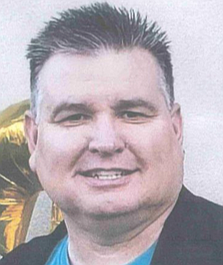
Ryan Swensen
Ryan Swensen said Athol has been a place seldom in charge of its own destiny. It’s a destiny the 49-year-old candidate for mayor contends his hometown can finally control.
“Being in Athol for over 20 years, I’ve seen a lot of ideas get talked about,” he said. “I’ve been talking about some things that were slated to happen but never came about. Now we’re in a place where we can generate some revenue with some of these bigger projects without being hamstrung.”
Hamstrung, Swensen said, because of Athol’s resistance to change — both political and economic change — that he believes has kept the town from moving forward.
“You take the Super 1,” he said, referring to the grocer’s 2018 opening in Athol. “Super 1 wanted to build here for quite some time. But we’ve had administrations here that didn’t want to see Athol grow. That’s something we need to talk about, because growth is going to happen one way or the other. So the question is: How do we grow?”
The Idaho native who was born in Rexburg said he doesn’t believe in growth for growth’s sake, nor does he believe that he has always supported growth in the small community along U.S. 95.
“Twenty years ago, I wouldn’t have been for [Super 1],” he said. “But the population can support it now. I think, in our zip code, there’s over 6,000 houses, and that’s just in Athol. It doesn’t include the surrounding people who work here or shop here or buy here. It doesn’t include all the people who live somewhere else but call Athol home.”
Growth is a word Swensen said he doesn’t consider dirty. Rather, he sees targeted growth as a bridge to Athol’s future.
“One project I think we’d like to see is an InstaCare,” he said. “Having some kind of local urgent care location so residents wouldn’t have to drive to Coeur d’Alene? That would be great … I’d love to have a dentist here, for that matter. That kind of growth would be something we should encourage here.”
The husband of 21 years and father of four said responsible growth doesn’t simply mean building what didn’t exist before, but also bringing in competition to help both the tax base and the residents. He cited recent plans for a truck stop in Athol as evidence.
“I think the truck stop could definitely help us,” he said. “I think competition is good. People here have always had one gas station here, one option. I think an alternative could help our local consumers by giving them choices.”
Swensen returned the conversation to Super 1 to demonstrate how a small business — in this case, Athol’s Little Town Market — can still compete with larger competition. But, he stressed, unchecked growth without conditions or stipulations should give Athol residents pause.
“Take the plans for a new hotel, for example,” he said. “I’m not in the circle of decision-makers because I’m not on the council. But I think the hotel would be a big boost to the economy here. I think it would bring us considerable revenue. We’re at the gateway to all things recreation — hiking, fishing, Farragut [State Park], four-wheeling, snowmobiling — so a bigger hotel here would be amazing.
“But,” he warned, “if they come, they have to put in their own sewer system.”
Swensen said looking forward must include solving the problems Athol faces today. One problem he said he champions is public safety, particularly among Athol’s children.
“If elected, I’d push to see some sidewalks on the busier streets,” he said. “We need sidewalks on the busier streets and around the school and on [Highway] 54. I don’t think we need sidewalks on every side street and in every neighborhood, but I’ve seen too many near-misses by the school.”
Swensen said he empathizes with Athol’s instinctive reluctance to grow, but that realizing growth as an inevitability will make it far easier to manage, something he learned after he was diagnosed 10 years ago with Charcot-Marie-Tooth disease, an inherited neurological disorder that suppresses pain and ultimately destroyed his right foot.
“If my diagnosis taught me anything, it’s that you’ve got to be ready to roll with the changes,” he said. “Everything changes, and if you’re not ready to roll with it, it’ll pass you by. That’s why I’m running. I’m not a professional politician. I’m a layman, and I’m dedicated. I’m dedicated to Athol, and this town needs a mayor.”
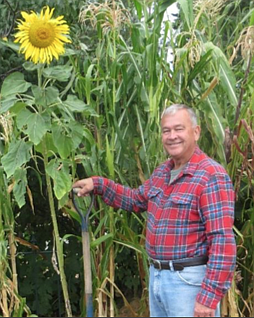
Bill Hill
Bill Hill left Athol in 1970 to join the military. Nearly 50 years later, he said he’s ready to serve again.
“I was never really looking to run for mayor,” the 67-year-old admitted. “Somewhere along the way, I took an interest in Athol — in city government — and along the way, I grew a real passion for it.”
It’s a passion Hill said ultimately led to his decision to run for City Council in 2015. After his term on the council, and after watching Bob Wachter step down as mayor in 2018, followed by appointed Mayor Mary Zichko deciding to run for City Council instead of re-election, Hill said he feels called to serve once more.
“Primarily, we’re united in mindset,” he said. “Most people here agree on most everything. Ultimately, the town council has to reflect the will of the people. But as we went along in this process, I realized the individual that’s running for mayor isn’t necessarily aligned with the town.”
Hill characterized that person, Ryan Swensen, as someone who is conscientious and means well, but also someone he said believes in too much growth too quickly.
“Once I was elected to council, I realized really quick there are people who come to our council meetings who can’t vote,” he said. “There are people who live on the outskirts who are affected by our decisions just as much as anyone who lives in town. But that person can’t vote. Every decision we make on the council, we try to keep our commitment to everyone in Athol, including the people on the outskirts of town.
“But, you have to know that you don’t desire growth. Nobody here desires growth, but growth is going to happen. We have to do it cautiously. And I’m thankful [Swensen] wants to be involved; we need more citizen involvement … But my counterpart wants to put high density housing next to the Super 1, and the people here don’t want that. People want smart, careful growth.”
Hill added that Athol can still grow while maintaining its small-town charm.
“[Athol is] a junction,” he said. “We’re not necessarily a destination, but we can be a place where people come and stay and enjoy themselves. Having a hotel [next to the Super 1] makes sense, if it’s done right. But having high-density housing right there would be a lost opportunity. Whether a hotel comes there or it doesn’t come, either way is fine by me. But whatever decisions we make have to help the community and make sense for the community. And high density right there by the highway doesn’t.”
Hill added that he sees Athol as a town with exciting opportunities ahead, but also a town with issues that must be addressed.
“Water is a need we need to look at,” he said. “We had a fire not that long ago: One little building caught fire, and shoot, it drained our tanks just to put it out.”
Tackling pedestrian safety is an issue Hill said should have been addressed long before. He said the town’s boxed-in perimeter between the highways and railroad tracks gives Athol fewer options at its disposal.
“This was a situation where we didn’t pursue a problem,” he said. “It pursued us, and I think that’s the lesson here. We need to be more proactive with taking on issues that come our way.”
An issue near and dear to Hill’s forefront is Athol’s public image.
“When you look at the character of the town, there’s a stigma here,” he said. “I haven’t been embarrassed of this community, but when I came back here [in 2009], I couldn’t help but notice all the yards that were cluttered with junk and in disrepair. We’ve got too many people here who think this is the Wild West: that people can just do whatever they want. We can’t turn a blind eye to it. We have to make our community look respectable if we want to grow responsibly.”
Ultimately, the father of two looks to his children as an inspiration for running for mayor.
“I raised my kids in Coeur d’Alene,” he said. “It’s a city where one person doesn’t really feel like he or she has a voice. But in a small town like Athol, a voice can be heard. And that’s what I want to do: serve as a mayor that will listen to those voices and represent its citizens.”