
Critters of North Idaho: Wolverine
Christian Ryan Correspondent | Hagadone News Network | UPDATED 6 years, 1 month AGO
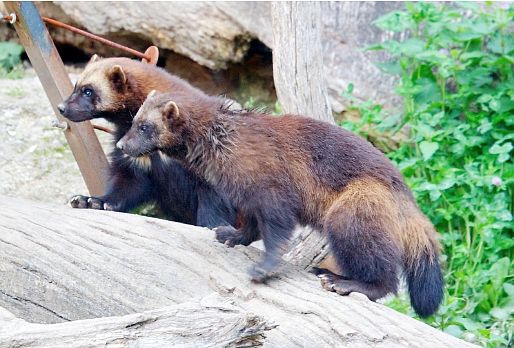


What would happen if you grabbed a weasel and crossed it with the ferocity of an animal over 10 times its size? Well, you would probably get something like the wolverine (Gulo gulo). Even though they look like miniature bears, they are actually the largest member of the weasel family. You are probably familiar with many of this critter’s relatives, which, aside from weasels, include otters, badgers and ferrets. The wolverine can grow 33 to 44 inches from snout to tail and weighs between 24 and 40 pounds. They typically live seven to 12 years in their natural habitat.
And just what is their habitat? Well, the native range of the wolverine stretches across northern Europe and Asia, skips the Bering Strait, and extends into Alaska and Canada and into the northwestern reaches of the Rocky Mountain regions in the lower 48. However, occasional sightings confirm that non-breeding populations of wolverines exist south of this range as well. Their limited range in the lower 48 is due to their preferred habitat being alpine or even arctic coniferous forests, especially boreal forests.
You can’t talk about wolverines without bringing up their dietary nature! The word used in their two-part scientific name, “gulo,” is Latin for “glutton.” Their gluttonous behavior usually occurs in winter and early spring, when food is scarcer than usual. Wolverines don’t hibernate, so in order to sustain their appetite, they’ve been known to travel 15 miles a day in search of food. These oversized weasels are mostly scavengers that clean up the carcasses left behind by other carnivores. And if the predator is still feeding on its kill by the time the wolverine arrives, sometimes the much smaller weasel will actually drive the other predator away, even if it’s a much larger bear or a cougar!
If carrion is hard to find, wolverines are not picky. They will eat seeds, fruit, insect larvae and eggs. They hunt squirrels, marmots, porcupines, hares and other small animals, and they have even been known to successfully hunt animals much larger than they are, like caribou and moose! Their large, furry feet act as snowshoes, helping them to quickly chase larger prey through deep snow where they have the advantage and can more easily bring it down. Nothing stops a wolverine from having its dinner!
Wolverines are typically thought of as being solitary, but they do seek companionship at times. How do these animals find each other across such vast tracts of land? Well, male wolverines generally share their habitat with two or three females, which they mate with for life. These mammals are also known as “skunk bears” because they have a special anal gland that produces a distinctive stench. While usually used to mark territory, it also helps male and female wolverines locate each other when they’re ready to mate.
Baby wolverines are called “kits,” and they are born in litters of one to five. Most male mammals play no role in rearing their offspring, but scientists were surprised to discover that male wolverines regularly visit their mates’ kids while they are weaning. Even when the kids are on their own by about six months of age, they still get visits from Dad that last several days.
Who knew? Turns out the ravenous wolverine is actually a family guy!
•••
Email Ryan: [email protected]
ARTICLES BY CHRISTIAN RYAN CORRESPONDENT

Critters of North Idaho: American Coot
If you see this bird swimming across the water’s surface from a distance, chances are you will mistake it for a duck.

Critters of North Idaho: Northern pike
When we talk about human disturbance of the environment, we usually think of the overharvesting of trees, overhunting and littering. But we can also disrupt the natural balance by introducing species of animals and plants into non-native habitats. This is what happened in the case of the northern pike.

Critters of North Idaho: Ye ol' vole
If you see a little rodent scurrying about in the thicket or under the snow, you may think it’s a mouse. And it may be a mouse, but at first glance it is very difficult to tell a mouse apart from another little rodent, the vole. So difficult, in fact, that voles are often mistakenly referred to as “field mice.” What makes these little scurriers so different from each other? For starters, they belong to different families.