
Critters of North Idaho: Northern pike
Christian Ryan Correspondent | Hagadone News Network | UPDATED 5 years, 11 months AGO


When we talk about human disturbance of the environment, we usually think of the overharvesting of trees, overhunting and littering. But we can also disrupt the natural balance by introducing species of animals and plants into non-native habitats. This is what happened in the case of the northern pike.
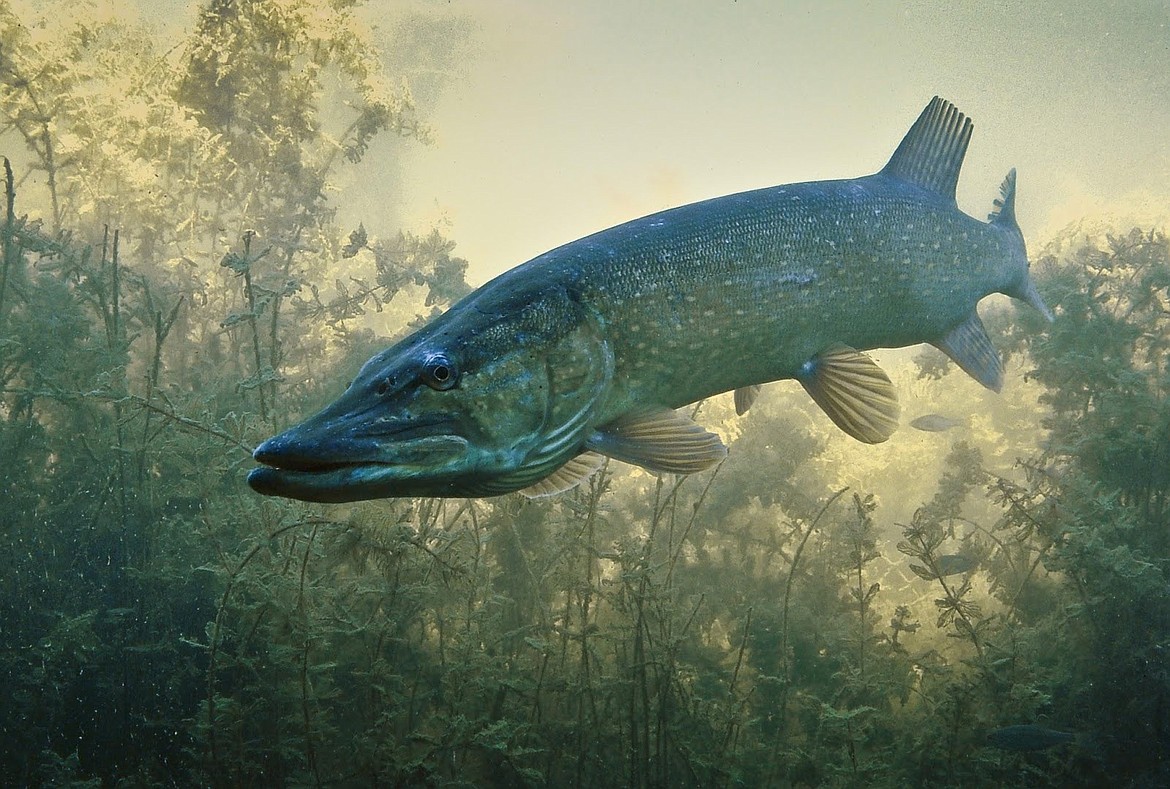
The northern pike (Esox lucius) is a large fish found throughout the brackish and freshwater rivers, lakes and streams of the northern Hemisphere. Though their average size varies depending on the population, those in the northern United States typically weigh between 3 and 7 pounds and 15 to 20 inches from snout to tail. Usually olive green in color with barring along the flank.
These fish are perfectly adapted to ambush their prey from the weedy river bottom. Other fish and frogs are typically what’s on the pike’s menu, but insects, small mammals and birds are often snagged in its long, jagged teeth as well. Northern pike are a cannibalistic species, which is a major reason why as few as 5% of pike larvae (that’s what baby fish are called) make it long enough to grow 3 inches in length.
Unlike many fish we associate with swimming up and down our rivers and streams, like salmon and trout, northern pike are non-migratory and mostly live on their own. In fact, they fiercely patrol their hunting grounds to make sure that other pike don’t try to muscle in on their turf. Their aggressive nature in necessary for survival in the eastern half of the northern United States, but it is causing havoc on other river fish species in the western United States.
This is because northern pike are not native to water bodies west of the Rockies; these populations descend from fish that were imported to Washington, Idaho and Montana starting in the 1950s and, unfortunately, continue to this day. The fish are causing so much ecological damage, in fact, that it is illegal to transport live northern pike into the state of Washington and all pike caught by fishermen must be killed immediately.
Some people are working very hard to get a handle on the pike infestation. A decade ago, Pend Oreille River was having a problem with a robust population of northern pikes as well, but thankfully, the Kalsipel Tribe stepped in. Against everyone’s expectations, the tribe knocked down the pike population by as much as 80% in the reservoir behind Boundary Dam by removing more than 18,000 pike from the river! It is hoped that the same techniques will work when applied to exporting pike populations in other parts of the Pacific northwest.
To be clear, northern pike are not the bad guys here. They are fascinating aquatic predators that do a great job at keeping the ecology of their native habitat healthy. It is only when humans introduced these efficient hunters into waters where they do not belong that they cause trouble. If you’re looking to help the environment in 2020, do not introduce invasive species!
•••
Email Christian: [email protected]
ARTICLES BY CHRISTIAN RYAN CORRESPONDENT

Critters of North Idaho: American Coot
If you see this bird swimming across the water’s surface from a distance, chances are you will mistake it for a duck.

Critters of North Idaho: Northern pike
When we talk about human disturbance of the environment, we usually think of the overharvesting of trees, overhunting and littering. But we can also disrupt the natural balance by introducing species of animals and plants into non-native habitats. This is what happened in the case of the northern pike.

Critters of North Idaho: Ye ol' vole
If you see a little rodent scurrying about in the thicket or under the snow, you may think it’s a mouse. And it may be a mouse, but at first glance it is very difficult to tell a mouse apart from another little rodent, the vole. So difficult, in fact, that voles are often mistakenly referred to as “field mice.” What makes these little scurriers so different from each other? For starters, they belong to different families.