
MOVING HISTORY FORWARD J.C. White: A man of action, big ideas
Robert Singletary Special to | Hagadone News Network | UPDATED 5 years, 11 months AGO
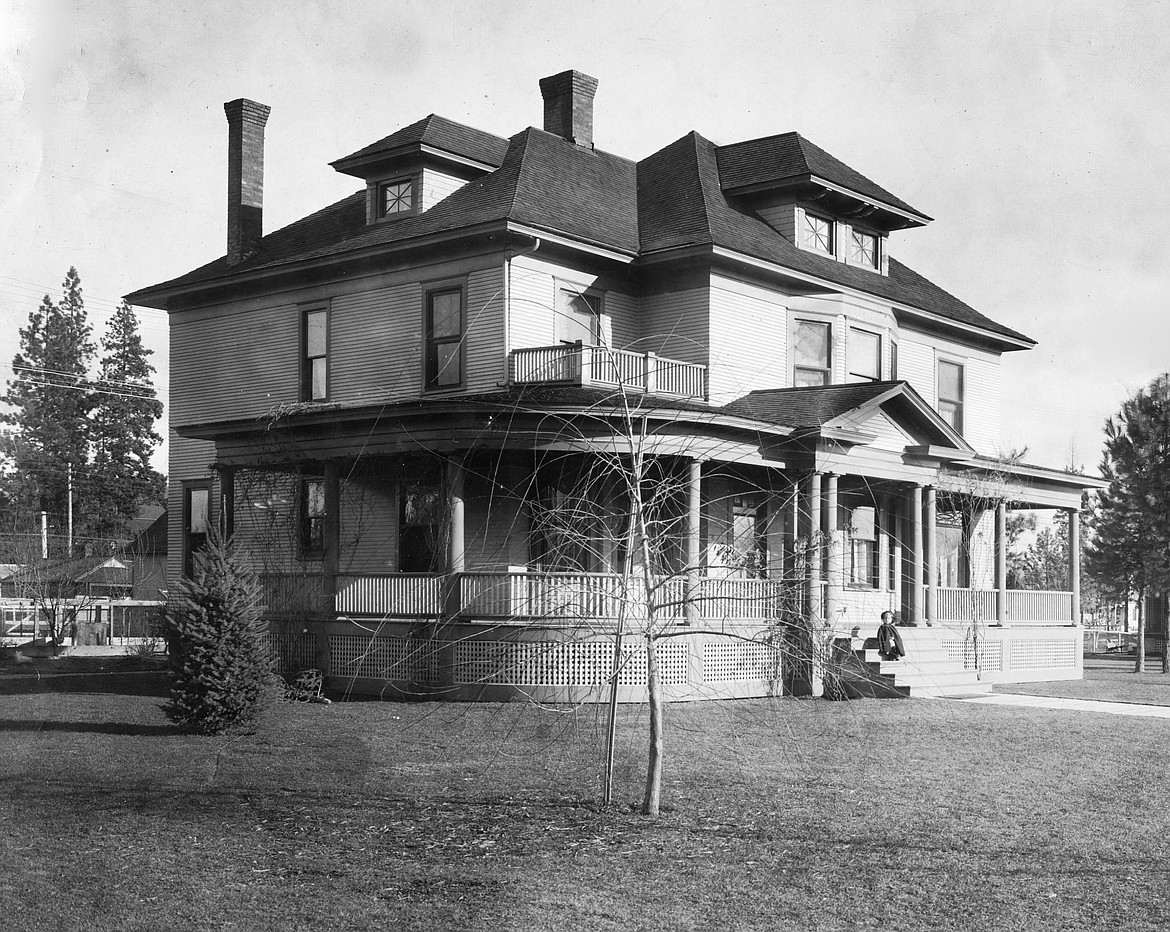
Early Saturday morning, Nov. 16, 2019, a professional house moving crew lifted the former 1903 home of J.C. White off its original foundation at 805 Sherman Ave., and moved it very slowly and carefully to the Museum of North Idaho’s new complex near Tubbs Hill. I have a feeling that J.C. White, the original owner and builder of the historic home, would have approved of this move.
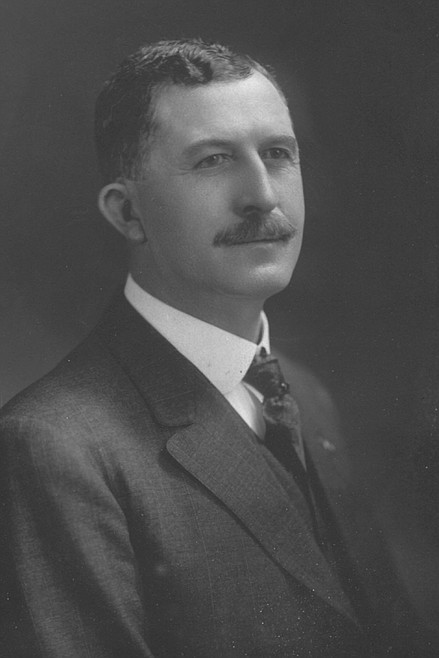
Even back in his college days at the University of Denver, White was comfortable with big ideas and big academic loads. In addition to completing advanced studies in literature, science and the classics, he also became well acquainted with the practical studies, such as business and civil engineering.
After graduation, White moved to Wallace, Idaho and started building a narrow gage railroad for financer, D.C. Corbin. The new rail line connected the Coeur d’Alene mining district with a fleet of steamboats at the old mission, then by water to the docks in Coeur d’Alene and finally by rail on to the smelters in Wicks, Mont. In 1887, when the project was completed, White, along with his parents, started homesteading along Emerald Creek in Benewah County. He was soon hired to build the first state wagon road up the St. Maries River Valley. In 1895, White married Harriet Whitmore from Farmington, Wash., and started a family.
While working on his homestead in the early 1900s, J.C. White received a call from lumberman J.J. Spalding and his son, Harry, with an offer to form a partnership in a steamboat company. White liked the idea and with financial backing from his banker friend William Dollar, formed the St. Joe Transportation Company. The new company launched its first steamboat, the Idaho, in June of 1903. The Idaho had the largest passenger capacity of any steamboat on Lake Coeur d’Alene. Within a few years, J.C. White not only bought out his own partners, but also acquired most of the steamboats on Lake Coeur d’Alene by 1908. White was the undisputed king of water transportation on the lake until the early 1920s, when the automobile and the need for highways was in full swing.
While J.C. White was promoting his own steamboat business, he was a major force behind the creation of the Coeur d’Alene Commercial Club in 1903 and the Chamber of Commerce in 1912. He was on the school board in 1910 when a $45,000 bond levy built a modern high school. White was head of the commission that build the first paved road from Coeur d’Alene to Spokane. When steamboats had seen their last days on Lake Coeur d’Alene, J.C. White was serving as the superintendent of the Idaho Department of Highways.
He moved with the times until his death in 1953. J.C. White was, without a doubt, one of the most active and influential men in the history of Coeur d’Alene.
ARTICLES BY ROBERT SINGLETARY SPECIAL TO

MOVING HISTORY FORWARD J.C. White: A man of action, big ideas
Early Saturday morning, Nov. 16, 2019, a professional house moving crew lifted the former 1903 home of J.C. White off its original foundation at 805 Sherman Ave., and moved it very slowly and carefully to the Museum of North Idaho’s new complex near Tubbs Hill. I have a feeling that J.C. White, the original owner and builder of the historic home, would have approved of this move.
MOVING HISTORY FORWARD Frederick Blackwell: A man of vision
In the early 1900s, Frederick A. Blackwell, a very successful lumberman from Pennsylvania, and his son, Russell, visited North Idaho to check on reports about abundant timber resources in this part of the country. His trip confirmed that those reports were true. He immediately formed a lumber company and began to buy large tracts of timber land in the area. He purchased property on East Sherman Avenue and built two beautiful houses, one for himself and one as a wedding gift for Russell. Within a few years, the Blackwells became one of the most prosperous and well-respected families in Coeur d’Alene. Blackwell was more than a successful lumberman, he was one of the most diverse businessmen in the history of Coeur d’Alene. In 1909, the Spokane Chronicle listed Frederick Blackwell as one of 17 millionaires in the Inland Northwest.